A violent vehicle assault at a major Michigan synagogue has intensified security concerns among U.S. Jewish communities after federal investigators said the incident appears to have deliberately targeted a religious institution.
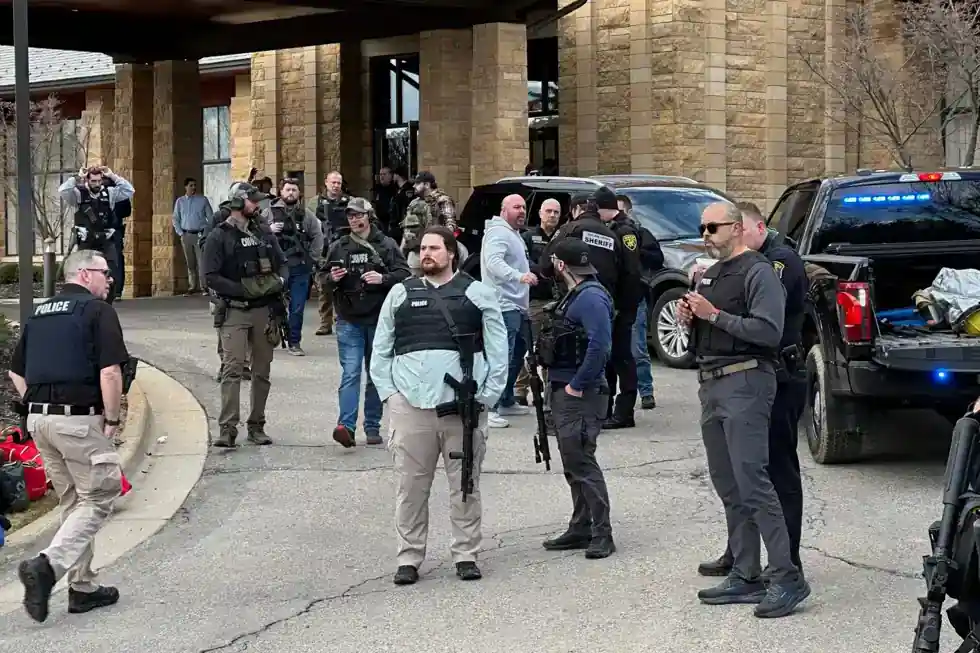
According to reporting by The Associated Press, an attacker armed with a rifle rammed a vehicle into Temple Israel on Thursday before being fatally shot by security personnel responding to the breach.
Federal authorities say the incident is now being investigated as a targeted act of violence against the Jewish community, raising new questions about security vulnerabilities at religious institutions across the United States.

Threat Environment Intensifies Around Jewish Institutions
The attack unfolded at one of the largest Reform synagogues in the country, located in West Bloomfield Township, a suburb outside Detroit that is home to a significant Jewish population.
Jennifer Runyan said federal investigators believe the assault was directed specifically at the Jewish community.
“This was a targeted act of violence,” Runyan told reporters, adding that the Federal Bureau of Investigation is leading the ongoing investigation. Authorities have not yet determined what motivated the suspect.
Local officials said the attacker drove the vehicle into the synagogue building before security personnel opened fire to stop the threat.
Security Response Prevents Mass Casualties
Officials say quick action by the synagogue’s security team likely prevented a far more serious outcome.
■ Related News


According to Mike Bouchard, the vehicle crashed through a hallway inside the synagogue complex and caught fire shortly afterward.
The building contained approximately 140 children enrolled in the synagogue’s early childhood center at the time of the attack, along with more than 30 staff members.
Despite the scale of the incident, none of the children or staff were physically injured.
A synagogue security officer was struck by the vehicle and briefly knocked unconscious, though authorities said the injuries were not life-threatening.
More than 30 responding law-enforcement officers were treated for smoke inhalation following the fire triggered by the crash.
Preparedness Measures Tested in Real Time
Inside the synagogue, staff moved quickly to implement emergency procedures.
Cassi Cohen said she heard a loud crash near the hallway where the vehicle entered the building.
Recognizing the potential threat, she and several staff members immediately secured themselves inside an office.
Temple Israel officials said routine active-shooter training helped staff respond quickly and initiate lockdown procedures designed to protect children and employees during emergencies.
Rabbi Arianna Gordon later praised teachers, security staff and emergency responders for ensuring that children were safely evacuated and reunited with their families.
Regional Security Concerns Grow
The incident comes at a time when Jewish institutions worldwide have increased security following the outbreak of the Israel–Iran war.
That conflict began after U.S. and Israeli forces launched missile strikes on Iranian targets on Feb. 28, triggering heightened tensions across the Middle East and raising concerns among Western security agencies about potential retaliatory attacks.
U.S. law-enforcement agencies have recently warned about possible threats to Jewish and government targets, including alerts about suspected Iranian-linked plots and extremist activity inspired by militant groups.
Community on Edge After Near Miss
Parents rushed to the synagogue shortly after authorities declared the building safe.
Some families reunited at a nearby Jewish community center while emergency crews continued clearing smoke from the synagogue complex.
Allison Jacobs said she first received a message from her daughter’s teacher confirming that the children were safe before she even knew what had happened.
“You never think this is actually going to happen to you,” she told the AP.
Community leaders acknowledged that the attack has intensified existing fears.
Steven Ingber said the organization has spent years preparing institutions for potential attacks — a reality that many hoped would never materialize.
Memories of Past Attacks Resurface
The attack also revived painful memories of previous violence targeting religious institutions in the United States.
Gretchen Whitmer said the incident was deeply troubling and emphasized that Jewish residents should be able to worship safely.
It follows another deadly attack at a Michigan house of worship last year when a gunman killed four people at a church north of Detroit before setting the building on fire.
Nationally, Jewish leaders also referenced the legacy of the Pittsburgh synagogue shooting, the deadliest antisemitic attack in U.S. history.
Jeffrey Myers, who survived that massacre, said the Michigan incident underscores the ongoing consequences of extremist violence.
Security Vigilance Likely to Intensify
Temple Israel, which has roughly 12,000 members, remains one of the largest Reform Jewish congregations in North America.
Following the attack, Jewish organizations across the Detroit region briefly placed institutions under precautionary lockdown while authorities assessed potential risks.
Investigators continue to analyze the suspect’s background and possible motives as part of the federal probe.
For Jewish communities across the United States, the attack serves as a reminder that the security landscape around houses of worship remains volatile — and that vigilance remains a permanent requirement.