DORAL, Fla. (Journos News) – A proposal by Donald Trump for Latin American governments to deploy their militaries directly against drug cartels has introduced a new strategic debate across the Western Hemisphere, as Washington pushes for a coordinated security response to transnational organized crime.
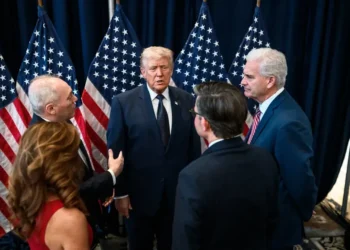
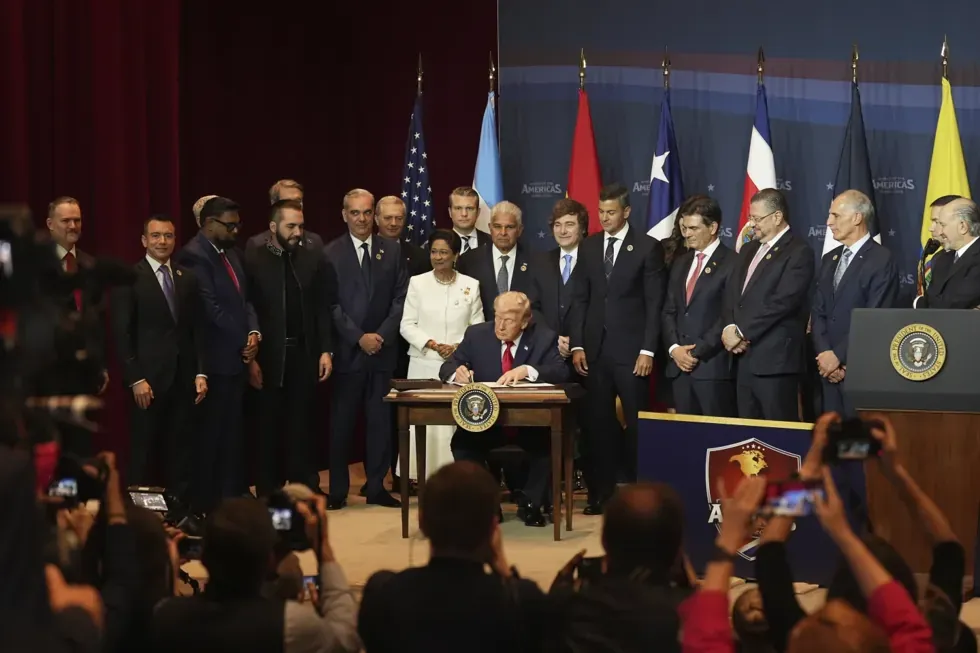
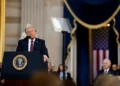
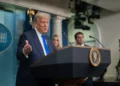
Speaking at a gathering of regional leaders at his resort near Miami, the U.S. president framed cartel violence as a hemispheric security threat requiring a military-led response rather than traditional law enforcement strategies. According to reporting by The Associated Press, Trump urged governments across Latin America to consider deploying armed forces to dismantle cartel networks operating across borders.
The proposal comes as the United States faces simultaneous international crises, including the ongoing conflict involving Iran and Israel, underscoring the administration’s attempt to maintain a strategic focus on the Western Hemisphere while navigating global security tensions.

Military Strategy Moves to the Forefront of Anti-Cartel Policy
Trump argued that conventional policing and judicial strategies have failed to contain the growing power of organized crime networks that dominate drug trafficking routes throughout the Americas.
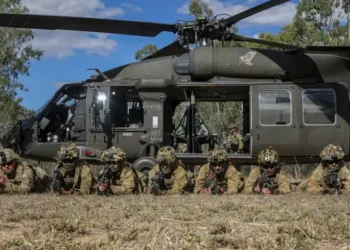
“The only way to defeat these enemies is by unleashing the power of our militaries,” the president told leaders gathered at Trump National Doral Miami, suggesting that a coalition approach similar to the multinational campaign against the Islamic State could serve as a model.
Security analysts say such a shift could significantly reshape counter-narcotics strategy in the region. Many Latin American countries have historically relied on police and specialized anti-drug units, while military involvement has often been controversial due to concerns about human rights and civilian oversight.
The proposal effectively reframes cartel violence as a regional security challenge rather than solely a criminal justice issue, potentially expanding the scope of military cooperation between Washington and allied governments.
Regional Alignment Reveals Strategic Fault Lines
The meeting brought together leaders from a group of countries broadly aligned with Washington’s security priorities, including Luis Abinader and Daniel Noboa.
■ Related News


However, several major regional powers were notably absent, including Brazil, Mexico, and Colombia, long considered a cornerstone of U.S. counter-narcotics cooperation.
Their absence highlights persistent political divisions within the hemisphere over how to address organized crime and the extent of U.S. influence in regional security strategies.
During the summit, Trump criticized Mexico as a center of cartel activity, arguing that organized crime groups wield significant influence across the country’s security landscape.
Joint Operations Signal Early Steps Toward Expanded Security Cooperation
Evidence of closer military coordination has already emerged in parts of South America. Authorities in Ecuador reported a joint security operation with U.S. forces targeting a camp used by the Colombian armed group Comandos de la Frontera in the Amazon region.
In a video statement shared online, Noboa said the site functioned as a logistical base for fighters linked to narcotics trafficking networks.
“We will find them wherever they hide,” the Ecuadorian president said, describing the operation as the start of deeper cooperation with the United States in combating organized crime.
The operation illustrates how Washington’s push for greater military engagement may already be shaping security operations on the ground.
Security Agenda Intersects With Broader Geopolitical Rivalry
Although the summit focused heavily on cartel violence, the initiative also intersects with Washington’s wider geopolitical competition with China for influence in the Americas.
Trump’s national security strategy promotes what his administration calls the “Trump Corollary” to the Monroe Doctrine, aimed at limiting external powers’ influence in the hemisphere.
Earlier this year, Washington pressured Panama to reconsider its participation in Beijing’s Belt and Road Initiative, highlighting how economic and security competition increasingly overlap in regional policy.
China has expanded its presence across Latin America through infrastructure financing, trade agreements, and investment in energy and resource industries—an approach many regional governments see as vital to economic development.
Diplomatic Uncertainty Persists Across the Hemisphere
Trump also suggested that U.S. policy toward Cuba could shift once the current Middle East conflict subsides, hinting that negotiations or policy changes may be under consideration.
Cuban officials have repeatedly said they remain open to dialogue with Washington, provided discussions respect the island’s sovereignty.
Yet analysts say the administration’s emphasis on militarized security strategies, combined with reductions in foreign aid to the region, could complicate diplomatic relations with some governments that prefer economic engagement over security-led initiatives.
Kevin Gallagher, director of the Global Development Policy Center at Boston University, noted that countries across the region are increasingly balancing relations between Washington and Beijing.
“The U.S. is offering tariffs, deportations and militarization whereas China is offering trade and investment,” Gallagher said.
A Strategic Pivot With Uncertain Outcomes
The call for coordinated military action against drug cartels signals a potentially significant shift in the security architecture of the Western Hemisphere.
If adopted broadly, the strategy could expand defense cooperation between the United States and allied governments while reshaping how the region confronts organized crime.
But with major powers in the hemisphere absent from the initiative and geopolitical competition intensifying, the proposal may also deepen strategic divisions over how Latin America addresses both security threats and global economic partnerships.