JERUSALEM (Journos News) – The expanding Iran war is rapidly reshaping the security landscape across the Middle East, with missile strikes, drone attacks and military retaliation spreading far beyond the initial battlefield.
What began with a joint U.S.–Israel military strike on Iranian targets has evolved into a region-wide crisis affecting commercial aviation, global shipping routes and diplomatic operations. Governments across the region and beyond have launched emergency evacuations, while airspace closures and disrupted maritime corridors signal a conflict whose consequences now extend well beyond the immediate combatants.
According to reporting by The Associated Press, nearly every major country in the region has recorded damage, casualties or military incidents linked to the widening confrontation.

The scale of disruption suggests a broader regional destabilization risk, with economic infrastructure, foreign embassies and strategic shipping routes increasingly exposed to retaliatory strikes.
Regional Frontlines Multiply as Iran Absorbs Heavy Blows
Inside Iran, the conflict has produced the heaviest casualties so far. Iranian authorities say more than 1,200 people have been killed since the war began, though officials have not clarified how many were civilians.
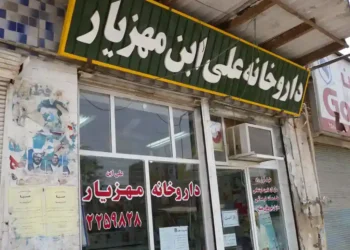
State media reported that a strike on a school in the southern city of Minab killed more than 160 people. Officials in United States said they could not immediately confirm details of the incident but reiterated that American forces do not deliberately target schools.
Meanwhile, Iranian state television and the national Red Crescent reported that U.S. and Israeli strikes have hit hospitals, schools, police facilities and government compounds across more than 170 cities.
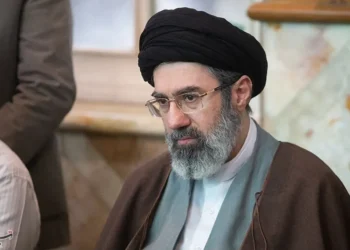
The strikes also appear to have removed key leadership figures, including Supreme Leader Ali Khamenei and senior military commanders, according to Iranian sources. Their deaths, if confirmed independently, could mark a profound rupture within Iran’s political hierarchy.



Missile Exchanges Bring War Directly to Israel
In Israel, authorities say Iranian missile strikes have killed at least eleven civilians and damaged residential areas in multiple cities.
Among the victims were three teenage siblings and a Filipino caregiver killed while escorting an elderly woman to a shelter. Other strikes struck residential buildings in Tel Aviv and public infrastructure in Jerusalem.
Israeli police also reported that an Iranian warhead landed close to the Old City of Jerusalem, an area containing several of the world’s most sensitive religious sites.
While Israel has not disclosed damage to military facilities, the government says its operations continue to focus on Iranian missile infrastructure and nuclear-related targets.
Lebanon Conflict Zone Expands as Ground Forces Move
The war has also intensified along Israel’s northern frontier with Lebanon, where cross-border combat has drawn in the Iran-aligned militant group Hezbollah.
Lebanese health authorities report more than 100 deaths and hundreds of injuries since the fighting intensified. Israeli airstrikes have targeted areas including Baalbek and suburbs south of Beirut.
Israel says its strikes focus on Hezbollah command facilities and weapons storage sites. In response, Hezbollah has launched drones toward Israeli territory.
The clashes have triggered large-scale displacement, with Lebanese officials estimating that more than 80,000 residents have fled southern regions amid warnings of further military operations.
Gulf States and U.S. Bases Draw Into the Conflict
Across the Gulf, several countries hosting U.S. military facilities have reported direct or near-miss attacks.
In Kuwait, an operations center used by American troops was struck, killing six U.S. soldiers, according to officials familiar with the incident. The attack occurred near Port Shuaiba, south of Kuwait City.
The U.S. Embassy compound in Kuwait was also hit, forcing a full shutdown of operations. Marco Rubio, the U.S. secretary of state, confirmed casualties among Kuwaiti troops during retaliatory strikes attributed to Iran.
Nearby United Arab Emirates reported multiple missile and drone interceptions, though several projectiles reached Emirati territory. Authorities say fragments from intercepted weapons killed three foreign workers and injured dozens more.
Dubai — long seen as one of the region’s safest commercial hubs — reported damage to airport facilities and nearby infrastructure.
Energy and Shipping Corridors Face Growing Threats
Strategic shipping routes have also become a focal point of the crisis.
Several commercial vessels have been targeted near the Strait of Hormuz, a chokepoint through which a significant share of global oil exports passes.
Off the coast of Oman, a drone-laden vessel struck an oil tanker, killing an Indian sailor and injuring several crew members. Additional maritime incidents have been reported near ports in Salalah and Duqm.
In Iraq, officials halted production at a key oil field due to disruptions in tanker traffic through the Strait of Hormuz, a move that has contributed to rising global crude prices.
Meanwhile, Egypt faces economic pressure after shipping firms rerouted vessels away from the Suez Canal, one of the country’s most important sources of foreign currency.
Airspace Closures and Evacuations Spread Across Region
Airspace closures have compounded the disruption. Commercial flights have been suspended across large portions of the Middle East as governments attempt to reduce risks to civilian aviation.
Countries including Bahrain, Qatar, Syria, and Iran have shut down their airspace entirely.
Foreign governments have begun evacuating citizens through remaining open routes. Russia, Germany, India and several Western states have launched repatriation flights for nationals stranded in the region.
Even countries not directly involved in the fighting are experiencing spillover effects. In Turkey, NATO air defenses intercepted a ballistic missile traveling toward its airspace. Missile debris later landed in Hatay province near the Syrian border.
Further afield, a U.S. submarine sank an Iranian warship in waters near Sri Lanka, highlighting how the confrontation has begun stretching beyond the Middle East itself.
Regional Deterrence Framework Faces Uncertain Future
The expanding conflict is now testing long-standing deterrence arrangements across the Middle East.
From Gulf energy infrastructure to Mediterranean military bases, countries that once positioned themselves on the periphery of regional tensions are now facing direct exposure to retaliatory strikes.
For governments across the region, the central question is no longer whether the Iran war will reshape the Middle East’s security order — but how far the confrontation may spread before diplomatic channels regain influence.