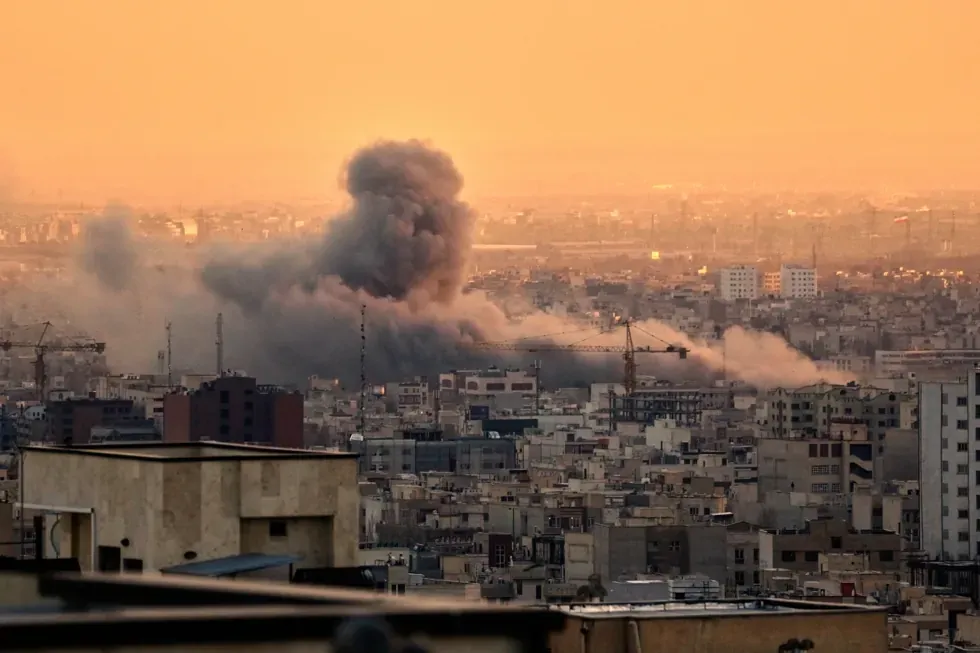
LONDON (Journos News) — Iranian drone strikes on Middle East facilities operated by Amazon Web Services have brought physical warfare into the heart of the global cloud economy, exposing how regional conflict can directly disrupt the digital infrastructure underpinning governments and corporations.
According to a statement released by Amazon Web Services late Monday, two data centers in the United Arab Emirates were “directly struck,” while a third facility in Bahrain sustained damage after a drone landed nearby. The company reported structural impact, power disruption and water damage resulting from fire suppression systems.
As first reported by Associated Press, the incidents appear to have caused localized outages rather than widespread global disruption. But the strategic implications extend beyond immediate service interruptions.

The strikes mark a rare instance in which physical military activity directly intersected with hyperscale cloud infrastructure — a domain traditionally insulated from kinetic conflict.
Command Fractures Emerge in Regional Cloud Stability
AWS said recovery efforts were progressing by Tuesday, yet the attacks revealed the limits of redundancy when multiple facilities within a single geographic cluster are affected.
The company organizes its global network into 39 regions, including three in the Middle East — covering the UAE, Bahrain and Israel. Each region is divided into availability zones designed to function independently while remaining interconnected. That architecture is meant to prevent a single facility failure from cascading across systems.
However, as Mike Chapple of the University of Notre Dame’s Mendoza College of Business noted, the simultaneous loss of more than one data center within the same zone could strain remaining capacity. “There could reach a point where there simply isn’t enough remaining capacity to handle all the work,” he said.
The advisory issued to customers — urging migration to other regions and traffic diversion away from affected Gulf facilities — signals that even robust failover systems are not immune to concentrated physical disruption.




Strategic Depth Shrinks for Hyperscale Operators
Unlike past AWS disruptions linked to software errors that triggered global outages, the current incident involved direct structural damage. That distinction alters the risk calculus for operators and clients alike.
Cloud providers have long marketed redundancy, ultra-low latency connectivity and physical isolation between facilities within a region. Yet those safeguards are calibrated primarily for technical faults, natural disasters or localized infrastructure failures — not coordinated drone strikes.
AWS emphasizes redundant water, power and telecom connections designed to maintain operations during emergencies. Physical security systems are robust against intrusion, including fencing, surveillance and guard patrols. They are not engineered to repel missile or drone attacks.
The geography of hyperscale infrastructure compounds exposure. These facilities are large, energy-intensive and difficult to conceal, making them visible components of national infrastructure.
Regional Deterrence Tested by Digital Targeting
The Middle East has positioned itself as a growing hub for cloud computing, with Gulf states investing heavily to attract multinational technology firms and diversify beyond hydrocarbons.
By striking facilities tied to one of the world’s dominant cloud providers, Iran’s actions — if confirmed as deliberate targeting — would signal an expanded understanding of strategic assets in modern conflict. Data centers increasingly support public administration systems, financial transactions, healthcare platforms and logistics networks.
The affected AWS facilities serve government agencies, universities and private companies across the region. Even limited disruptions underscore how digital infrastructure has become embedded in state and commercial operations.
While the outages were contained, the precedent introduces a new category of infrastructure risk: the weaponization of cloud dependency within contested regions.
Economic Leverage Under Strain
For multinational corporations operating in politically volatile environments, the episode raises immediate questions about geographic concentration of computing resources.
Chapple characterized the strikes as a reminder that cloud computing “isn’t magical.” Behind distributed dashboards and seamless application interfaces sit physical facilities vulnerable to “all sorts of disaster scenarios.”
Industry analysts say organizations operating in higher-risk theaters may accelerate adoption of multi-region or multi-cloud strategies, spreading workloads beyond a single provider or geography. Such shifts carry cost implications and operational complexity, potentially reshaping how digital resilience is priced and structured.
The advisory from AWS encouraging migration out of affected Gulf regions reflects a broader industry recognition: resilience now requires geopolitical contingency planning as much as technical redundancy.
Diplomacy Faces New Risk in Infrastructure Targeting
The incident also carries diplomatic overtones. The UAE and Bahrain are strategic U.S. partners and hosts to significant Western business presence. Damage to American corporate infrastructure on their soil introduces new friction points in an already tense regional environment.
While AWS indicated recovery was underway and global systems remained stable, the episode reframes cloud infrastructure as a potential pressure point in geopolitical confrontation.
If physical targeting of data centers becomes normalized in conflict zones, digital services may no longer be perceived as neutral commercial platforms but as strategic extensions of national influence.
For the global cloud industry, the immediate disruption may be contained. The longer-term consequence is more complex: the recognition that data sovereignty, regional politics and military risk are now inseparable from the architecture of the internet itself.