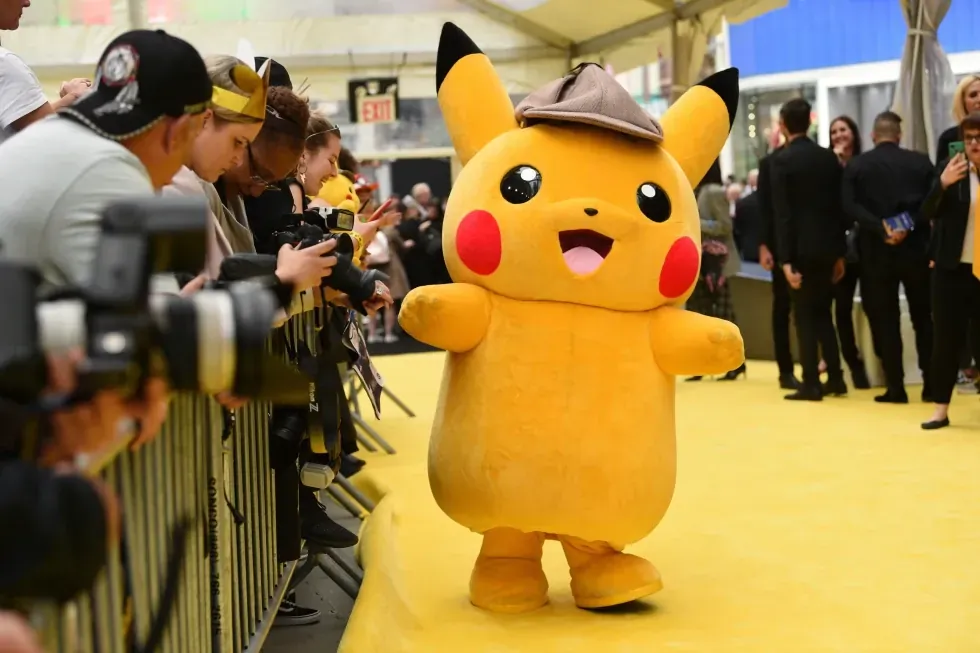
LOS ANGELES (JN) – Three decades after its debut, Pokémon remains one of the most commercially successful and culturally durable entertainment franchises in the world. What began as a pair of Game Boy titles in Japan has evolved into a global ecosystem of video games, television, films, mobile apps and trading cards — sustained by a fan base that now spans generations.
The milestone comes as renewed enthusiasm for collectibles and live events underscores Pokémon’s staying power. From Los Angeles to Toronto, players continue to gather weekly to trade cards, compete in tournaments and explore augmented-reality streetscapes in search of digital creatures. For many, the appeal blends nostalgia with community — and, increasingly, financial stakes.
When Pokémon Red and Green launched in Japan in 1996 on Nintendo’s handheld console, few anticipated the scale of what would follow. The franchise expanded rapidly with animated series, feature films and a trading card game that became a playground staple in the late 1990s. Today, Pokémon is managed by The Pokémon Company, which oversees global licensing, competitive play and brand expansion.

Built on characters and world-building
At its core, Pokémon’s endurance rests on character design and world-building, according to academics who study interactive media. Heather Cole, a teaching assistant professor of game design and interactive media at West Virginia University, said the franchise offers a “masterclass” in crafting creatures that are both distinctive and emotionally resonant.
“The longevity of it has to do with the characters and world-building it does with the characters,” she said, noting that each generation of games introduces new species while maintaining familiar icons such as Pikachu.
That design philosophy can be traced to creator Satoshi Tajiri, who has spoken about his childhood fascination with collecting insects in suburban Tokyo. The concept of capturing, cataloguing and trading creatures became the foundation of the gameplay — a formula that has proved adaptable across platforms.
In 2016, the mobile game Pokémon Go brought the franchise into augmented reality, encouraging players to explore real-world locations to capture digital Pokémon. The title sparked a global surge of outdoor gatherings and remains active years later, with dedicated players logging in daily.
Trading cards: passion and price tags
Beyond video games, the Pokémon Trading Card Game has become a lucrative secondary market. Standard retail packs typically sell for around $5 for 10 randomized cards. However, rare cards — particularly those graded in pristine condition — can command far higher prices.
■ Related News




Grading firms such as Professional Sports Authenticator and Beckett Grading Services evaluate cards on a scale from 1 to 10, with “10” signifying mint condition. High grades can significantly increase resale value.
In one widely reported case, social media personality Logan Paul purchased a PSA Grade 10 Pikachu Illustrator card for millions of dollars, later wearing it on a chain in promotional appearances. The sale underscored how Pokémon cards have evolved from childhood collectibles into alternative investment assets.
Some retailers argue that cards tend to appreciate over time, attracting buyers who view sealed packs or graded singles as long-term holdings. Others caution that the market can be volatile and influenced by hype cycles, grading trends and scarcity.
The financial upside has also drawn criminal attention. In Southern California, several trading card stores have reported break-ins in recent months, resulting in substantial losses. One Anaheim retailer said thieves stole more than $80,000 worth of Pokémon cards in a single incident, marking the second time the shop had been targeted. Similar cases have been reported in other major cities.
Store owners say heightened resale values have changed the hobby’s atmosphere. Increased security measures and limited supply have made it harder for casual collectors to find sought-after products at retail prices. Some compare the uncertainty of opening randomized packs to gambling, noting that resale values do not always match expectations.
A new generation joins in
Despite security concerns and price surges, interest among younger fans appears strong. In Toronto, high school students decorate phone cases with holographic cards and trade during breaks, echoing trends from the late 1990s.
For some collectors, the pursuit is highly specific. One teenager described attempting to gather every variation of his favorite Pokémon, memorizing move sets and lore details across different game regions. The depth of the franchise’s fictional universe — now encompassing hundreds of species — enables such targeted fandom.
Community events remain central to the brand’s appeal. In Pasadena, California, thousands recently gathered near the Rose Bowl stadium to participate in a Pokémon Go event, walking through designated areas to capture rare digital characters and complete in-game challenges. Similar gatherings take place worldwide, often blending tourism with gameplay.
Longtime players say nostalgia plays as large a role as profit. Many who grew up with early Game Boy titles now share the franchise with younger siblings or children, reinforcing cross-generational continuity. Even as resale markets fluctuate, the emotional attachment to particular characters often outweighs financial considerations.
A franchise still evolving
Thirty years after its launch, Pokémon’s commercial infrastructure spans console releases, streaming distribution, competitive tournaments and licensed merchandise. Analysts frequently cite it among the highest-grossing media franchises globally, a status achieved through consistent reinvention rather than radical change.
The formula remains recognizable: explore, capture, trade and connect. Yet each new generation of games or cards introduces fresh mechanics and designs, ensuring that veteran players and newcomers alike have reasons to return.
For devoted fans, the milestone anniversary is less about retrospection and more about continuation. The slogan “catch ’em all” endures not only as marketing shorthand but as a reflection of the franchise’s original ethos — a collecting adventure that, for many, shows no sign of ending.
Source: AP News – 30 years after Pokémon’s release, fans are still trying to catch ‘em all