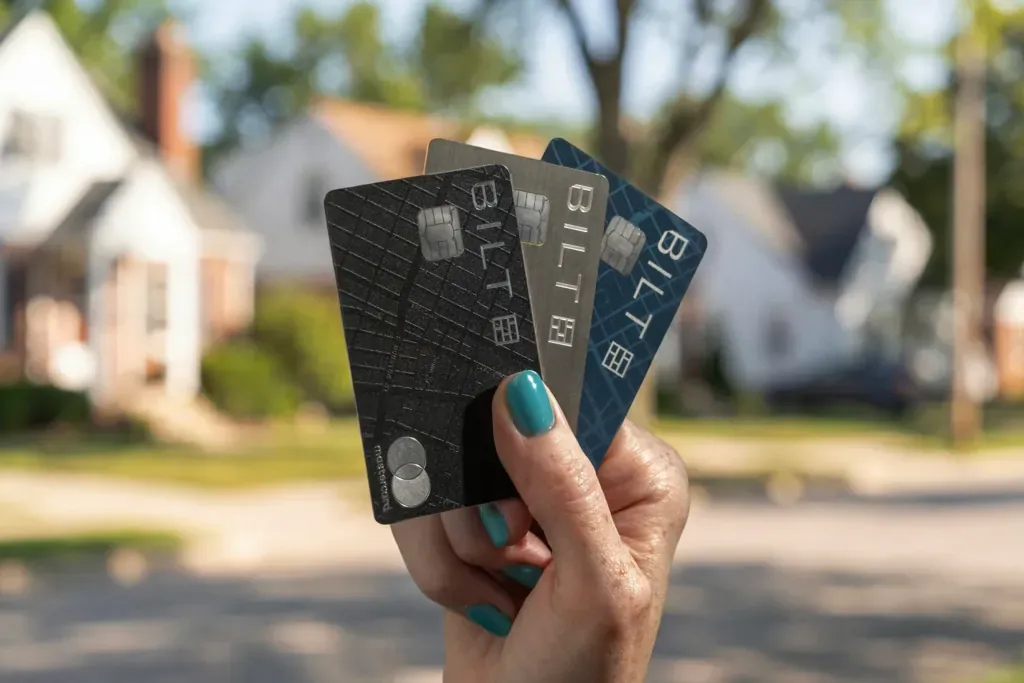
Bilt, a fast-growing U.S. financial technology company best known for allowing renters to earn rewards on housing payments, has announced a major overhaul of its credit card lineup, including a one-year introductory interest rate of 10% for all approved cardholders. The move comes as political attention intensifies around the cost of consumer credit, with President Donald Trump and several lawmakers calling for temporary caps on credit card interest rates.
The New York-based company said the 10% rate will apply for the first 12 months on new eligible purchases across its three newly launched cards, after which standard variable rates will apply, in line with the broader rewards card market.
Political pressure and market timing
Bilt’s announcement follows renewed debate in Washington over credit card affordability. Trump said last week he supports a one-year cap on credit card interest rates at 10%, reviving a populist policy idea that has circulated on both sides of the political aisle in recent years.

Left-leaning lawmakers, including New York Representative Alexandria Ocasio-Cortez and Vermont Senator Bernie Sanders, have long argued that high interest rates trap consumers in debt. The average U.S. credit card interest rate currently hovers around 21%, according to industry data.
In an interview, Bilt founder and chief executive Ankur Jain said the company decided to voluntarily limit interest rates for a year in response to what he described as a “bipartisan call for a solution” to rising household costs. He acknowledged that the move also offers a competitive opportunity.
“If a cap is going to happen, we’d rather be at the forefront,” Jain said, adding that the promotion could help attract new customers in a crowded rewards market.
How the rate cap works
The 10% annual percentage rate will be offered as an introductory APR on new purchases for the first year for customers approved for one of Bilt’s three new cards. After the promotional period ends, interest rates on purchases, balance transfers, and cash advances may rise to levels above 20%, depending on creditworthiness, similar to other major rewards cards.
Industry analysts note that promotional rates are not unusual. Credit card issuers frequently use zero-percent APR periods or balance transfer offers to attract customers. What sets Bilt apart is the political context and the decision to frame the promotion as a response to affordability concerns rather than purely a marketing tool.
Researchers at Vanderbilt University have estimated that a government-mandated one-year cap at 10% could cost the U.S. credit card industry roughly $100 billion in lost revenue. Large issuers such as JPMorgan Chase, Capital One, and American Express have historically opposed rate caps, arguing they would restrict access to credit, particularly for higher-risk borrowers.
Bilt’s move may give policymakers a real-world example to cite as debates continue, even though the company remains far smaller than the dominant banks.
Expanding beyond rent-focused rewards
Founded with a model centered on earning points for rent payments, Bilt has been broadening its ambitions as it scales. The privately held company was valued at $10.75 billion last year and is backed by venture capital and pension funds.
Bilt says roughly one in four U.S. landlords now accept its payment platform, and it has become the largest single reporter of on-time rent payments to U.S. credit bureaus, a feature that can help renters build credit histories.
The company is now expanding its rewards ecosystem to cover other routine expenses, including mortgage payments, and is positioning itself as a financial intermediary connecting renters, landlords, and local merchants.
Three-tier card lineup
The new credit card program follows a tiered structure commonly used in the industry.
At the top is the Bilt Palladium Card, which carries a $495 annual fee. It includes up to $400 in annual hotel credits and $200 in Bilt Cash, a rewards currency designed for use within Bilt’s partner network.
The mid-tier Bilt Obsidian Card has a $95 annual fee and emphasizes rewards for dining and grocery purchases.
The entry-level Bilt Blue Card has no annual fee and offers cash back and points at lower earning rates than the premium cards.
Bilt will continue to offer the ability to transfer points to airline and hotel partners, a feature that has helped it compete with established travel rewards programs.
Changing partners and issuing structure
The rollout also marks a transition in Bilt’s banking relationships. The company’s previous partnership with Wells Fargo is set to end in February, several years earlier than originally planned. The Wall Street Journal previously reported that Wells Fargo was losing about $10 million a month on the Bilt card program, contributing to the decision to exit the deal.
The new cards will be issued through Column N.A., with credit card operations handled by Cardless, a platform that supports co-branded card programs.
Bilt executives say the changes are part of a broader effort to move beyond its image as a niche “card for renters” and establish the company as a wider consumer finance platform.
This article was rewritten by JournosNews.com based on verified reporting from trusted sources. The content has been independently reviewed, fact-checked, and edited for accuracy, neutrality, tone, and global readability in accordance with Google News and AdSense standards.
All opinions, quotes, or statements from contributors, experts, or sourced organizations do not necessarily reflect the views of JournosNews.com. JournosNews.com maintains full editorial independence from any external funders, sponsors, or organizations.
Stay informed with JournosNews.com — your trusted source for verified global reporting and in-depth analysis. Follow us on Google News, BlueSky, and X for real-time updates.