U.S. President Donald Trump’s renewed threats toward Greenland have unsettled NATO allies and raised fresh questions about how the alliance would respond if one member challenged another’s sovereignty. Washington says it is weighing “options” to protect U.S. interests in the Arctic, while European leaders warn the language risks weakening NATO cohesion at a critical time.
The remarks have drawn attention to Greenland’s strategic importance and to NATO’s core promise of collective defense, a principle designed to deter outside threats rather than manage disputes within the alliance.
A rare test of NATO’s founding principle
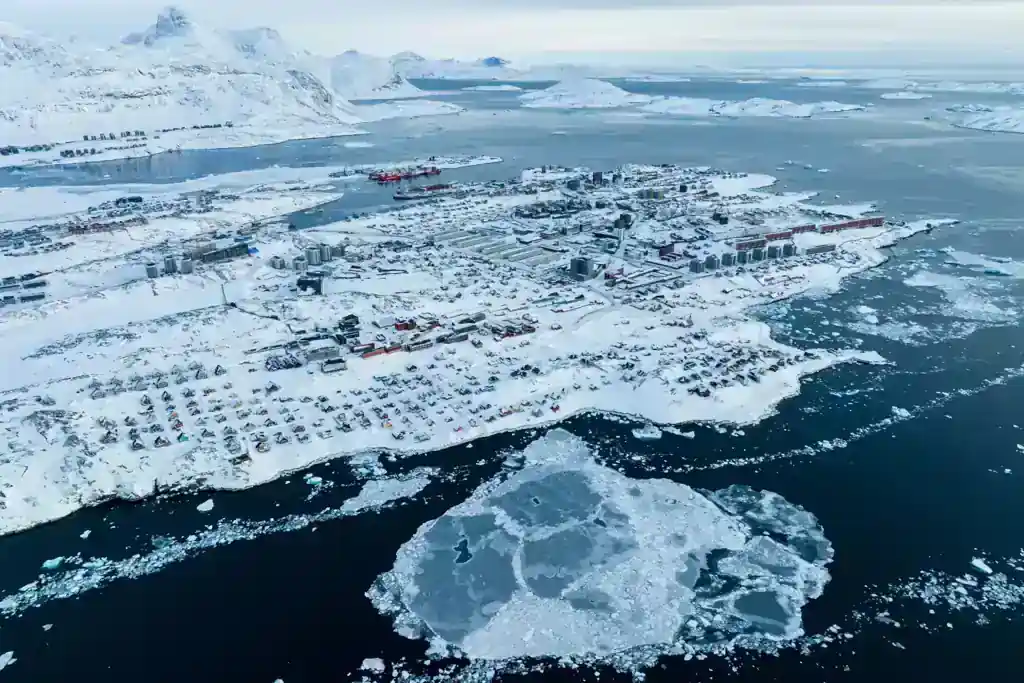
Greenland is a semi-autonomous territory within the Kingdom of Denmark, a NATO member. It sits between North America and Europe and plays a key role in transatlantic security planning. The island has long featured in U.S. and allied defense strategy, especially during the Cold War, and its relevance has grown as Arctic routes gain importance.

This week, the White House said Greenland is a “national security priority” and confirmed that the administration is considering a range of options. It did not rule out the possible use of military force. The statement marked a sharper tone than previous comments from Trump, who has often said U.S. leadership is essential to NATO’s strength.
NATO’s collective defense commitment, known as Article 5, states that an attack on one member is an attack on all. Allies have invoked it only once, after the September 11, 2001 attacks on the United States. The treaty offers no clear guidance for situations in which one NATO country threatens another.
Past disputes inside the alliance have tested unity but stopped short of direct territorial challenges. Greece and Turkey, both NATO members, have clashed for decades over airspace and maritime boundaries. Those confrontations, however, never involved an attempt to seize territory by force.
As a result, Trump Greenland NATO tensions have alarmed diplomats and analysts, who say the alliance now faces a scenario it was never designed to handle.
European leaders back Denmark and Greenland
Several European governments moved quickly to reaffirm their support for Denmark and Greenland. Leaders from Britain, France, Germany, Italy, Poland and Spain said decisions about Greenland’s future belong solely to Denmark and Greenland.
Canada also voiced support. The country sits across the Davis Strait from Greenland and has relied on the island for North American defense since World War II.
Danish Prime Minister Mette Frederiksen has urged allies to take the U.S. statements seriously. She warned that any attempt by one NATO member to take territory from another would strike at the alliance’s foundations. Danish officials say Greenland’s status is settled under international law and recognized by the United States.
NATO officials have responded cautiously. The alliance has avoided discussing hypothetical conflicts involving member states. Instead, it has stressed the Arctic’s importance for shared security and the need to preserve stability in the region.
Strategic stakes in the Arctic
Greenland hosts infrastructure vital to early-warning systems and transatlantic defense. As climate change reduces ice cover, the Arctic has drawn growing interest from major powers, including Russia and China, due to new shipping routes and resource access.
Trump has argued that NATO relies heavily on U.S. military power. In a recent social media post, he said Russia and China have “zero fear” of NATO without American leadership. He added that the United States would continue to support the alliance.
Security experts say the mixed signals have unsettled allies. Ian Lesser of the German Marshall Fund said the White House statement raised the stakes, even if the likelihood of action remains low. He noted that the tone makes it harder for allies to dismiss the issue as political rhetoric.
Pressure on unity amid the Ukraine war
The dispute comes as NATO works to maintain unity over Ukraine. The United States and its allies are weighing future military support and long-term security arrangements for Kyiv. Analysts warn that internal tensions could distract from those efforts.
Last year, NATO leaders agreed to increase defense spending after pressure from Washington. Most members committed to moving closer to U.S. levels over the next decade. NATO Secretary-General Mark Rutte later praised Trump for pushing allies to invest more in their militaries.
In public remarks, Rutte has also warned that Russia could threaten other parts of Europe if it succeeds in Ukraine. He has urged European governments to prepare their societies for higher defense costs and long-term security risks.
Maria Martisiute, a defense analyst at the European Policy Centre, said the Greenland rhetoric runs counter to those goals. When a leading member undermines another, she said, it weakens NATO’s credibility and benefits rival powers.
An alliance built to deter outsiders
NATO was founded in 1949 to protect its members from external aggression, first from the Soviet Union and later from other state and non-state threats. Its strength has depended on U.S. leadership, shared military planning and political trust among allies.
Diplomats say the current episode highlights how much that trust still matters. Whether tensions ease or deepen, they warn that any lasting damage could shape how NATO’s commitments are viewed, both by its members and by adversaries beyond its borders.
This article was rewritten by JournosNews.com based on verified reporting from trusted sources. The content has been independently reviewed, fact-checked, and edited for accuracy, neutrality, tone, and global readability in accordance with Google News and AdSense standards.
All opinions, quotes, or statements from contributors, experts, or sourced organizations do not necessarily reflect the views of JournosNews.com. JournosNews.com maintains full editorial independence from any external funders, sponsors, or organizations.
Stay informed with JournosNews.com — your trusted source for verified global reporting and in-depth analysis. Follow us on Google News, BlueSky, and X for real-time updates.