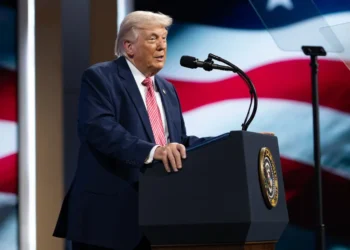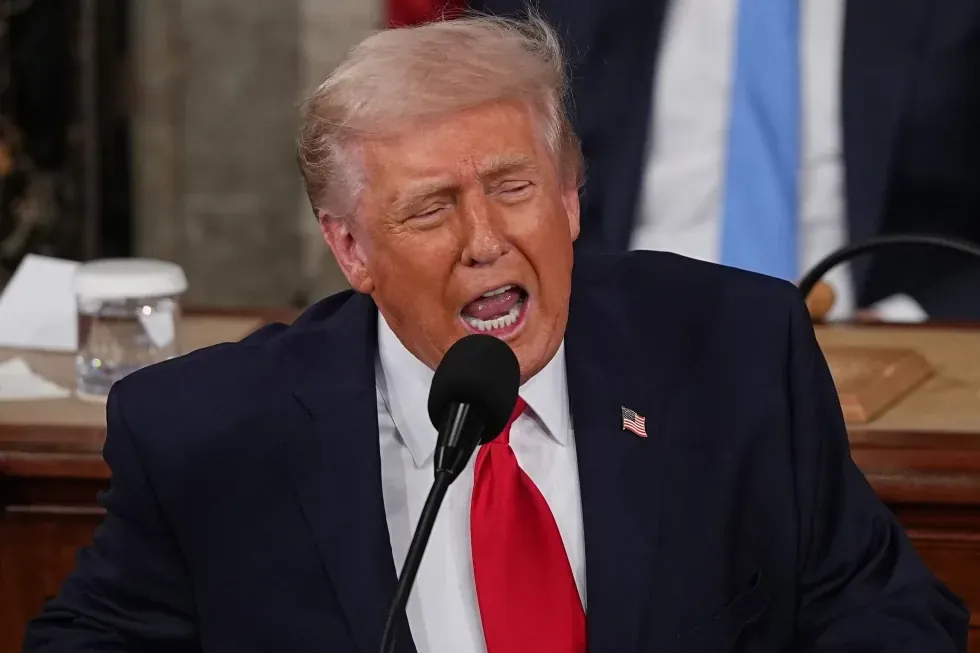
The state of the United States under President Donald Trump’s second term reflects shifts in economic management, immigration enforcement, institutional authority, and foreign policy posture. As the administration advances its priorities, the balance between executive power and federal systems has become central to understanding the country’s trajectory. The issue matters because U.S. policy decisions shape global markets, alliances, and democratic governance standards.
When President Donald Trump returned to office for a second term, the political landscape was already defined by deep partisan division, global economic uncertainty, and institutional strain following years of political confrontation. His administration entered office pledging continuity in border enforcement, deregulation, and an “America First” foreign policy doctrine.
The second term has unfolded within established constitutional structures but under heightened scrutiny from Congress, the courts, and international observers. The state of the United States in 2026 is therefore best understood not through a single speech or policy initiative, but through the interaction of economic systems, federal authority, legislative dynamics, and global engagement.

This article examines how those systems are functioning, where pressures persist, and why the debate over institutional balance continues to shape national and international perceptions.
Economic Policy and Structural Pressures
Economic management remains central to assessing the state of the United States under President Donald Trump’s second term. The administration has continued to emphasize tax policy, energy production, and regulatory rollback as tools for stimulating growth.
Macroeconomic indicators show a mixed picture, as reported by agencies such as the U.S. Bureau of Economic Analysis and widely covered by Reuters and Bloomberg. Inflationary pressures that intensified globally in the early 2020s have moderated compared to peak levels, though price stability remains uneven across sectors. Employment levels remain historically strong by long-term standards, yet wage growth continues to be evaluated against cost-of-living increases.
Energy production has been positioned as a strategic priority. Expanded domestic oil and gas output aligns with the administration’s stated objective of reducing dependence on foreign supply chains. Supporters argue this bolsters energy security; critics point to climate commitments and long-term environmental targets under international agreements.
Fiscal policy also remains a structural question. Federal debt levels, which rose significantly during the COVID-19 pandemic and subsequent stimulus periods, continue to influence debates over spending and taxation. While the administration supports selective reductions in federal programs, mandatory spending on entitlements remains structurally difficult to alter without congressional agreement.


Immigration and Border Enforcement Systems
Immigration policy is one of the defining components of Trump’s second term. The administration has maintained a focus on border enforcement, asylum restrictions, and expanded authority for federal immigration agencies.
The Department of Homeland Security operates within statutory frameworks established over decades, yet enforcement discretion plays a critical role in outcomes. Changes in asylum eligibility rules and expedited removal procedures have altered the processing system, affecting migrants and local communities along the southern border.
State governments have also become active participants. Legal disputes between federal and state authorities over border control responsibilities have reached federal courts, underscoring tensions within the federalist structure.
The persistence of migration flows reflects global factors beyond U.S. policy alone. Economic instability, climate-related displacement, and political unrest in parts of Latin America and beyond continue to drive movement northward. As a result, enforcement measures address only part of a broader hemispheric dynamic.
Executive Authority and Institutional Balance
A central question shaping the state of the United States is how executive authority interacts with legislative and judicial institutions.
Trump’s second term has seen continued reliance on executive orders to advance policy objectives. While such orders are constitutionally permitted, their scope and frequency often prompt legal challenges. Federal courts, including the Supreme Court, remain arbiters in disputes over regulatory authority and administrative interpretation.
Congressional dynamics further shape policy outcomes. Partisan divisions influence the passage of major legislation, including budget appropriations and national security funding. At times, funding negotiations have approached deadlines that risk partial government shutdowns, highlighting structural tensions in fiscal governance.
Independent agencies also play a role. The Federal Reserve, for example, operates independently of direct presidential control, yet its interest rate decisions significantly affect economic conditions. Tensions between monetary policy and executive economic messaging reflect the broader separation of powers embedded in the U.S. system.
Foreign Policy and Global Positioning
The global dimension of the state of the United States under President Donald Trump’s second term centers on strategic competition and alliance recalibration.
The administration continues to frame foreign policy through national interest and bilateral negotiation. Relations with China remain characterized by strategic rivalry, including trade restrictions and technology export controls. At the same time, economic interdependence complicates efforts at full decoupling.
Support for Ukraine in its conflict with Russia remains a subject of congressional debate, reflecting differing views on the scope of U.S. international commitments. NATO allies monitor U.S. policy signals closely, particularly regarding defense spending expectations and burden-sharing arrangements.
In the Middle East, U.S. engagement balances security partnerships with evolving regional alignments. Energy markets, counterterrorism cooperation, and diplomatic normalization efforts all influence policy decisions.
Multilateral institutions such as the United Nations and the World Bank continue to engage with U.S. representatives, though the administration’s emphasis remains on sovereign decision-making over multilateral frameworks.
Democratic Norms and Political Polarization
Domestic political polarization continues to shape public discourse. Surveys conducted by established research institutions indicate persistent divides in voter trust toward federal institutions, media organizations, and electoral processes.
Election administration, while decentralized and state-managed, remains a focal point of debate. Court rulings and legislative changes in various states influence voting procedures, ballot access, and oversight mechanisms.
Civil society organizations, advocacy groups, and state governments play increasingly prominent roles in contesting or supporting federal initiatives. The constitutional system allows for such contestation, yet the intensity of political rhetoric reflects enduring mistrust between ideological camps.
The resilience of democratic norms is therefore measured not only by election outcomes but by institutional continuity, judicial independence, and peaceful transfers of power. These structural factors remain intact, though subject to ongoing scrutiny.
The Structural Drivers Behind Policy Continuity
Understanding why current policy directions persist requires examining structural incentives.
Electoral mandates provide political legitimacy for campaign priorities. At the same time, entrenched party coalitions shape legislative behavior, often reinforcing executive agendas or opposing them along predictable lines.
Economic globalization, technological change, and demographic shifts also constrain policy flexibility. Trade networks, capital flows, and multinational supply chains limit unilateral action without domestic economic consequences.
Finally, the constitutional system itself distributes power across branches and levels of government. This diffusion both restrains rapid transformation and prolongs political conflict, ensuring that shifts in governance occur incrementally rather than abruptly.
Conclusion
The state of the United States under President Donald Trump’s second term reflects continuity in key priorities alongside enduring structural pressures. Economic management, immigration enforcement, executive authority, and global engagement remain interconnected elements of national governance. While institutions continue to function within constitutional boundaries, debates over their scope and legitimacy persist.
What remains unresolved is how these dynamics will evolve amid shifting global conditions and domestic political cycles. The durability of federal systems, the independence of institutions, and the balance between national sovereignty and international engagement will continue to shape the country’s trajectory in the years ahead.
By : JN – Journos News – The Daily Desk
Sources & Further Reading
AP News – Coverage of Trump’s second-term policies and State of the Union 2026 (apnews.com)
Reuters – Immigration enforcement, economic trends, and policy reporting (reuters.com)
PBS NewsHour – Analysis of border enforcement and federal programs (pbs.org)
Al Jazeera – Domestic policy context and political landscape (aljazeera.com)
Brookings Institution – Economic and policy research on Trump administration (brookings.edu)
Migration Policy Institute – Research on immigration trends and impacts (migrationpolicy.org)
Wikipedia – Overview of Trump’s second presidency and related legislation (wikipedia.org)