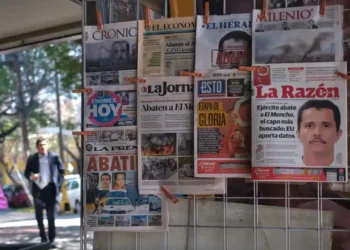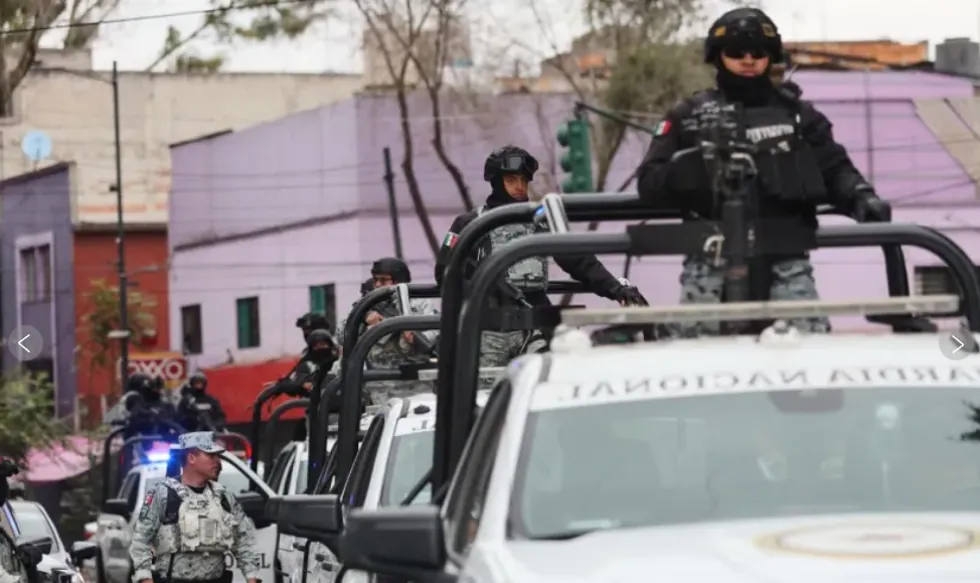
TAPALPA, Mexico (Journos News) – Mexico’s killing of alleged cartel leader Nemesio Oseguera Cervantes has triggered days of violence in western states, prompting concern among residents and business owners just months before the country hosts matches for the 2026 FIFA World Cup. In towns known for tourism, including Tapalpa and Puerto Vallarta, gunfire and military operations have unsettled communities that depend heavily on visitors.
The unrest follows a large-scale operation by Mexican security forces that left more than 70 people dead, according to authorities. The clashes have drawn international attention and raised questions about security preparedness as Guadalajara prepares to welcome global football fans in June.
For many residents, the immediate concern is economic as much as physical safety.

Maria Dolores Aguirre, who runs a small family-owned store in the mountain town of Tapalpa, said the violence has shaken confidence in a region that relies on tourism. “It’s going to affect us. It’s collateral damage,” she said, expressing fears that travelers may reconsider visiting after images of gunfire and military helicopters circulated widely.
Security tensions in Jalisco after El Mencho operation
The operation targeted Nemesio Oseguera Cervantes, widely known as “El Mencho,” the alleged leader of the Jalisco New Generation Cartel (CJNG). Mexican authorities said he died after a firefight with the military near Tapalpa, in Jalisco state.
Defense Secretary Gen. Ricardo Trevilla told reporters that security forces had tracked one of Oseguera’s romantic partners to his location. The suspect and two bodyguards reportedly fled into a wooded area and were wounded in a shootout before being detained. They died while being transported to Mexico City, Trevilla said.
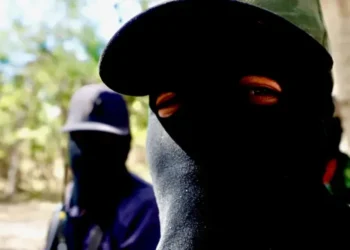
The CJNG is considered one of Mexico’s most powerful and rapidly expanding criminal organizations. U.S. authorities have accused it of trafficking fentanyl, methamphetamine and cocaine into the United States and of orchestrating high-profile attacks against Mexican officials.
The U.S. government confirmed it provided intelligence support for the operation. The U.S. State Department had previously offered a reward of up to $15 million for information leading to Oseguera’s arrest.
■ Related News


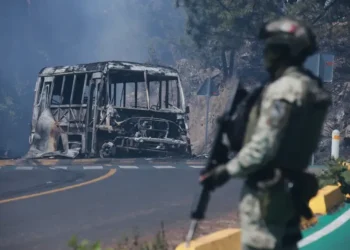
While Mexican officials framed the operation as a significant blow to organized crime, violence flared across multiple states in its aftermath. Residents reported road blockades, vehicle burnings and exchanges of gunfire, a pattern often seen following high-profile cartel arrests or killings.
Pressure from Washington and domestic security strategy
The operation also unfolded against a backdrop of renewed pressure from Washington. U.S. President Donald Trump has called on Mexico to intensify its crackdown on drug trafficking organizations, warning of possible tariffs or unilateral measures if progress is not demonstrated.
Mexico’s government has increased military deployments and high-level operations against major criminal groups in recent months. Officials have not directly linked the timing of the Tapalpa operation to diplomatic pressure, but analysts note that bilateral security cooperation has intensified.
For Mexican authorities, the removal of one of the country’s most wanted figures may signal resolve. Yet past experience suggests that leadership vacuums can trigger internal power struggles or retaliatory violence, at least in the short term.
Tourist destinations on edge
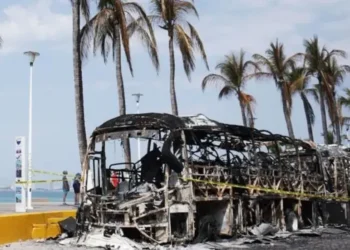
In the Pacific resort city of Puerto Vallarta, explosions and plumes of smoke were reported shortly after the operation. The city, long popular with both domestic and international tourists, experienced flight cancellations and temporary disruptions.
Steve Perkins, a visitor from Oklahoma, said he and his wife were on their hotel terrace when they saw smoke rising in different parts of the city. Their return flight was canceled, delaying their departure by several days.
Perkins said they had traveled annually to Puerto Vallarta for more than a decade and had previously felt secure. This time, he said, the atmosphere was different. “There’s a lot of Americans trapped here,” he said, referring to fellow travelers affected by cancellations.
Local authorities have sought to reassure visitors, emphasizing that security forces are maintaining a presence in key tourist corridors. Still, images of armed confrontations and burned vehicles have circulated widely on social media and international news outlets.
World Cup spotlight
Guadalajara, Jalisco’s capital, is one of the Mexican host cities for the 2026 FIFA World Cup, which will be co-hosted by Mexico, the United States and Canada under FIFA. The tournament is expected to draw hundreds of thousands of international visitors across the three countries.
Major sporting events in Mexico have historically been accompanied by significant security operations. Federal and local authorities are likely to increase visible patrols and coordination in the run-up to the tournament.
For small-business owners like Aguirre in Tapalpa, however, the concern is immediate. Her 15-year-old son’s classes were suspended due to the violence, and uncertainty lingers over who effectively controls areas surrounding the town — the military or remnants of cartel structures.
She worries not only about reprisals but also about longer-term instability. “If they really did kill this leader, it could be that they fight between each other to win control or see who will lead it,” she said.
That uncertainty reflects a broader pattern in Mexico’s long-running conflict with organized crime. High-profile arrests or killings have at times weakened cartels, but they have also been followed by fragmentation and competition among rival factions.
Balancing security and economic stability
Tourism accounts for a significant share of income in coastal Jalisco and surrounding regions. With global attention turning toward the World Cup, maintaining stability is not only a public safety priority but an economic one.
Mexican authorities have not announced additional extraordinary measures beyond existing security deployments. However, federal officials are expected to coordinate closely with state governments as preparations for the tournament accelerate.
For residents in Tapalpa and Puerto Vallarta, the coming weeks will be telling. Whether violence subsides or escalates may shape perceptions far beyond Jalisco — at a moment when Mexico is preparing to host one of the world’s most-watched sporting events.
Source: AP News – Mexican cartel clashes fuel worries in lead up to FIFA World Cup