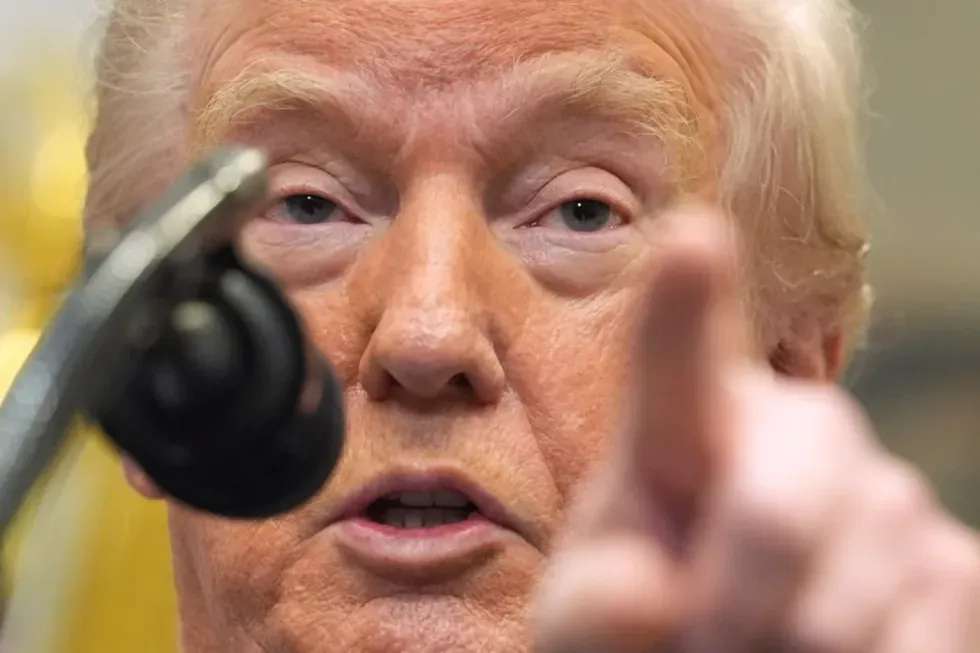
WASHINGTON (Journos News) – As President Donald Trump prepares to address Congress, the moment reflects more than a routine constitutional ritual. It comes amid intensified debate over executive power, legislative oversight, and the durability of America’s checks and balances.
In Washington, the annual State of the Union address traditionally offers a president an opportunity to outline priorities and project authority. This year, it unfolds against a backdrop of institutional strain. With Congress narrowly controlled by Republicans and Democrats unified in opposition, President Trump’s return to office has been marked by assertive executive action, aggressive policy shifts, and recurring legal confrontation.
The speech, delivered in the House chamber, will likely frame the administration’s legislative achievements and executive initiatives as a mandate fulfilled. Yet beyond the chamber’s applause lines lies a more structural question: how much governing authority now rests with the presidency compared with Congress, and what does that mean for the constitutional order?

A presidency operating at full throttle
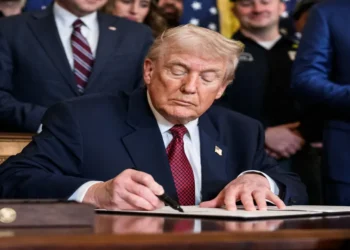
Since returning to office, Trump has relied heavily on executive actions to advance his agenda. While presidents of both parties have increasingly used executive authority in recent decades, the scale and speed of actions taken during this term have drawn particular attention from scholars and courts.
The administration’s signature legislative accomplishment — a sweeping tax package backed by congressional Republicans — included provisions such as new savings accounts for children, tax exemptions on tips, and reductions in federal social spending programs including Medicaid and nutrition assistance. It also directed substantial funding toward immigration enforcement and homeland security.
But much of the policy momentum has come outside the traditional legislative process. From restructuring parts of the federal workforce to altering elements of public health guidance and imposing tariffs, the White House has often acted first and left Congress to respond later — if at all.
This approach has prompted legal scrutiny. In a recent ruling involving the administration’s tariff policy, the Supreme Court signaled limits to executive authority when congressional authorization is unclear. Writing in the majority opinion, Justice Neil Gorsuch emphasized that major policy decisions require clear legislative backing, warning that unchecked authority risks concentrating power in a single branch.
The decision did not halt the administration’s broader agenda, but it underscored that the judiciary is increasingly serving as the primary institutional counterweight when Congress declines to intervene.



Congress: Partner, spectator, or counterweight?
Under the Constitution, Congress retains authority over spending, commerce, war powers, and oversight. In practice, however, its willingness to exercise those tools depends heavily on partisan alignment.
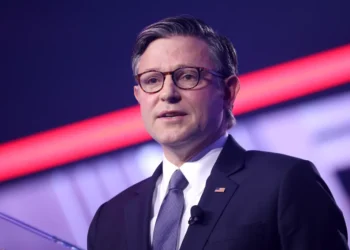
With Republicans holding slim majorities, party leaders have largely supported the president’s direction. Mike Johnson, the House Speaker, has described Trump as a transformational figure and signaled alignment with his policy priorities.
Democrats, led in the House by Hakeem Jeffries, argue that Congress has ceded too much authority. They have attempted to use procedural tools — including funding negotiations and oversight hearings — to challenge aspects of the administration’s immigration and enforcement strategy. Yet without majority control, their leverage is limited.
There have been exceptions. Bipartisan efforts have occasionally surfaced, such as cross-party pushes to release records tied to the late financier Jeffrey Epstein. In other instances, small groups of Republicans have joined Democrats in symbolic votes opposing specific tariff actions or expressing concern over potential military engagements abroad. However, most of these measures lack the votes required to override a presidential veto.
This pattern reflects a broader dynamic in modern American politics: congressional assertiveness often rises or falls with partisan incentives. When the president’s party controls both chambers, oversight can become politically costly.
Immigration, enforcement, and federal restructuring
Immigration enforcement has been central to the administration’s agenda. Expanded deportation operations, increased funding for Homeland Security, and new detention infrastructure have followed campaign promises to intensify border security.
These moves have been accompanied by controversial episodes, including the use of federal agents during enforcement operations that resulted in fatalities during protests. Legal challenges and public demonstrations have followed, reinforcing how immigration policy has become both a governance issue and a flashpoint in the broader debate over executive reach.
At the same time, the administration’s internal restructuring of federal agencies has drawn scrutiny. Reports indicate that hundreds of thousands of federal employees have left government service through firings, buyouts, or reassignments, while hiring has concentrated in security-related departments. Critics describe the changes as a fundamental reshaping of the civil service; supporters argue they reflect efforts to streamline bureaucracy and align agencies with policy goals.
Max Stier, head of the nonpartisan Partnership for Public Service, has characterized the scale of personnel shifts as historically significant. Analysts note that changes to the federal workforce can have lasting consequences for institutional capacity, regardless of political affiliation.
Courts as a frontline arena
As executive actions have multiplied, so have lawsuits. Advocacy organizations across the ideological spectrum have filed challenges to policies involving tariffs, immigration enforcement, federal employment practices, and regulatory authority.
Skye Perryman, president of Democracy Forward, has described the volume of litigation as unprecedented. Court rulings have at times paused or modified administration initiatives, though enforcement of judicial decisions has itself become a subject of debate when political rhetoric escalates.
Some Republican lawmakers have publicly criticized federal judges and proposed impeachment resolutions, moves that legal scholars say reflect rising tension between branches. Historically, judicial review has functioned as a stabilizing mechanism. Whether it can continue to do so under sustained political pressure remains an open question.
The voting law debate ahead
Another looming test concerns federal election law. The House has passed the SAVE America Act, which would require documentary proof of citizenship to register to vote in federal elections and photo identification at polling places. Supporters argue that such measures are necessary to safeguard election integrity. Critics counter that instances of noncitizen voting are rare and that documentation requirements could disproportionately affect eligible voters lacking ready access to birth certificates or passports.
The Senate faces procedural hurdles, including the 60-vote threshold needed to overcome a filibuster. Should Congress fail to act, the president has signaled willingness to explore executive avenues, though election administration traditionally rests with states and is subject to constitutional constraints.
The debate illustrates the recurring theme of this presidency: whether policy disagreements are resolved through legislative compromise or unilateral action followed by judicial review.
A constitutional crossroads
The United States approaches its 250th anniversary amid institutional tension that scholars describe as both cyclical and consequential. American history includes periods of expanded executive authority — from wartime presidencies to economic crises — often followed by recalibration.
What distinguishes the current moment, analysts suggest, is the degree of polarization and the speed of policy execution. Congress retains its constitutional powers, yet partisan incentives and narrow majorities have shaped how vigorously those powers are exercised.
The State of the Union address will likely project confidence and legislative ambition. But beneath the ceremony lies a broader institutional story. The separation of powers, long treated as a durable guardrail, is being tested not only by executive ambition but by legislative calculation and judicial capacity.
Whether this period results in lasting structural change or eventual rebalancing depends less on a single speech than on how each branch chooses to assert — or restrain — its authority in the months ahead.
Source: AP News – Trump’s big speech will be delivered to a changed nation and a Congress he has sidelined