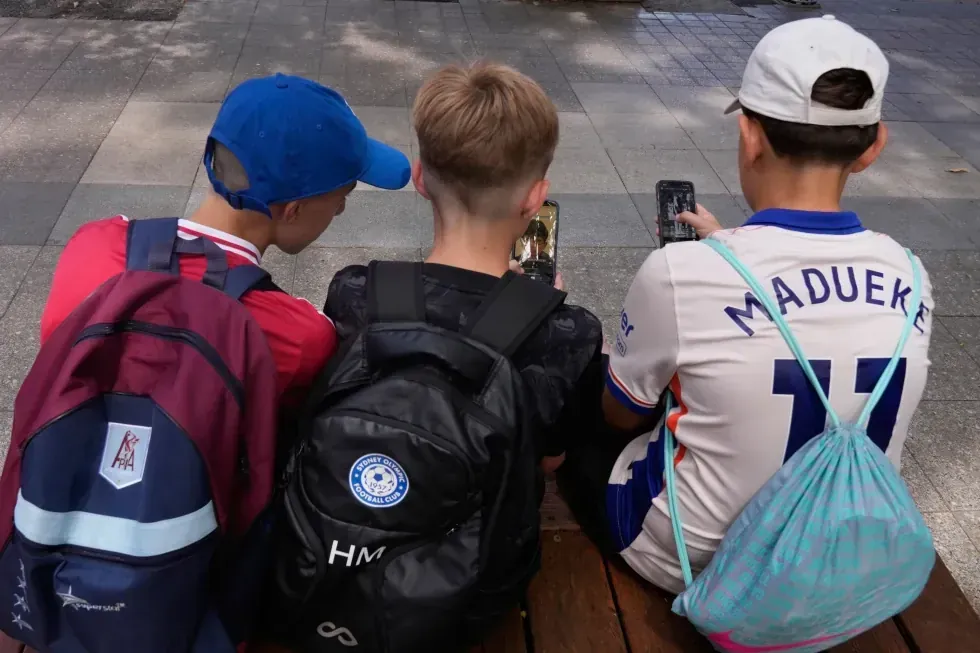
MELBOURNE, Australia (JN) – Australia’s social media ban for children under 16 comes into force on Wednesday, marking a world-first move that has ignited debate among families, educators and digital rights advocates. The law requires major platforms to prevent young teenagers from holding accounts, shifting responsibility onto technology companies rather than parents.
For some teenagers in rural areas, the change feels immediate and personal. Riley Allen, 15, who lives on a sheep ranch near Wudinna in South Australia, worries the ban will cut him off from friends scattered across long distances during the summer school holidays.
The measure, passed by federal Parliament last year, places Australia at the forefront of global efforts to regulate children’s access to social media. Supporters argue it responds to growing concerns about online harms. Critics say it risks isolating young people and curbing their ability to communicate and participate in civic life.

Rural teens fear isolation under Australia social media ban
Riley’s home sits five kilometers from the small town of Wudinna, and some of his classmates live up to 70 kilometers away. In such a setting, digital platforms often serve as a practical bridge rather than a luxury.
“I don’t think the impact will be very positive for us,” Riley said, noting that face-to-face contact is limited by geography. With the Southern Hemisphere summer break beginning this week, he questioned how he and his friends would stay in touch.
Under the new law, children younger than 16 are barred from holding accounts on platforms including Meta’s Facebook, Instagram and Threads, as well as TikTok, Snapchat, X, Reddit, YouTube, Twitch and Kick. Companies face fines of up to 49.5 million Australian dollars (about $32.9 million) if they fail to take reasonable steps to remove underage accounts.
Meta was among the first major firms to respond, beginning efforts last week to exclude suspected underage users. Riley said some platforms had already asked him to verify his age, though as of Monday his accounts remained active.
Parents divided on enforcement and responsibility
Riley’s mother, Sonia Allen, a schoolteacher, said she would not help her son bypass the ban. “If the rule is there, the rule is there,” she said, though she acknowledged that some families might take a different approach.
■ Related News




She argued that parents still have a role in supervising their children’s online activity. A year ago, she temporarily removed Riley’s access to social media after discovering he was using it late at night and neglecting homework. She said the break helped him develop more responsible habits.
Riley, who turns 16 in April, said he understands the government’s objectives but believes alternatives could address concerns about sleep and screen time. He suggested, for example, a mandatory 10 p.m. curfew for younger users rather than a blanket prohibition.
Public health experts have frequently linked excessive screen use to disrupted sleep and mental health challenges among adolescents, concerns cited by supporters of the legislation. The law reflects a broader global conversation about how to balance digital access with child welfare.
Constitutional challenge heads to High Court
Opposition to the ban has reached Australia’s highest court. In Sydney, 15-year-old Noah Jones is one of two plaintiffs challenging the legislation in the High Court of Australia. The case was brought by the Sydney-based Digital Freedom Project, along with fellow teenager Macy Neyland.
The plaintiffs argue the law infringes on the implied constitutional freedom of political communication, affecting an estimated 2.6 million young Australians. A directions hearing is scheduled for late February to set a timetable for the full bench of seven judges to hear the case.
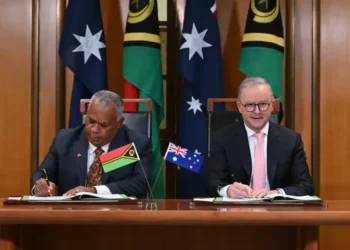
The federal government, led by Prime Minister Anthony Albanese, has said it will defend the legislation. Officials maintain that many parents have called for stronger protections against online harms, including exposure to harmful content and addictive platform design.
Some children have also expressed support for the restrictions, telling Australian media they welcome limits on features designed to maximize screen time.
Advocacy group Heaps Up Alliance, which campaigned for the age restriction, argues that a universal rule avoids singling out individual children. “When everybody misses out, nobody misses out,” the group has said, framing the measure as a collective safeguard.
Academics and lawmakers raise concerns
Before Parliament approved the law, more than 140 Australian and international academics specializing in technology and child welfare signed an open letter opposing a strict age limit, describing it as “too blunt an instrument” to address complex risks.
John Ruddick, president of the Digital Freedom Project and a state lawmaker for the Libertarian Party, said his organization considered seeking an injunction to delay implementation but decided against it on legal advice. He said the case has not received funding from technology companies, though he indicated such support would be welcome.
Ruddick and others argue that determined teenagers may circumvent the restrictions using tools such as virtual private networks, potentially pushing them toward less regulated online spaces. “It’s much better for it to be out in the open,” he said, advocating for active parental supervision rather than prohibition.
Noah Jones echoed concerns about unintended consequences. He warned the ban could silence young people and limit their engagement with national debates. His mother, Renee Jones, who acts as his litigation guardian, said she recognizes the risks of social media but believes education and supervision are more effective than outright bans.
Australia’s move will likely be closely watched by other governments considering similar measures. As the law takes effect, the practical challenges of enforcement — and the broader question of how societies manage young people’s digital lives — are only beginning to unfold.
Source: AP News – Australia’s social media ban leaves a 15-year-old worried about losing touch with friends