SANTA FE, N.M. (Journos News) – The Trump administration has moved to expand its use of military-controlled areas along the U.S.–Mexico boundary, designating a new militarized zone across much of California’s southern border. The decision deepens the military’s involvement in border enforcement at a time when migrant crossings have slowed to levels not seen in decades.
Announced by the Department of the Interior on Wednesday, the move transfers jurisdiction over significant stretches of federal land along California’s border with Mexico to the U.S. Navy. Officials say the change is intended to support national defense and reinforce border security operations under President Donald Trump’s emergency declaration.
The development comes amid broader legal and political disputes over the role of the armed forces in domestic immigration enforcement, including a separate federal court order concerning National Guard deployments in Los Angeles.

Expanded military footprint in California
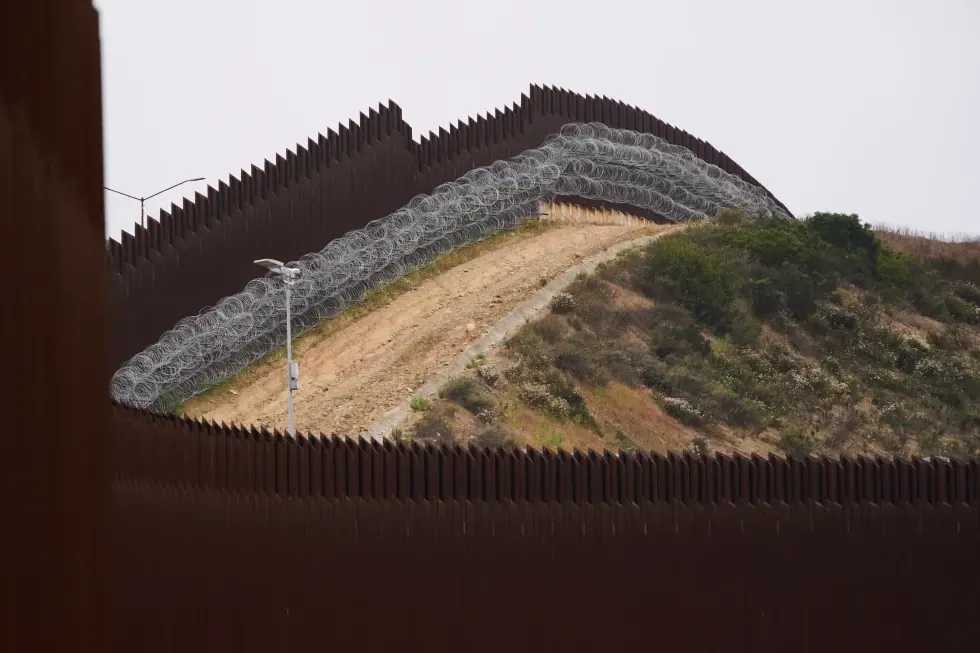
According to the Interior Department, the newly designated national defense area stretches nearly the full length of California’s international boundary — from the Arizona state line westward to the Otay Mountain Wilderness. The area cuts across the Imperial Valley and includes border communities such as Tecate.
The department described the region as a high-traffic corridor for unlawful crossings. Under the new designation, military personnel may assist in apprehending individuals accused of trespassing on land classified as Army, Air Force, or Navy property. Additional criminal charges may apply in such cases, potentially carrying prison sentences.
Interior Secretary Doug Burgum said in a statement that coordination with the Navy would help close what he described as “long-standing security gaps,” while protecting public lands and advancing the administration’s border agenda.
More than 7,000 active-duty troops are currently deployed to the southern border, supported by helicopters, drones and surveillance systems. The administration first introduced the militarized-zone approach in April along a 170-mile stretch of border in New Mexico. It was later expanded into parts of Texas and Arizona.
Border crossings at historic lows
The expansion in California comes as apprehensions by the U.S. Border Patrol have dropped sharply. Data released earlier this year show arrests along the southern border at their slowest pace since the 1960s, reflecting a broader crackdown on migration tied to Trump’s push for mass deportations.
■ Related News



Administration officials have argued that the emergency declaration and expanded military role serve as a deterrent against irregular crossings between official ports of entry. Critics, however, contend that the legal and practical implications of assigning law enforcement functions to the military raise constitutional concerns.
Legal experts have pointed to the Posse Comitatus Act, which generally restricts the use of federal armed forces in civilian law enforcement. While exceptions exist, scholars say the increasing scale and scope of military involvement could test long-standing boundaries between civil authority and national defense.
Legal and political tensions
The announcement in California coincided with a separate ruling by a federal judge ordering the administration to stop deploying the California National Guard in Los Angeles and to return operational control of those troops to the state government.
In June, President Trump activated more than 4,000 California National Guard members without the approval of Governor Gavin Newsom. The move was intended to bolster immigration enforcement efforts in urban areas, further intensifying tensions between federal and state authorities.
The administration maintains that the emergency powers invoked under federal law provide sufficient authority for such deployments. State officials and civil liberties advocates have challenged that interpretation, arguing that the missions risk politicizing the military and eroding local oversight.
Broader national strategy
The California zone represents the latest step in what administration officials describe as a coordinated, multi-state strategy to fortify border infrastructure and deter unlawful entry. By placing federal lands under military jurisdiction, authorities can bring additional legal consequences against individuals who cross into restricted defense areas.
Supporters of the policy say the approach reinforces national sovereignty and provides operational flexibility at a time of sustained migration pressures. Opponents argue that border enforcement traditionally falls within the remit of civilian agencies such as U.S. Customs and Border Protection, and that expanding military authority could have unintended long-term consequences.
The Interior Department has not indicated how long the California designation will remain in effect, but similar zones in other border states remain active.
As the legal challenges proceed and migration patterns continue to evolve, the role of the U.S. military in border enforcement is likely to remain a central point of debate in Washington and in border communities themselves.
Source: AP News – Trump administration adds militarized zone in California along southern US border