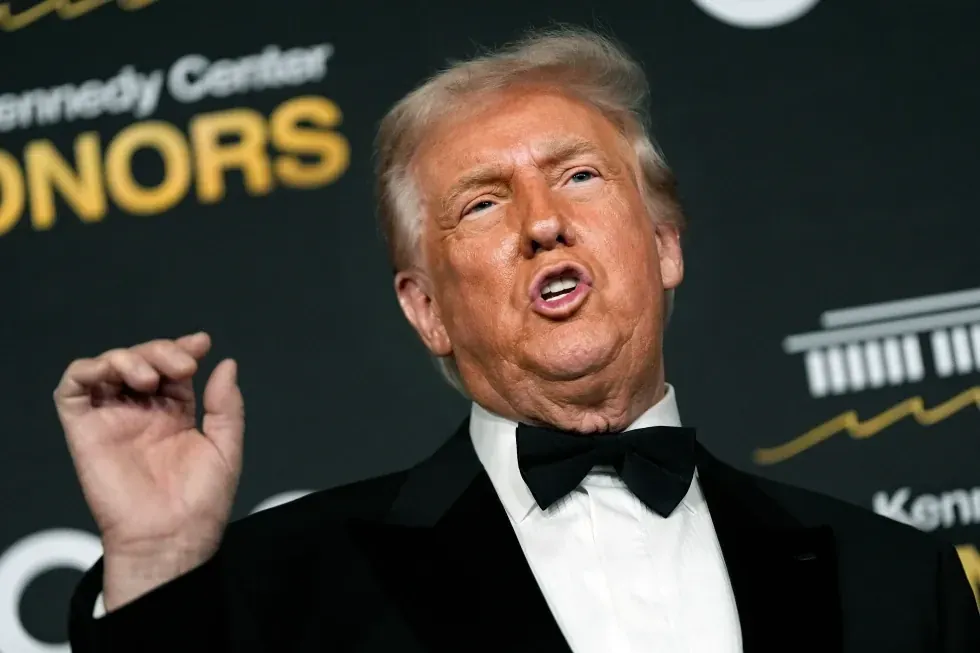
KYIV, Ukraine (JN) – President Donald Trump said on Sunday that Ukrainian President Volodymyr Zelenskyy had not yet read a U.S.-authored proposal aimed at ending the Russia-Ukraine war, casting doubt on Kyiv’s position as talks continue between the two governments.
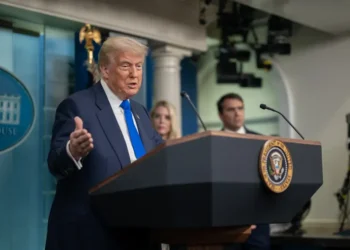
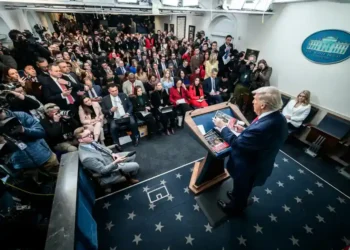
Speaking to reporters in Washington, Trump expressed frustration over the pace of progress after three days of negotiations between American and Ukrainian officials concluded in Florida. His remarks added a new layer of public tension to a diplomatic effort that Washington says is intended to bring the nearly four-year conflict to a close.
The comments come at a delicate stage in negotiations, with U.S. officials portraying the framework as close to completion while both Kyiv and Moscow signal reservations about key elements.

Trump questions Zelenskyy’s engagement with proposal
Trump told reporters that Zelenskyy “hasn’t yet read” the proposal, even though Ukrainian officials involved in the talks were supportive. “His people love it,” Trump said, adding that he believed Russia was “fine with it” as well, though he acknowledged uncertainty about Zelenskyy’s personal view.
The U.S. president has made ending the war a central foreign policy priority of his second term, arguing that the conflict has cost too many lives and strained American taxpayer resources. His administration has pressed for a negotiated settlement that would stabilize relations with Moscow while seeking security assurances for Ukraine.
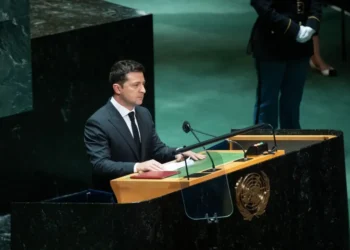
Zelenskyy, for his part, said Saturday that he had held a “substantive phone call” with American officials participating in the talks and received an update from both U.S. and Ukrainian representatives. Writing on social media, he said Ukraine remained committed to working “in good faith” with Washington to achieve what he described as genuine peace.
Kyiv has consistently maintained that any agreement must preserve Ukrainian sovereignty and territorial integrity. That position has at times clashed with U.S. suggestions that territorial compromises could form part of a settlement.
Moscow’s cautious response
Russian President Vladimir Putin has not publicly endorsed the White House proposal. Last week, he indicated that certain aspects were unworkable, despite reports that the initial draft contained provisions seen as favorable to Moscow.
■ Related News

Kremlin spokesperson Dmitry Peskov welcomed elements of the Trump administration’s newly released national security strategy, saying it aligned in part with Russia’s preference for dialogue over confrontation. He told Russia’s Tass news agency that Moscow hoped this approach could lead to constructive cooperation with Washington regarding Ukraine.
The strategy document, released Friday by the White House, stated that improving relations with Russia and ending the war were central U.S. interests. It described a goal of reestablishing “strategic stability” after years of strained ties.
While the language signaled a shift in tone, the gap between public statements and a finalized agreement remains evident. Analysts note that both sides have historically framed negotiations in ways that serve domestic political audiences as well as diplomatic objectives.
Territorial disputes and nuclear concerns
Speaking at the Reagan National Defense Forum on Saturday, outgoing U.S. envoy to Ukraine Keith Kellogg said negotiations were in “the last 10 meters,” suggesting that only two major issues remained unresolved: territory in the Donbas region and the status of the Zaporizhzhia Nuclear Power Plant.
Russia controls most of Donbas — encompassing the Donetsk and Luhansk regions — as well as two southern regions it declared annexed three years ago, a move widely condemned by Ukraine and its Western allies as illegal. The fate of these territories has been one of the most contentious elements of any prospective settlement.
The Zaporizhzhia Nuclear Power Plant, Europe’s largest nuclear facility, has been under Russian control since early in the invasion and remains offline. International observers have repeatedly warned about safety risks at the site, which requires consistent external power to cool its six reactors and spent fuel. Any disruption, experts say, could have serious consequences.
Kellogg, who is due to leave his post in January, was not present at the Florida talks.
Continued fighting amid diplomacy
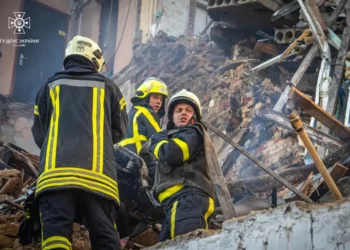
Even as negotiations progressed, fighting continued across Ukraine. Overnight missile and drone attacks killed at least four people, according to Ukrainian officials. A drone strike in the northern Chernihiv region killed one man, while infrastructure in the central city of Kremenchuk was damaged, leading to power and water outages.
Kremenchuk, an industrial hub and home to one of Ukraine’s largest oil refineries, has been targeted repeatedly since the war began. Ukrainian authorities and their Western allies accuse Russia of deliberately targeting energy infrastructure to weaken civilian resilience during winter months — an allegation Moscow denies.
In the Kharkiv region, shelling on Sunday killed three people and wounded 10 others, according to the regional prosecutor’s office.
The continued attacks underscore the fragile nature of diplomacy conducted alongside active hostilities. While U.S. officials describe progress toward a settlement, events on the ground remain volatile, and neither Kyiv nor Moscow has publicly signaled full acceptance of the proposed terms.
Leaders of the United Kingdom, France and Germany are scheduled to meet Zelenskyy in London on Monday, in what officials describe as consultations on the diplomatic path forward. European governments have sought to maintain a unified position in support of Ukraine while monitoring Washington’s evolving approach.
As negotiations advance, the central question remains whether the U.S. proposal can bridge fundamental disagreements over territory, security guarantees and the future of regional stability. Public exchanges between leaders, including Trump’s latest remarks, highlight both the urgency and the complexity of efforts to end the Russia-Ukraine war.
Source: AP News – Trump says Zelenskyy ‘hasn’t read’ a US-authored proposal to end Russia-Ukraine war