


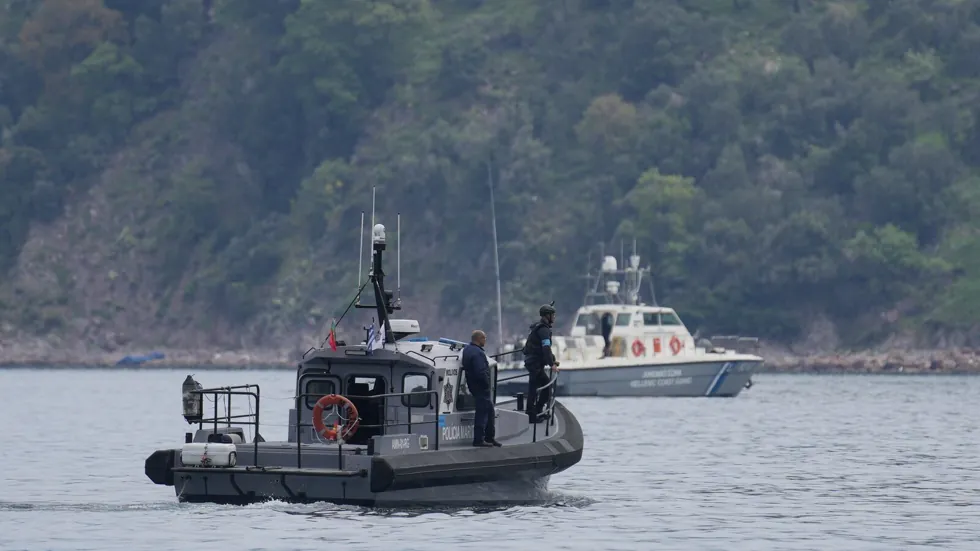
ATHENS, Greece (Journos News) – At least 18 migrants drowned after their inflatable boat sank south of Crete, Greek authorities reported Saturday, highlighting the continuing dangers faced by people crossing the Mediterranean Sea in overcrowded vessels. Two individuals were rescued by a passing Turkish merchant ship, and search efforts for additional survivors remain underway.
Greek officials located the half-submerged boat on Saturday, prompting a coordinated rescue operation involving a Frontex ship and aircraft, a Greek Coast Guard helicopter, and three merchant vessels in the area. Authorities have not yet confirmed the vessel’s departure point.
Greece serves as a key entry point into the European Union for migrants fleeing conflict, poverty, and instability in the Middle East, Africa, and parts of Asia. While crossings from Turkey’s coast to nearby Greek islands have historically been frequent, enhanced patrols and reported pushbacks have reduced attempts along that route. In contrast, arrivals from Libya toward Crete have increased in recent months, often via small boats or inflatable dinghies in hazardous conditions.

Mediterranean Crossings Remain Perilous
Fatal incidents in the Mediterranean are not uncommon. Overcrowding, rough seas, and poorly maintained vessels contribute to frequent tragedies. Humanitarian groups have repeatedly warned that these journeys are highly dangerous, and that timely search-and-rescue operations are critical to prevent further loss of life.
The ongoing search in Crete underscores both the scale of migration flows in the region and the challenges faced by Greek and European authorities in managing safety at sea. Frontex and the Greek Coast Guard continue to monitor maritime routes, providing aerial and naval support in areas where migrant crossings are most frequent.
International organizations emphasize that while stronger border enforcement has shifted migration patterns, the underlying drivers—conflict, economic hardship, and instability—continue to push people toward perilous sea journeys.
Broader Regional Trends
Recent data indicate a rise in migration from North Africa, particularly Libya, toward southern European shores. Analysts suggest that shifts in patrols, weather patterns, and regional conflicts influence the choice of departure points and sea routes. Despite international rescue efforts, the human toll remains high, prompting calls for safer, legal pathways for migration.
Source: AP News – At least 18 migrants die as inflatable boat sinks south of Greek island of Crete; 2 rescued


