Journos News - Breaking News, World News, Top Stories, Todays Headlines and Flash Reports
Monday, July 13, 2026
  • Login
  • Home
  • World
    • Africa
    • Americas
    • Asia
    • Europe
    • Middle East
    • Oceania
  • Politics
  • Business
  • Technology
  • Health
  • Science
  • Sports
  • Entertainment
  • Culture
No Result
View All Result
  • Home
  • World
    • Africa
    • Americas
    • Asia
    • Europe
    • Middle East
    • Oceania
  • Politics
  • Business
  • Technology
  • Health
  • Science
  • Sports
  • Entertainment
  • Culture
No Result
View All Result
Journos News - Breaking News, World News, Top Stories, Todays Headlines and Flash Reports
No Result
View All Result
Home Lifestyle Arts, Culture & Heritage

Why Americans expect ice in every drink—and Europeans often don’t

Exploring the cultural divide over ice between the U.S. and Europe

The Daily Desk by The Daily Desk
June 16, 2026
in Arts, Culture & Heritage, Lifestyle
0
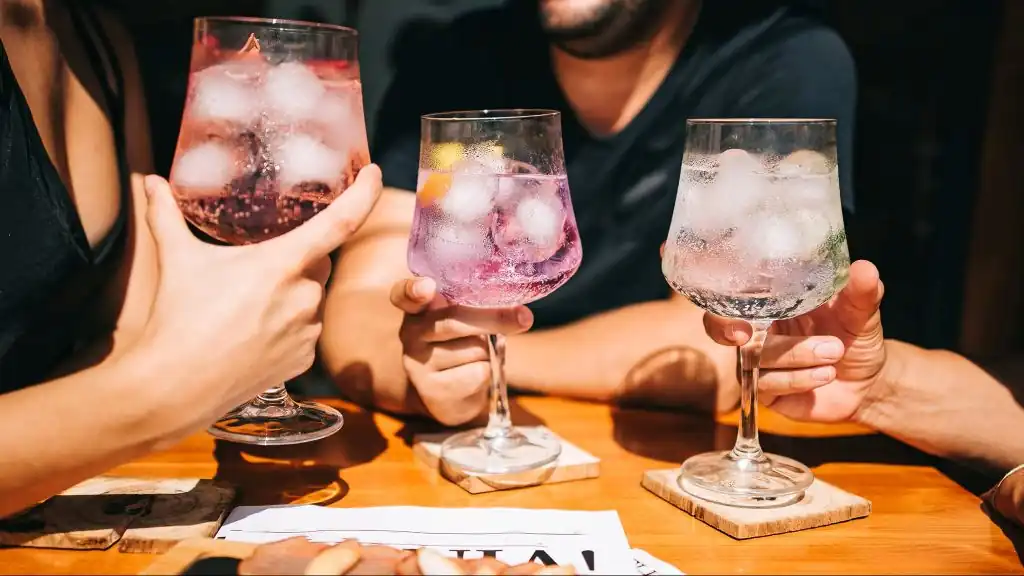
Room-Temperature Shock: Why European Drinks Leave Americans Frozen in Surprise - bobakphoto/iStockphoto/Getty Images

From Boston to Paris: How Ice Became an American Icon—but Not a European Staple - bobakphoto/iStockphoto/Getty Images

Why Americans love ice and Europeans can live without it

July 25, 2025 – 11:40 AM

When American travelers visit Europe during a summer heatwave, one common culture shock awaits at cafes and restaurants: drinks without ice. While many in the U.S. consider ice an essential part of refreshment, Europeans often serve beverages at room temperature—or with just a token cube. But this difference isn’t just a matter of preference; it’s a deeply rooted cultural contrast shaped by history, climate, and even economics.

A surprise for Americans abroad

Whether in Paris, Rome, Athens, or London, American tourists often express confusion or frustration when a drink arrives without ice. Some, like New Yorker Isabel Tan, try to find creative workarounds.

“In Italy, it was so hot I jokingly asked for a bucket of ice—and they actually brought one out,” Tan recalls. Her TikTok video about the incident resonated with thousands, sparking a wave of memes and social media commentary from Americans encountering Europe’s “ice-free” culture.

This phenomenon isn’t new, but it has gained attention with each summer’s influx of American travelers.

RELATED POSTS

Private Farewell Held for David Hockney as Memorial Plans Emerge

José Andrés Shares His Guide to Experiencing Tapas the Spanish Way

Why Hair Brushing Habits Matter More Than Popular Beauty Myths

Tall Communities Find New Visibility Through Meetups and Shared Public Experiences

Pen Pal Programs See Renewed Interest as Digital Fatigue Shapes Communication Habits

A formative kitchen experience highlights tradition and technique in French cuisine

A uniquely American habit

Jonathan Rees, historian and author of Refrigeration Nation: A History of Ice, Appliances, and Enterprise in America, says the American love affair with ice is unique.

“The entire world does not have as much interest in ice as the United States does,” Rees explains. “We’re accustomed to having ice in everything—it’s very much an American thing.”

Author Amy Brady agrees. Her book, Ice: From Mixed Drinks to Skating Rinks – A Cool History of a Hot Commodity, explores the history and consequences of America’s obsession with frozen water. “Americans are unique on the world stage in terms of our absolute obsession with ice,” she says.

Tan, who grew up in Singapore, notes that in many Asian cultures, warm drinks are traditionally seen as healthier. But after living in New York, she adapted to the American norm. “Even in my Stanley Cup right now, there are ice cubes,” she says. “I prefer iced drinks—even in winter.”

Not everyone wants it

For many Europeans, however, ice is more a nuisance than a necessity. UK-based Claire Dinhut, who has lived in Athens, Prague, and the UK, is not a fan.

“I really don’t like ice,” she says. “It dilutes the drink, spills easily, and sometimes feels like it’s being used to mask small portions.”

Even those with American ties don’t always adapt. “My partner, who’s British, always asks for no ice in the U.S., and that confuses servers,” says Lacey Buffery, a Brit who has lived in California for five years.

The difference often boils down to habits formed from childhood and what each culture considers “refreshing.”

A history of cold drinks in America

The American preference for icy drinks dates back to the early 1800s. Boston businessman Frederick Tudor—nicknamed the “Ice King”—pioneered the global ice trade, shipping blocks of ice to tropical regions and American cities alike.

“He sent ice to India, the Caribbean, and the southern U.S.,” says Rees. “He even gave ice away to taverns so customers would get used to cold drinks and come back for more. It was a brilliant strategy.”

Brady adds that by the late 19th and early 20th centuries, ice had become a status symbol in the U.S. “Owning an icebox was like having a TV or a car—it signaled middle-class success.”

In contrast, European cities—especially those with temperate climates—never developed a similar demand. Cold drinks were less necessary, and the infrastructure to support widespread ice use never caught on.

Still a rarity across Europe

Today, despite climate change driving up summer temperatures across Europe, ice remains an exception rather than the norm. European cafes and restaurants often don’t stock large amounts of ice or have automatic ice machines like those common in American hotels.

In Paris, Canadian expat Zoe McCormack says she frequently struggles to get a truly cold drink. “The water comes lukewarm in tiny glasses,” she says. “Even the cans in the grocery store aren’t very cold.”

Refrigeration standards also differ. U.S. homes typically have large fridges with built-in ice dispensers. In the UK, compact fridges without such features are still the norm.

“We had an ice tray in the freezer growing up,” says Buffery. “But we couldn’t make a lot of ice. Now, in California, I love having a fridge that gives me ice instantly.”

It’s more than just the ice

Some argue that the American tradition of free refills fuels the demand for ice. “In the UK, we pay per drink,” Buffery notes. “So who wants to keep paying for a cup filled mostly with ice?”

Historian Rees says the American willingness to accept dilution in exchange for coldness is telling. “It’s as much about what we’re used to as it is about taste. The crackle of the ice in a glass—that sound makes us happy.”

Even so, he recognizes the cultural divide. “When I travel, I know I won’t get ice everywhere, and that’s okay. I’m there to experience a different culture, drinks and all.”

Europe is not a monolith

It’s important to note that not all of Europe resists ice. In southern Spain, for example, a jug of tinto de verano is usually packed with ice. And chilled rosé in Provence or gelato in Italy can offer relief from the summer heat.

“There’s no ice shortage in Europe,” Rees clarifies. “It’s just not customary. And you may find a restaurant that simply doesn’t have any.”

Travelers often assume that cultural differences are inconveniences, but Brady encourages a more open-minded approach.

“Instead of thinking tepid tea or water is less clean or less tasty, try viewing it as a different culinary tradition,” she says. “That perspective will make your travels richer—and help you avoid coming across as entitled.”

Final thoughts: embrace the difference

Whether you prefer an overflowing glass of crushed ice or a gently chilled drink, your experience abroad may challenge your habits. But as more Americans explore Europe and the world gets warmer, understanding these differences matters more than ever.

For now, ice remains one of the small—but telling—ways that American and European cultures diverge. And perhaps that’s part of the charm of international travel: discovering not just new sights, but new tastes, temperatures, and traditions.

Source: CNN – Why Americans can’t chill out about ice-free European beverages

Tags: #AmericanIceCulture#ColdDrinksTrend#CulturalDifferencesAbroad#DrinkPreferences#EuropeanCafeCulture#EuropeNoIce#IceInDrinks#IceObsession#RefrigerationHistory#TravelCultureClash#USvsEuropeTravel#WarmDrinksDebate
The Daily Desk

The Daily Desk

The Daily Desk is a contributor at JournosNews.com covering politics, media, governance, and the evolving dynamics of public discourse. Stories published under this byline are produced in accordance with JournosNews' editorial standards, with an emphasis on verified reporting, accuracy, context, and impartiality.

Related Posts

Private Farewell Held for David Hockney as Memorial Plans Emerge

by The Daily Desk
June 21, 2026
0
David Hockney artwork displayed during a public exhibition - BBC/Getty Images

A private funeral has already been held for acclaimed British artist David Hockney following his death earlier this month at...

Read moreDetails

José Andrés Shares His Guide to Experiencing Tapas the Spanish Way

by The Daily Desk
June 21, 2026
0
Traditional Spanish tapas served in a lively tapas bar - Courtesy of José Andrés and Family in Spain

For chef and humanitarian José Andrés, tapas represent far more than a collection of small dishes. They are a reflection...

Read moreDetails

Why Hair Brushing Habits Matter More Than Popular Beauty Myths

by The Daily Desk
June 21, 2026
0
Woman brushing long hair as part of daily care - BBC/ Prashanti Aswani

For generations, hair brushing has been surrounded by beauty advice passed down through families, from claims that 100 nightly brush...

Read moreDetails

Tall Communities Find New Visibility Through Meetups and Shared Public Experiences

by The Daily Desk
June 16, 2026
0
Tall adults gathering together during a social meetup event - AP Photo/David J. Phillip

Tall people are increasingly forming social communities through organized gatherings, travel events, and public meetups centered on shared experiences related...

Read moreDetails

Pen Pal Programs See Renewed Interest as Digital Fatigue Shapes Communication Habits

by The Daily Desk
June 16, 2026
0
Handwritten letters and envelopes displayed beside vintage stationery materials - AP Photo/Holly Ramer

As messaging apps and social media continue to dominate everyday communication, handwritten letters and pen pal exchanges are experiencing a...

Read moreDetails

A formative kitchen experience highlights tradition and technique in French cuisine

by The Daily Desk
May 5, 2026
0
Classic leek quiche representing French culinary training tradition - Maura Mcevoy/Voracious via AP

The connection between culinary training and ingredient appreciation often shapes how chefs define their craft later in life. In the...

Read moreDetails

Barrier-Free Tours Gain Ground as Accessible Travel Reshapes Global Tourism

by The Daily Desk
April 27, 2026
0
Accessible guided tour with participants using mobility aids in museum - AP Photo/Markus Schreiber

Barrier-free tours are emerging as a key feature of modern tourism, reflecting broader efforts to make travel more inclusive for...

Read moreDetails

Global Pancake Traditions Reflect Cultural Identity and Changing Food Habits

by The Daily Desk
April 27, 2026
0
Different types of pancakes from around the world on plates - asab974/Adobe Stock via CNN

Pancakes, a staple found across continents, are increasingly being examined not just as comfort food but as a reflection of...

Read moreDetails

World’s Largest Art Heist Still Shapes Museum Security Decades On

by The Daily Desk
June 16, 2026
0
Empty frames at Boston museum after major art theft - AP Photo/Josh Reynolds, File

The world’s largest art heist remains one of the most enduring mysteries in cultural history, with stolen works valued at...

Read moreDetails
Load More
Next Post
Mahjong’s Fading Legacy: One Woman’s Mission to Preserve a Dying Art - Photographs and video by Noemi Cassanelli, CNN

The Last Hand-Carved Mahjong Tiles in Hong Kong

Experts Say This TikTok Fiber Trend May Actually Improve Your Health - alvarez/E+/Getty Images

Is the Fibermaxxing Trend Actually Good for You? Experts Say Yes

After Viral Coldplay Moment, Astronomer Hires Gwyneth Paltrow to Shift Focus - Photo by Jordan Strauss/Invision/AP, File

Gwyneth Paltrow Joins Tech Firm Astronomer Amid Viral Coldplay KissCam Controversy

JournosNews logo

Journos News delivers globally neutral, fact-based journalism that meets international media standards — clear, credible, and made for a connected world.

  • Categories
  • World News
  • Politics
  • Business & Markets
  • Technology
  • Health
  • Science
  • Sports
  • Arts & Culture
  • Resources
  • Editorial Standards
  • Submit a Story
  • Advertise with Us
  • Syndication & Partnerships
  • Site Map
  • Press & Media Kit
  • Editorial Team
  • Careers

Join thousands of readers receiving the latest updates, tips, and exclusive insights straight to their inbox. Never miss an important story again.

  • About Us
  • Accessibility Statement
  • Contact Us
  • Privacy Policy
  • Terms and Conditions

© JournosNews.com – Trusted source for breaking news, trending stories, and in-depth reports.
All rights reserved.

Welcome Back!

Login to your account below

Forgotten Password?

Retrieve your password

Please enter your username or email address to reset your password.

Log In
No Result
View All Result
  • Home
  • World
    • Africa
    • Americas
    • Asia
    • Europe
    • Middle East
    • Oceania
  • Politics
  • Business
  • Technology
  • Health
  • Science
  • Sports
  • Entertainment
  • Culture

© JournosNews.com – Trusted source for breaking news, trending stories, and in-depth reports.
All rights reserved.

This website uses cookies. By continuing to use this website you are giving consent to cookies being used. Visit our Privacy and Cookie Policy.