CARACAS, Venezuela (Journos News) – Venezuela has enacted a sweeping amnesty law that could lead to the release of hundreds of people detained for political reasons, marking a significant shift in official policy after decades of denying the existence of political prisoners.
The measure, signed Thursday by acting president Delcy Rodríguez, follows a period of political upheaval and international pressure. It opens a legal pathway for opposition politicians, activists, journalists and others to seek relief for offenses tied to political conflicts dating back to 1999.
If fully implemented, the legislation could reshape Venezuela’s political landscape and ease tensions that have defined the country’s governance for years.

Legislative approval and political context
Rodríguez signed the bill into law hours after it cleared the legislature. Speaking during the ceremony, she said the measure reflected a willingness among political leaders to reduce polarization and “open new avenues for politics in Venezuela.”
The approval comes after a dramatic period in national politics, including last month’s U.S. military operation in Caracas that resulted in the capture of then-President Nicolás Maduro. The raid marked an extraordinary intervention in Venezuelan affairs and triggered a rapid reconfiguration of political authority inside the country.
In the weeks since, the new administration has moved swiftly on several fronts, including changes to oil industry regulations in line with directives from U.S. President Donald Trump’s administration. The amnesty law represents the most consequential domestic political reform announced so far.
Scope of the amnesty
The law grants a “general and full amnesty” for crimes or offenses committed during periods of politically driven conflict since 1999. That includes incidents linked to unrest surrounding the 2024 presidential election, whose disputed aftermath sparked protests and a broad crackdown.
More than 2,000 people were detained following those protests, according to authorities at the time, including minors. Human rights organizations have long argued that many of those arrests were politically motivated.
The legislation does not automatically free detainees but establishes a framework under which eligible individuals may petition for relief. It also allows people who left Venezuela to avoid detention to request amnesty through legal representation, a compromise reached after lawmakers debated whether they should be required to return in person.
That provision resolved a key sticking point in legislative discussions. Some ruling-party loyalists had opposed granting relief to those who fled the country, reflecting persistent internal divisions over how far reconciliation should go.
Opposition reaction and human rights concerns
For years, opposition leaders and civil society groups have demanded a broad amnesty as a first step toward restoring political freedoms. The government had consistently rejected claims that it held political prisoners, describing detainees as individuals charged with criminal offenses.
Opposition lawmaker Nora Bracho welcomed the legislation during debate, calling it “a great step forward,” while acknowledging it was not flawless. Her comments reflected cautious optimism shared by many activists who have pressed for releases but remain concerned about implementation.
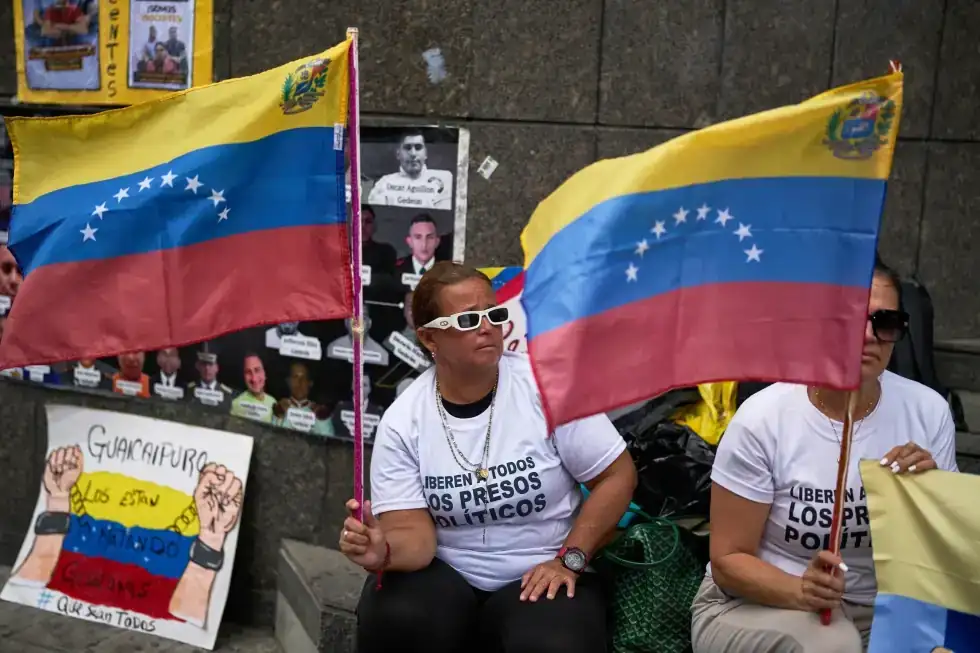
The Venezuela-based advocacy group Foro Penal estimates that more than 600 people are currently detained for political reasons. In the days after Maduro’s capture, Rodríguez’s administration announced that a substantial number of prisoners would be freed. Foro Penal says 448 releases have been recorded so far, though families and watchdog groups have criticized what they describe as a slow and uneven process.
Outside detention centers in recent days, relatives of detainees have gathered in hopes of news. A small group began a hunger strike over the weekend, underscoring the urgency felt by families awaiting confirmation of releases.
A break with past policy
The passage of the amnesty law marks a notable departure from the state’s longstanding refusal to acknowledge politically motivated detentions. Since the early years of the Bolivarian government under Maduro and his predecessor, officials have maintained that all detainees were prosecuted under criminal statutes.
By establishing a formal amnesty mechanism tied explicitly to political conflicts, the new law effectively recognizes that some prosecutions were connected to political activity. That acknowledgment could have broader implications for reconciliation efforts and for Venezuela’s international standing.
Whether the measure will lead to comprehensive releases remains uncertain. Much will depend on administrative procedures, judicial cooperation and political will in the weeks ahead.
For families who have waited years, however, the law offers a tangible — if cautious — sign of change.
This article was rewritten by JournosNews.com based on verified reporting from trusted sources. The content has been independently reviewed, fact-checked, and edited for accuracy, neutrality, tone, and global readability in accordance with Google News and AdSense standards.
All opinions, quotes, or statements from contributors, experts, or sourced organizations do not necessarily reflect the views of JournosNews.com. JournosNews.com maintains full editorial independence from any external funders, sponsors, or organizations.
Stay informed with JournosNews.com — your trusted source for verified global reporting and in-depth analysis. Follow us on Google News, BlueSky, and X for real-time updates.