


This report is based on reporting by The Associated Press.
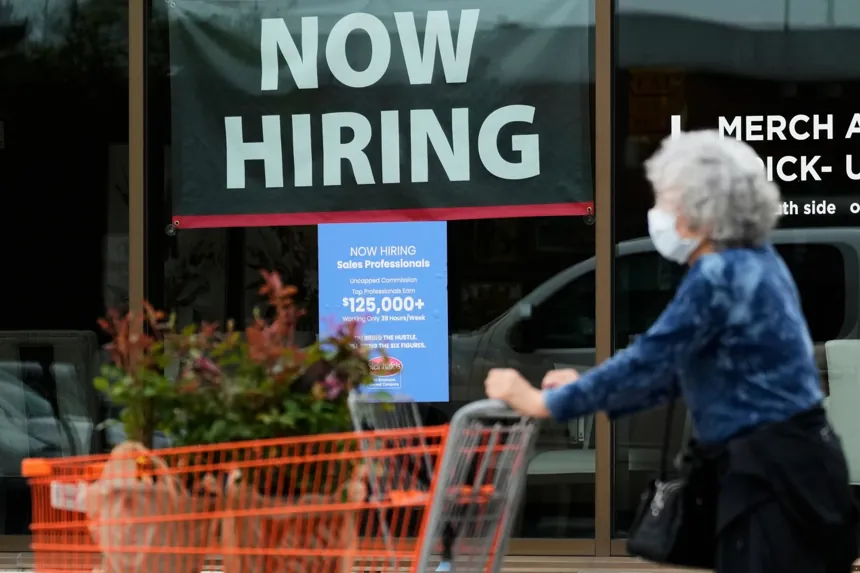
WASHINGTON — Hiring across the United States slowed considerably in June as employers added fewer jobs than expected, suggesting businesses remain cautious about expanding their workforces amid persistent inflation and uncertain economic conditions.
According to the U.S. Labor Department, employers added 57,000 jobs during the month, a sharp decline from the revised 129,000 jobs created in May. While the unemployment rate edged down to 4.2% from 4.3%, the improvement largely reflected a decline in labor force participation rather than stronger employment growth.

The latest figures indicate that the labor market continues to operate in a period of restrained hiring, with employers limiting recruitment even as layoffs remain relatively low.
Hiring Momentum Weakens After Spring Improvement
Earlier gains in hiring had raised hopes that the labor market was strengthening after a subdued 2025, but revisions to previous months’ employment data painted a less robust picture.
The Labor Department lowered April payroll growth from 179,000 to 148,000 jobs and revised May’s total from 172,000 to 129,000, reducing the momentum seen during the spring.
Although hiring has improved compared with last year—when monthly job creation averaged fewer than 10,000 positions—the first half of this year averaged approximately 92,000 new jobs per month, still below levels typically associated with a rapidly expanding economy.
Nicole Bachaud, labor economist at ZipRecruiter, said businesses remain hesitant to make major staffing decisions.
“We are in a market that is still very fragile, and still susceptible to shocks happening,” Bachaud said, adding that employers are advertising positions but are often delaying hiring decisions.
Hospitality and Retail Shed Jobs
The leisure and hospitality sector experienced one of the month’s largest employment declines.
Restaurants, bars, and hotels collectively eliminated approximately 61,000 jobs, despite expectations that the ongoing FIFA World Cup matches hosted across multiple U.S. cities would temporarily boost hiring.
Retail employment also declined, with employers cutting roughly 7,500 positions during June.
According to Chad Moutray, chief economist at the National Restaurant Association, many restaurant operators are seeing consumers reduce discretionary spending, particularly among middle- and lower-income households.
He said the industry’s performance increasingly reflects differences in household income, with businesses serving higher-income customers generally faring better than those targeting more budget-conscious consumers.
The association expects restaurants to hire around 450,000 seasonal workers this summer, slightly below last year’s estimate of 470,000.
Rising Costs Continue to Pressure Employers
Business owners say operating expenses remain a significant obstacle to expanding payrolls.
Denise Beckson, vice president at Morey’s Piers & Beachfront Water Parks in Wildwood, New Jersey, said her company has hired roughly the same number of seasonal employees as last year—about 1,500 workers.
However, she noted that many hospitality businesses continue to face higher food prices and increased labor costs stemming from minimum wage hikes.
“Costs continue to rise, and one way to control that is to pull back on staffing,” Beckson said.
Professional Services and Construction Remain Brighter Spots
Not all sectors experienced weaker hiring.
Professional and business services added 36,000 jobs during June, including positions in engineering, architecture, and software development.
Construction companies also continued hiring, adding 11,000 jobs, while manufacturers increased payrolls by 3,000 positions.
Power & Construction Group, based in Scottsville, New York, recently expanded its workforce to help meet growing demand for electrical infrastructure upgrades.
Vice President Thomas “Murph” Murphy said the company has added 47 employees over the past two months and hopes to recruit another 15 to 20 workers, including electricians, laborers, and heavy equipment operators.
Murphy said increasing electricity demand from homes, businesses, and emerging technologies continues to drive infrastructure investment, while competition for skilled workers remains intense.
Artificial Intelligence Investment May Support Some Hiring
Although artificial intelligence has raised concerns about potential job displacement, current investment linked to AI infrastructure may also be supporting employment in some industries.
Growing demand for data centers, electrical networks, engineering services, and related construction projects has helped sustain hiring in technical and skilled trades, even as other sectors remain cautious.
Federal Reserve Faces Softer Labor Market Signals
The employment report may reduce pressure on the Federal Reserve to tighten monetary policy further.
Moderating job growth and slower wage gains suggest inflationary pressures from the labor market are not accelerating significantly.
Average hourly earnings increased 3.5% compared with a year earlier. However, wage growth continued to trail inflation, leaving many households facing higher costs for essentials such as food, gasoline, and housing.
Financial markets reacted positively following the release of the employment report, with investors viewing the data as reducing the likelihood of additional interest rate increases in the near term.
Eric Winograd, chief U.S. economist at AB Global, said the figures balanced concerns about economic growth with easing fears of renewed inflation.
Labor Force Participation Falls to Five-Year Low
One of the report’s more concerning trends was a further decline in labor force participation.
The share of Americans either working or actively seeking employment fell to 61.5% in June from 61.8% a month earlier, marking the lowest participation rate in five years.
According to the Labor Department, population aging remains a major factor as thousands of Americans reach retirement age each day. At the same time, participation among prime working-age adults also declined, indicating that fewer people between the ages of 25 and 54 were either employed or searching for work.
The combination of slower hiring, reduced workforce participation, and cautious employer sentiment suggests the U.S. labor market continues to cool gradually rather than experience a sharp downturn, leaving policymakers and businesses closely watching future employment data for signs of stronger or weaker economic momentum.



