U.S. President Donald Trump said Tuesday that his administration is ordering what he described as a “total and complete blockade” of sanctioned oil tankers entering or leaving Venezuela, signaling a further escalation in Washington’s campaign against the government of President Nicolás Maduro.
In a statement posted on his social media platform, Trump said the expanded U.S. military deployment in the Caribbean would remain in place until what he called “Chavismo” returns to the United States “all the oil, land and other assets that they stole from us.” The remarks appeared to broaden the administration’s stated objectives beyond drug interdiction, which had been the primary public justification for recent U.S. actions in the region.
The announcement comes amid heightened tensions between Washington and Caracas, following recent U.S. military operations targeting Venezuelan oil shipments and a new round of sanctions against individuals and companies linked to the country’s energy exports.
Claims of Stolen Assets and Illicit Financing
In his message, Trump accused the Maduro government of using oil from what he described as “stolen fields” to finance its operations, including alleged involvement in narcotics trafficking and other criminal activity. He said the Venezuelan authorities were using oil revenues to support “narcoterrorism, human trafficking, murder, and kidnapping,” claims that echo long-standing U.S. allegations against elements of the Venezuelan state.
“For the theft of our assets and for many other reasons, including terrorism, drug trafficking, and human trafficking, the Venezuelan regime has been designated a FOREIGN TERRORIST ORGANIZATION,” Trump wrote. He cited that designation as the basis for ordering the blockade of sanctioned oil tankers.
U.S. officials have previously accused senior Venezuelan figures of collaborating with drug trafficking networks, including the so-called Cartel of the Suns, which U.S. authorities allege has links to members of the Venezuelan military and political leadership. Trump’s reference to a terrorist designation appeared to be directed at those allegations, though his statement did not clarify the legal scope or timing of such a designation.
It was not immediately clear what Trump meant by claims that Venezuela had appropriated U.S. oil, land, or other assets, or how he expects such assets to be “returned” to the United States, as he demanded in his post.
Recent Military Action at Sea
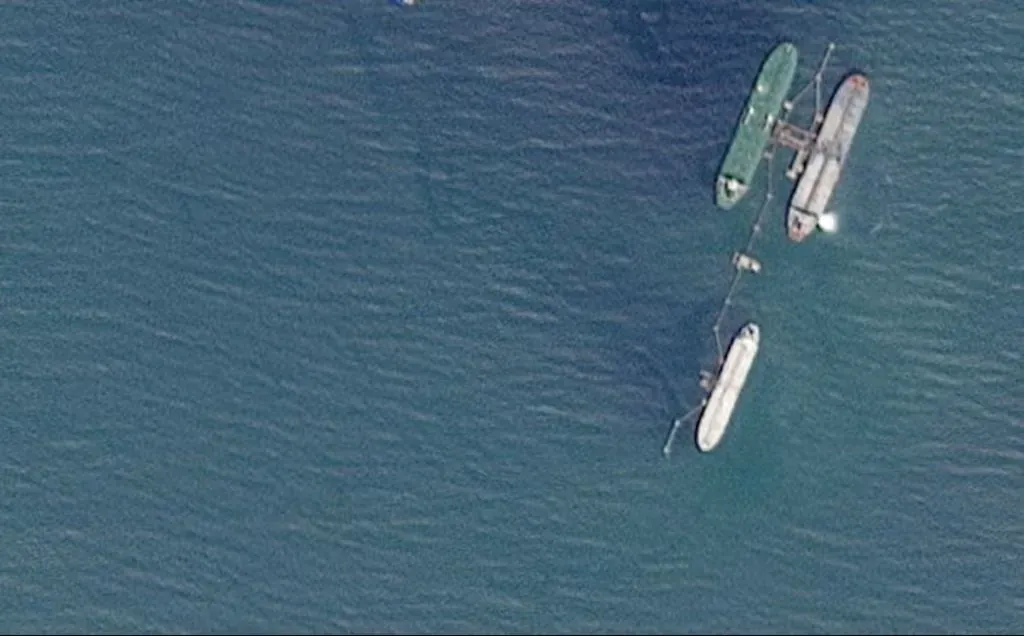
Trump’s statement follows a U.S. military operation last week in which American forces intercepted a Venezuelan oil tanker in waters off the country’s coast. The operation was widely publicized by U.S. officials and was presented as part of a broader effort to disrupt what Washington describes as illicit oil exports that help sustain the Maduro government.
The day after the interception, the United States announced new sanctions targeting six additional oil tankers and the shipping companies that operate them. Those measures expanded the scope of existing sanctions on Venezuela’s energy sector, which has been under U.S. pressure for several years.
U.S. authorities also announced sanctions against three of Maduro’s nephews, citing alleged involvement in drug trafficking. The individuals have previously been named in U.S. legal proceedings, and the sanctions were framed as part of a broader effort to cut off financial and logistical support networks linked to the Venezuelan leadership.
Rising Tensions in the Caribbean
The interception of the tanker and the subsequent sanctions were widely viewed as an escalation in the Caribbean, where the United States is maintaining one of its largest military presences in the region in decades. U.S. naval and air assets have been operating in international waters near Venezuela as part of what officials describe as counter-narcotics and security missions.
Trump has repeatedly threatened additional military action against targets inside Venezuela since returning to office, though those threats have not been carried out. The latest statement, however, suggests a willingness to sustain or expand maritime enforcement actions tied to sanctions.
Analysts note that while the United States has broad authority to enforce its own sanctions, the legal and practical implications of a “total blockade” depend heavily on how it is implemented, including coordination with allies and adherence to international maritime law.
Sanctions on Shipping and Energy Networks
In addition to the individuals targeted, the U.S. sanctions announced last week affected six shipping companies involved in transporting Venezuelan oil, as well as six vessels used by those firms. The measures effectively bar U.S. entities from doing business with the sanctioned companies and expose foreign partners to potential secondary sanctions.
“The United States will continue to deny financial lifelines to the illegitimate regime, which Maduro continues to use to oppress the Venezuelan people,” the U.S. government said in a statement accompanying the sanctions. Officials said the measures are intended to reduce the Maduro government’s access to hard currency.
Washington has maintained that pressure on Venezuela is necessary to counter drug trafficking and organized crime in the hemisphere, while also supporting democratic change in the country. Caracas, for its part, has consistently rejected U.S. sanctions as illegal and has accused Washington of economic warfare.
Broader Political and Economic Context
Venezuela holds some of the world’s largest proven oil reserves, but years of mismanagement, sanctions, and infrastructure decay have sharply reduced production. Oil exports remain one of the Maduro government’s most important sources of revenue, making tanker shipments a central focus of U.S. enforcement efforts.
Trump’s comments appear to link energy resources directly to broader geopolitical and security objectives, framing oil exports not only as an economic issue but as a national security concern for the United States.
While the administration has emphasized its focus on combating drug trafficking, Trump’s remarks underscored a more expansive view of the conflict with Caracas, one that includes claims of stolen assets and demands for restitution.
Unanswered Questions Ahead
Despite the strong language, key questions remain unanswered. The White House has not provided detailed guidance on how the blockade will be enforced, how it will differ from existing sanctions regimes, or how it will affect non-U.S. companies operating in or near Venezuelan waters.
It is also unclear how international partners will respond, particularly countries that continue to import Venezuelan oil or have expressed concerns about unilateral enforcement actions at sea.
For now, Trump’s declaration signals a hardening U.S. stance and suggests that maritime pressure will remain a central feature of Washington’s strategy toward Venezuela, even as diplomatic avenues remain limited and regional tensions continue to simmer.
This article was rewritten by JournosNews.com based on verified reporting from trusted sources. The content has been independently reviewed, fact-checked, and edited for accuracy, neutrality, tone, and global readability in accordance with Google News and AdSense standards.
All opinions, quotes, or statements from contributors, experts, or sourced organizations do not necessarily reflect the views of JournosNews.com. JournosNews.com maintains full editorial independence from any external funders, sponsors, or organizations.
Stay informed with JournosNews.com — your trusted source for verified global reporting and in-depth analysis. Follow us on Google News, BlueSky, and X for real-time updates.