WASHINGTON (Journos News) – Washington’s annual gathering of U.S. governors, long regarded as one of the capital’s few bipartisan rituals, has fractured after President Donald Trump declined to invite two Democratic state leaders to a White House meeting. The dispute has prompted the National Governors Association to withdraw from facilitating the event, marking a rare break in a tradition that spans more than a century.
The episode highlights the increasingly strained relationship between the White House and several Democratic-led states during Trump’s second term. While governors from both parties are still expected to attend separate White House engagements, the absence of formal coordination by the NGA underscores the political tensions surrounding what has typically been a largely ceremonial occasion.
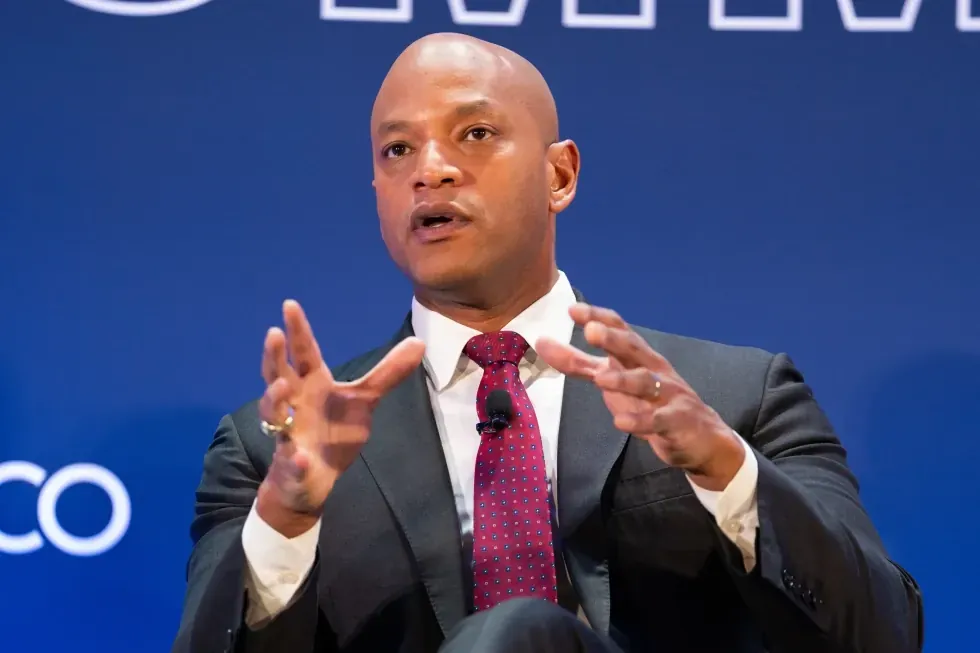
The disagreement centers on Trump’s refusal to invite Democratic Governors Jared Polis and Wes Moore. The president recently criticized both men on social media, describing them as “not worthy” of attending.

Polis, speaking briefly to reporters, said he could not speculate on the president’s reasoning. He emphasized that his focus in Washington remained on collaboration with fellow governors across party lines.
“I’ve spent quality time with my colleagues this morning and really learning from one another,” Polis said, describing the value of sharing policy approaches regardless of political affiliation. He added that such exchanges represent the core purpose of governors’ meetings in the capital.
RELATED POSTS
Moore, who serves as vice chair of the NGA, struck a similar tone. In an interview, he said he had no interest in escalating personal disputes with the president.
“I didn’t run for governor to go toe to toe with the president,” Moore said. He added that he preferred to focus on governing and expressed concern over what he described as late-night criticism from the White House.
Governors seek bipartisan footing amid tensions
The annual winter meeting of governors in Washington has historically provided a rare setting for bipartisan engagement. This year’s gathering began with public displays of collegiality between Moore and Kevin Stitt, a Republican who chairs the NGA.
Appearing together at public events, the two governors exchanged praise and humor, presenting a united front despite broader national polarization. Stitt described Moore as “a great American” committed to serving Maryland’s residents, reflecting the association’s long-standing emphasis on cooperation.
However, efforts to resolve the standoff with the White House appear to have faltered. After Stitt attempted to mediate the dispute, Trump criticized him on social media, accusing him of misrepresenting the president’s position and labeling him a “RINO,” a term meaning “Republican In Name Only.”
Stitt later adopted a conciliatory tone, acknowledging the pressures of the presidency and indicating he would still participate in White House events.
“Politics has a way of beating you down over time,” Stitt said, adding that serving as president carries significant challenges.
The broader fallout illustrates how even symbolic gestures in Washington can become flashpoints in a polarized climate. Although the White House meeting itself is largely ceremonial, it has traditionally served as an opportunity for governors to discuss federal-state cooperation on issues ranging from infrastructure to disaster response.
Former Maryland Governor Larry Hogan, a Republican who occasionally broke with Trump during his tenure, called the decision to exclude governors a mistake.
“It was a nice thing annually to bring all the governors — Republicans and Democrats — together,” Hogan said. He argued that dialogue, even among political rivals, serves the public interest.
Federal-state tensions extend beyond ceremony
The disagreement over invitations comes amid broader debates over executive authority and federal funding. Several governors have raised concerns in recent months about the administration’s approach to federal-state relations, particularly where policy disagreements exist.
At a public forum hosted by Politico, Utah Governor Spencer Cox suggested that Congress should play a stronger role in checking presidential authority. He criticized what he described as political posturing and urged lawmakers to focus on substantive governance.
“Presidents aren’t supposed to do this stuff,” Cox said, adding that states may need to assert themselves more actively when federal power expands.
The comments reflect a recurring theme among governors from both parties: that state governments often serve as counterweights within the federal system. In recent years, disputes over public health mandates, immigration enforcement, environmental regulation and funding allocations have tested those boundaries.
Trump has at times threatened to withhold federal funds or deploy federal resources over the objections of state or local officials. Supporters of the administration argue such steps are within presidential authority; critics say they risk undermining cooperative federalism.
2028 presidential speculation hovers over gathering
Beyond policy disagreements, the annual meeting also drew attention for another reason: speculation about the 2028 presidential race. Several governors widely viewed as potential contenders were present in Washington.
Moore and Pennsylvania Governor Josh Shapiro participated in public panels, fielding questions about national politics while emphasizing their focus on their respective states. Both declined to rule out future bids for higher office.
Kentucky Governor Andy Beshear took a somewhat more open approach. Days after announcing plans to release a book later this year, Beshear discussed the possibility of a presidential campaign at an event hosted by the Center for American Progress.
Asked about timing, Beshear said his immediate priority remains governing Kentucky. Any decision about 2028, he said, would come after consultations with his family.
Notably absent from the Washington gathering were other prominent Democratic governors often mentioned in national discussions, including California’s Gavin Newsom and Illinois’ JB Pritzker.
A break with tradition
Founded in 1908, the National Governors Association has long positioned itself as a bipartisan forum where state leaders advocate collectively for federal policies affecting their jurisdictions. While disagreements between governors and presidents are not new, the association’s decision to step back from facilitating a White House meeting is unusual.
The immediate practical impact may be limited, as individual governors are still expected to engage with federal officials during their time in Washington. Yet symbolically, the breakdown underscores how national political divisions increasingly shape even routine institutional events.
For many governors, the annual meeting remains an opportunity to exchange ideas on education, economic development and public safety — areas where bipartisan collaboration at the state level often persists despite Washington’s partisan climate.
Whether the White House and the NGA restore their customary format in future years may depend less on formal protocol and more on the broader tone of federal-state relations. For now, an event once seen as a modest symbol of unity has become another reflection of the country’s political divides.
This article was rewritten by JournosNews.com based on verified reporting from trusted sources. The content has been independently reviewed, fact-checked, and edited for accuracy, neutrality, tone, and global readability in accordance with Google News and AdSense standards.
All opinions, quotes, or statements from contributors, experts, or sourced organizations do not necessarily reflect the views of JournosNews.com. JournosNews.com maintains full editorial independence from any external funders, sponsors, or organizations.
Stay informed with JournosNews.com — your trusted source for verified global reporting and in-depth analysis. Follow us on Google News, BlueSky, and X for real-time updates.