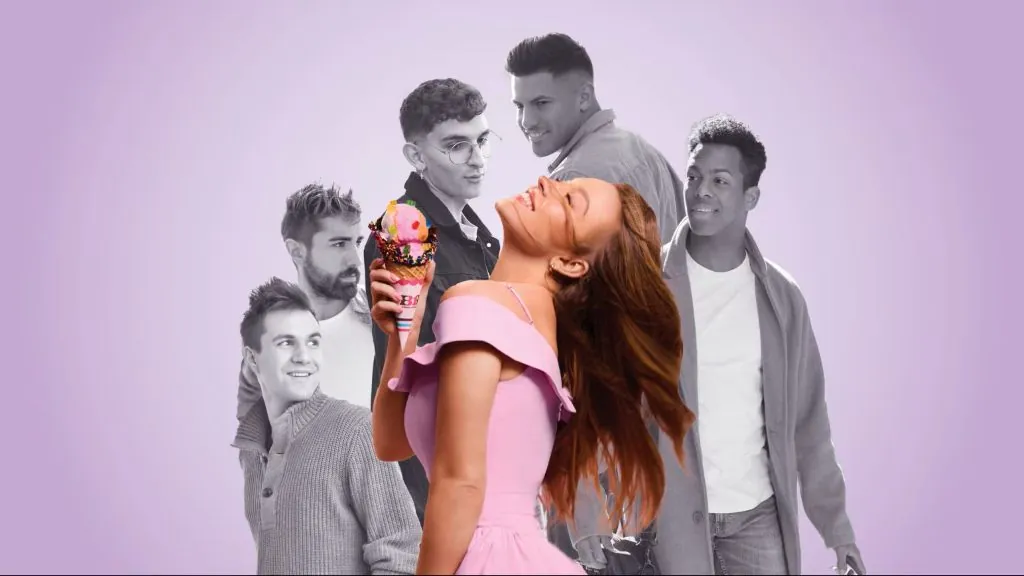
The Male Gaze Makes a Comeback in Modern Media and Culture
Published: October 11, 2025, 21:45 EDT
After years of progress in feminist storytelling and representation, a new wave of pop culture trends appears to be steering society backward. The “male gaze” — a concept describing how women are framed and viewed through a male-centered lens — is once again influencing advertising, entertainment, and social narratives.
A Cultural Shift Reverses Progress
Across the late 2010s and early 2020s, films, television, and advertising reflected more inclusive portrayals of women. Campaigns celebrating body positivity and equality replaced narrow beauty standards and male-dominated storytelling.

However, over the past year, this progress has shown signs of reversal. Influenced by political shifts, social media trends, and changing market forces, depictions of women in mainstream media are increasingly filtered once again through the “male gaze” — prioritizing attractiveness and desirability over agency and complexity.
Cultural analysts suggest this shift coincides with broader political and social changes following movements like #MeToo and the reversal of Roe v. Wade.
Defining the Male Gaze
The “male gaze” is a concept introduced by British film theorist Laura Mulvey in 1975. It refers to the way media often represents women from a heterosexual male perspective, positioning them as objects of visual pleasure rather than autonomous individuals.
Dr. Linda Tuncay Zayer, a professor of marketing at Loyola University Chicago, explains: “The woman’s value is reduced to existing for pleasure — she becomes an object.” This gaze is evident in everything from slow camera pans in films to the use of women’s bodies in advertising.
It is not limited to how women look but extends to how power and narratives are structured — who gets to speak, whose stories matter, and whose desires define social norms.
■ Related News




A New Wave of Advertising and Imagery
Recent ad campaigns illustrate the male gaze’s resurgence. American Eagle’s July campaign, featuring actress Sydney Sweeney, reignited debate for using her image to market jeans by appealing to male attraction.
Similarly, beauty and fashion brands once praised for body diversity are shifting back toward hypersexualized imagery. Even comedic and influencer-led promotions now blur the line between empowerment and objectification.
This change, according to experts, is not accidental — it’s profitable. Sexualized imagery remains one of marketing’s most effective tools, and corporations often revert to it during economic uncertainty or cultural polarization.
Cultural Reactions and Public Concern
While audiences have grown more media-literate, the subtle nature of the modern male gaze makes it harder to spot. “We’re kind of goldfish in water,” Zayer notes. “It’s so ingrained that it feels normal.”
The shift is also reflected in social media, where influencers often reinforce beauty ideals linked to desirability and thinness. Viral trends like “trad wives,” “what I eat in a day,” and “thinspiration” content promote nostalgia for outdated gender roles.
Dr. Katherine Sredl of Loyola University Chicago observes that “historically, there’s almost always a backlash after women achieve something significant.” This mirrors earlier cycles in history — from women’s liberation in the 1920s to conservative retrenchment in the 1950s.
Female Gaze and Alternative Storytelling
Despite the resurgence of male-centered imagery, many creators continue to challenge it. The “female gaze” — an approach centering women’s perspectives, emotions, and agency — has gained traction through projects like Bridgerton, Lady Bird, and Portrait of a Lady on Fire.
These works explore women’s desires and identities without catering to male validation. Other examples, such as Hidden Figures and Everything Everywhere All at Once, highlight women as multidimensional heroes rather than accessories in men’s stories.
Films like Bridesmaids and series like Star Trek have long subverted the male gaze by presenting women as funny, powerful, and complex. Yet, such portrayals remain exceptions in an industry still largely controlled by male directors, writers, and executives.
Marketing, Money, and Media Power
Advertising continues to use sexuality as a selling tool. For decades, brands like Carl’s Jr. and GoDaddy built their images around provocative campaigns. Though many companies shifted to more inclusive strategies by the late 2010s, recent trends suggest a regression.
Social media influencer Alix Earle’s 2025 Super Bowl appearance in a Carl’s Jr. ad — featuring the brand’s classic “bikini and burger” formula — signaled that old tactics still sell.
Critics argue that these portrayals commodify women’s bodies while reinforcing a hierarchy that privileges male desire and whiteness. Even when women appear to “own” their sexuality, the underlying profit structure often benefits corporations more than individuals.
A Gender Divide in Cultural Attitudes
Surveys by Ipsos show a widening gender gap in beliefs about traditional roles. Younger men increasingly favor conservative definitions of masculinity, influenced by online figures like Andrew Tate and certain athletes who promote “traditional values.”
In contrast, many women express frustration over being told their worth lies in domesticity or beauty. Public comments by figures like Kansas City Chiefs player Harrison Butker, who told female graduates to prioritize homemaking over careers, reignited debate about women’s autonomy and ambition.
Yet counter-narratives persist. Many men advocate for emotional awareness and partnership-based family dynamics, arguing that masculinity should include empathy, responsibility, and shared household duties.
Why the Gaze Still Matters
The persistence of the male gaze has tangible effects beyond entertainment. It shapes societal expectations, influences mental health, and constrains both women and men.
When women internalize objectifying standards, self-worth becomes tied to appearance. For men, the gaze fosters emotional detachment and limits their capacity for genuine relationships. “It affects everyone,” Zayer says. “It narrows what we think is possible for both genders.”
Experts also note racial implications — beauty ideals tied to the male gaze often center on whiteness, marginalizing other expressions of identity and attractiveness.
Changing the Narrative
Scholars and activists suggest that expanding who tells stories is key to progress. Supporting diverse filmmakers, authors, and creators can dismantle entrenched biases.
“The stories we consume affect how we see ourselves and others,” said Madeline Di Nonno, CEO of the Geena Davis Institute on Gender in Media. Studies show that diverse representation inspires real-world change — encouraging women to pursue education, careers, and independence.
Audiences can also practice media literacy — recognizing bias, supporting inclusive creators, and questioning which narratives dominate screens and feeds.
Ultimately, as media consumers and creators, the power to reshape representation lies in collective awareness and choice.
Conclusion
The male gaze never fully disappeared — it simply adapted. But awareness, dialogue, and alternative storytelling continue to challenge its dominance. As viewers, readers, and consumers, choosing narratives that celebrate complexity over conformity remains one of the most powerful ways to shift culture toward balance and equality.
Source: CNN – The male gaze is back. And it’s coming for everyone