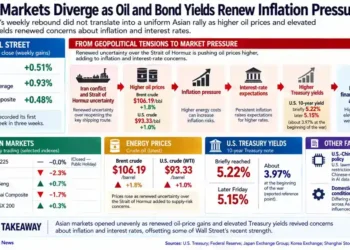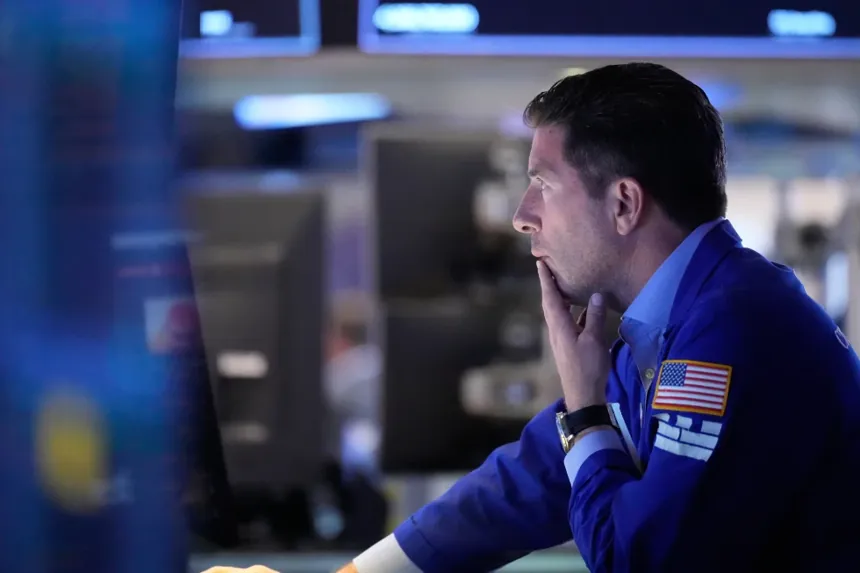
Wall Street’s benchmark **S&P 500 closed at a fresh record high on Wednesday, extending a two-week rally as investors increasingly priced in a potential de-escalation in the U.S.-Iran conflict and improving first-quarter earnings expectations. The index ended at 7,022.95, up 0.8%, while the Nasdaq Composite advanced 1.6% to a new peak, according to market data reported by Reuters.
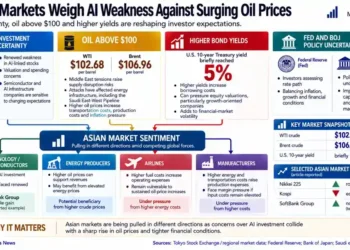
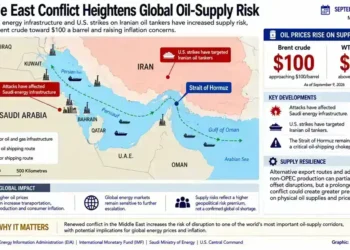
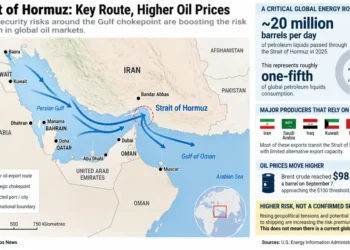
The dominant business angle is market reaction, with geopolitical risk premiums easing across equities as crude oil prices retreated from recent highs. Brent crude, which had briefly surged above $100 per barrel during the early phase of the conflict, moved lower as investors responded to renewed diplomatic signals from Washington and Tehran, reducing immediate concerns over supply disruptions through the Strait of Hormuz.
Earnings momentum reinforces the rally
Beyond geopolitics, the market’s move was supported by stronger corporate fundamentals. Analysts’ estimates for first-quarter S&P 500 aggregate earnings rose to $605.1 billion from $598.7 billion, reflecting better-than-expected resilience in banking and technology results, Reuters data showed.

Large-cap financial stocks helped anchor sentiment after major lenders pointed to stable consumer demand, healthy capital markets activity, and a steady pipeline for mergers and initial public offerings. That backdrop helped investors look past the sharp correction seen when the conflict first escalated, when the S&P 500 had fallen nearly 9% from its prior highs.
Oil retreat eases inflation and policy fears
The pullback in oil also reduced immediate macroeconomic pressure. Lower energy prices may temper near-term inflation risks, a critical variable for central banks and rate-sensitive sectors such as technology and consumer discretionary stocks.
Market participants had been particularly focused on the possibility of a prolonged disruption in Gulf shipping routes. With ceasefire discussions and backchannel diplomacy now back in focus, investors appear to be reassessing worst-case supply scenarios that had previously driven commodity volatility and defensive positioning.
Strategic outlook remains tied to geopolitical headlines
Despite the record close, analysts cautioned that the rally remains highly sensitive to diplomatic outcomes and energy market stability. Any renewed escalation could quickly reintroduce volatility through higher freight costs, oil price spikes, and inflation-linked repricing across global assets.
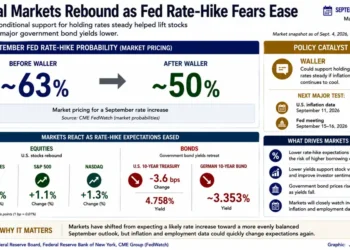
For now, however, Wall Street’s rebound suggests institutional investors are leaning toward a scenario of contained geopolitical fallout, supported by earnings resilience and softer commodity pressure.