ATLANTA (AP) – Millions rely on wearable devices to monitor sleep, but accuracy, interpretation, and psychological effects vary widely.
Sleep-tracking technology has become a mainstream tool for individuals seeking to monitor and improve their sleep habits. Devices such as smartwatches, rings, and dedicated sensors have surged in popularity, with the U.S. market generating an estimated $5 billion in 2023 and forecasts projecting a doubling of revenue by 2030. Yet while these devices are marketed as detailed sleep monitors, experts caution that their readings should be interpreted carefully.
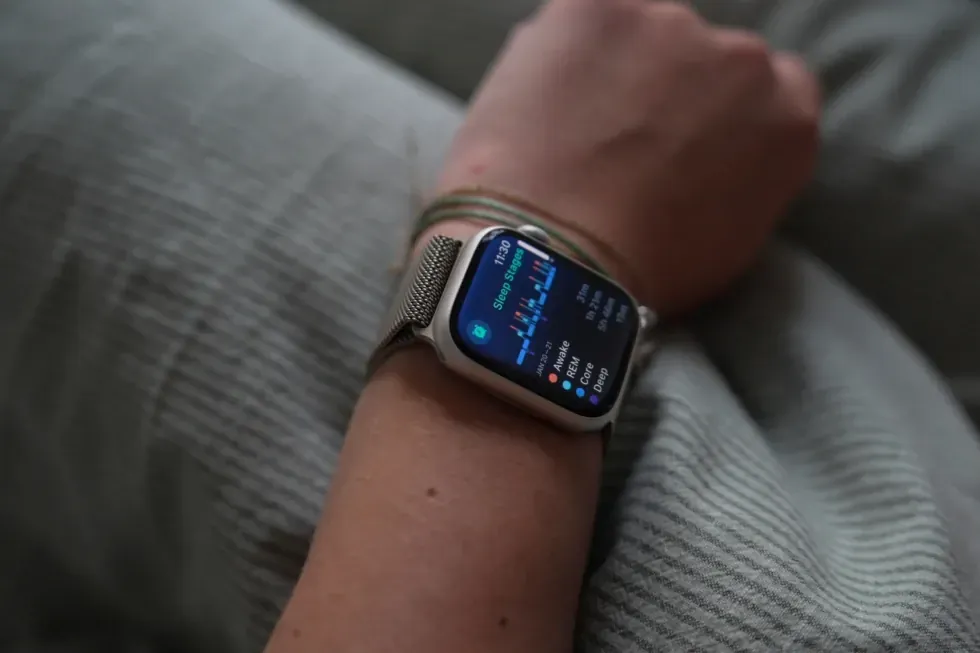
At their core, sleep trackers do not measure sleep directly. Instead, they infer sleep stages and quality from proxies such as heart rate variability, movement, and other physiological signals. This distinction is critical: laboratory-based studies using polysomnography remain the gold standard for precise measurement of sleep architecture, including the distinction between REM and non-REM sleep. Understanding the capabilities and limitations of wearable devices is essential for consumers and healthcare providers alike, particularly as the devices gain influence in shaping personal health behavior.
How sleep trackers measure rest
Wearables like the Apple Watch, Fitbit, and Oura Ring rely primarily on accelerometers and photoplethysmography to monitor movement and heart rate. Algorithms process these signals to estimate when a user is asleep and, to a lesser extent, the stages of sleep. According to Daniel Forger, a University of Michigan mathematician studying wearable sleep technology, the algorithms can achieve high accuracy in determining sleep versus wake states. However, their precision in distinguishing between REM and non-REM sleep remains lower than that of in-lab studies.
The implications of this distinction are significant. Users may be receiving detailed reports on “deep sleep” or “REM sleep” that approximate rather than definitively measure physiological states. While trends over time may reflect meaningful patterns, single-night readings should not be treated as definitive indicators of health.
Interpreting sleep data: trends versus granular measures
Neurologist Dr. Chantale Branson of Morehouse School of Medicine emphasizes that patients often misinterpret device outputs, focusing on granular metrics such as REM duration from a single night. She argues that while wearables are useful for observing patterns over time, they cannot replace clinical evaluation for diagnosing or addressing sleep disorders. Branson recommends that individuals seeking to improve sleep prioritize behavioral strategies—often referred to as “sleep hygiene”—such as consistent bedtimes, limiting screen exposure, and maintaining a comfortable sleeping environment.
Forger, by contrast, highlights the motivational potential of wearables. He notes that even without pre-existing sleep issues, tracking devices can help individuals align their sleep schedules with natural circadian rhythms, potentially enhancing daytime alertness and overall well-being. The difference in perspective illustrates the broader tension between quantitative data collection and behavioral guidance: devices provide information, but the user’s interpretation and response ultimately determine impact.
Behavioral changes driven by sleep data
Users report tangible lifestyle changes stemming from wearable feedback. Kate Stoye, a middle school teacher in Atlanta, described adjusting her alcohol consumption and evening meal timing after observing correlations with lower sleep quality in her Oura Ring data. The feedback loop created by wearable data can reinforce habits that promote better rest, particularly when patterns emerge over weeks or months rather than from single nights.
However, data-driven behavior can also have unintended consequences. Mai Barreneche, an advertising professional in New York City, experienced anxiety linked to nightly sleep scores—a phenomenon researchers describe as orthosomnia. The pressure to achieve optimal scores led to stress, illustrating the potential psychological risks associated with intensive self-monitoring. Branson warns that individual variability in sleep needs, influenced by age, genetics, and lifestyle, makes comparisons between users or even across nights less meaningful. When monitoring becomes a source of stress rather than insight, professional consultation is advised.
Emerging potential and research frontiers
Despite current limitations, experts see significant untapped potential in sleep-tracking technology. Forger suggests that wearables could evolve to detect early signs of infection, track changes in circadian rhythm associated with mental health conditions, or provide remote health monitoring in resource-limited settings. By capturing subtle changes in physiological rhythms, devices could contribute to preventive health interventions, particularly in communities with limited access to clinical diagnostics.
The ongoing challenge lies in translating continuous, sensor-derived data into actionable health insights while avoiding misinterpretation or overreliance. As algorithms improve and validation studies expand, the role of wearables may shift from general wellness tools toward more clinically relevant monitoring instruments. Yet for now, experts stress that the primary utility lies in trend observation and behavioral reinforcement rather than precise medical diagnosis.
Balancing utility and limitation
Sleep trackers occupy a nuanced position between convenience and clinical relevance. They offer an accessible window into personal sleep patterns, capable of motivating behavioral change and highlighting long-term trends. Simultaneously, their readings carry inherent uncertainty, particularly regarding detailed sleep architecture and nightly fluctuations. Both healthcare professionals and users must navigate this duality, leveraging the devices’ strengths without over-interpreting their outputs.
In conclusion, sleep-tracking wearables provide meaningful insights when contextualized appropriately, emphasizing long-term trends, circadian alignment, and behavior reinforcement. They are not a substitute for clinical evaluation, and overreliance may introduce anxiety or misperception of sleep quality. Emerging research indicates that their value may expand further, potentially bridging gaps in preventive health and personalized medicine. Until then, understanding the limitations and appropriate use of these devices is essential for informed adoption.
This article was rewritten by JournosNews.com based on verified reporting from trusted sources. The content has been independently reviewed, fact-checked, and edited for accuracy, neutrality, tone, and global readability in accordance with Google News and AdSense standards.
All opinions, quotes, or statements from contributors, experts, or sourced organizations do not necessarily reflect the views of JournosNews.com. JournosNews.com maintains full editorial independence from any external funders, sponsors, or organizations.
Stay informed with JournosNews.com — your trusted source for verified global reporting and in-depth analysis. Follow us on Google News, BlueSky, and X for real-time updates.