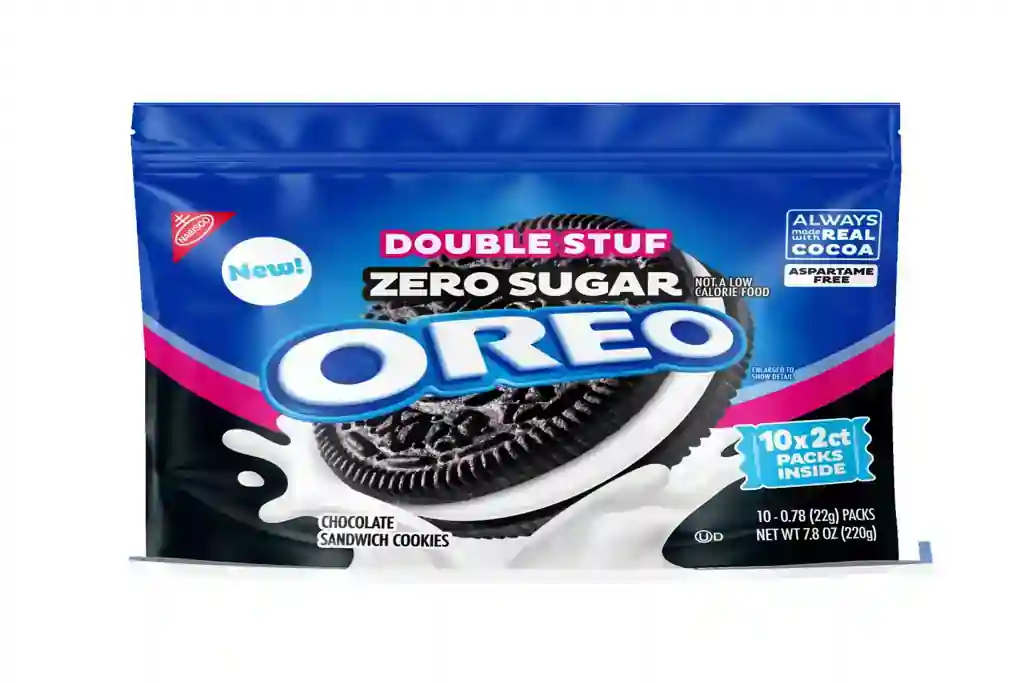
For the first time, U.S. shoppers will be able to buy zero-sugar Oreo cookies — a move Mondelez says reflects accelerating demand for lower-sugar snacks across multiple consumer groups. The launch marks an expansion of the company’s strategy to adapt classic brands for a health-conscious marketplace without sacrificing taste or brand identity.
A Major U.S. Debut for a Global Brand
Mondelez International said Tuesday that Oreo Zero Sugar cookies and Oreo Double Stuf Zero Sugar will arrive in U.S. stores in January, becoming permanent additions to a lineup that has historically centered on indulgence rather than nutrition. Although sugar-free variants have been available in Europe and China for years, this will be the first time American consumers can purchase them domestically.
Company officials describe the move as a response to what they call “mindful indulgence,” a preference for snacks that preserve familiar flavors while reducing ingredients people are trying to moderate, particularly added sugars. In recent years, that shift has also appeared in beverage trends and across the broader packaged-food sector.
Mondelez said the new products were developed over four years to ensure the flavor profile still aligned with consumer expectations for the Oreo brand. The company emphasized that taste testing and formulation were critical to avoid the compromises that have historically made some sugar-free cookies less popular.
Growing Appetite for Health-Conscious Snacking
Industry researchers have documented a steady rise in Americans seeking snacks perceived as healthier or lighter. Circana, a U.S. market insights firm, reported earlier this year that a majority of Americans now gravitate toward foods they view as “good for them,” especially when shopping for everyday snacks.
This shift is particularly strong among Millennials and Generation Z consumers, according to Conagra Brands’ snacking report. These groups tend to prioritize portion control, reduced sugar, functional ingredients and what brands often market as “better-for-you” alternatives. As manufacturers compete for attention from younger buyers, product innovation has accelerated across categories — from low-sugar confections to high-protein snacks and fortified beverages.
The trend is visible in beverage sales as well: Coca-Cola Zero Sugar posted 9% growth last year, significantly outpacing the 2% rise in original Coca-Cola, according to company reports.
Mondelez is not entering the market alone. Hershey already sells zero-sugar versions of some flagship products, including Reese’s Peanut Butter Cups, while Voortman has built an entire brand identity around sugar-free wafer cookies. The competitive landscape suggests that major confectionery companies are betting on long-term demand for options that reduce sugar without removing the indulgent experience.
What’s Inside the New Sugar-Free Cookies
Replacing sugar in a globally recognized product is rarely straightforward. Mondelez said its recipe uses a blend of alternative sweeteners to replicate the sweetness and texture of traditional Oreos. The ingredients include:
-
Maltitol, a sugar alcohol found naturally in some fruits and vegetables.
-
Polydextrose, a soluble fiber commonly used to create bulk in reduced-sugar foods.
-
Sucralose, a widely used artificial sweetener derived from sugar.
-
Acesulfame potassium, another synthetic sweetener that reinforces sweetness when blended with others.
The company noted that balancing sweetness, mouthfeel and shelf stability required numerous formulation rounds. Sugar plays a structural role in cookies, affecting texture as well as flavor. Creating a version without added sugar meant engineers had to recalibrate how each component interacted in the baking process.
Comparing the Nutrition Numbers
Comparisons between Oreo Zero Sugar and the classic Oreo are not perfectly one-to-one because the serving sizes differ. Yet the general nutritional profile illustrates the shift Mondelez is aiming for.
A serving of Oreo Zero Sugar cookies (22.6 grams) contains:
-
90 calories
-
4.5 grams of fat
-
16 grams of carbohydrates
-
0 grams of added sugars
A serving of regular Oreos (34 grams, or three cookies) contains:
-
160 calories
-
7 grams of fat
-
25 grams of carbohydrates
-
13 grams of added sugars, or 26% of the recommended daily value.
While the calorie reduction per serving is modest, the absence of added sugar is the most significant nutritional difference. Public-health groups, including the World Health Organization and U.S. dietary guidelines, have repeatedly advised consumers to limit added sugar intake to reduce risks associated with obesity, diabetes and cardiovascular disease. Although sugar-free products are not inherently “healthy,” they can help reduce overall sugar consumption for people who closely monitor intake.
A Strategic Shift for an Iconic Brand
The arrival of zero-sugar Oreos underscores a broader shift across major food companies: consumers are increasingly reluctant to give up their favorite snacks entirely, but they are more open to reformulated versions that offer small nutritional concessions.
For Mondelez, which owns a portfolio of major snack brands, the challenge is to meet health-minded expectations without alienating long-time fans. The company has tested various portion-controlled products in recent years — including smaller packs and “thin” variants — but sugar reduction represents one of its more significant product engineering efforts.
Food industry analysts note that sugar-free products often struggle with taste consistency, aftertaste or texture. If Oreo Zero Sugar can maintain the brand’s signature flavor, the line may help Mondelez strengthen its position in a competitive market that increasingly values both indulgence and restraint.
The U.S. launch also aligns with the company’s broader global strategy. While tastes vary by region, demand for reduced-sugar alternatives is rising worldwide. In markets like Europe and China, sugar-free Oreos have already carved out a solid niche. The move to bring them to the U.S. suggests Mondelez believes American consumers are ready to embrace similar options.
Looking Ahead
The long-term success of Oreo Zero Sugar will likely depend on repeat purchases rather than novelty interest. As with Coca-Cola Zero Sugar — which gained momentum after a reformulated recipe and expanded marketing — brand loyalty will hinge on whether the sugar-free version feels like a credible substitute.
With snack inflation still influencing buying habits and health-conscious eating on the rise, a product that preserves the taste of an established favorite while removing added sugars may find a strong foothold. Mondelez says the new cookies will remain a permanent fixture, signaling confidence in their appeal.
Whether they become a new staple or a niche offering, the launch reflects a broader reality: Americans want familiar treats, but they are increasingly asking for them in lighter, less sugary forms.
This article was rewritten by JournosNews.com based on verified reporting from trusted sources. The content has been independently reviewed, fact-checked, and edited for accuracy, neutrality, tone, and global readability in accordance with Google News and AdSense standards.
All opinions, quotes, or statements from contributors, experts, or sourced organizations do not necessarily reflect the views of JournosNews.com. JournosNews.com maintains full editorial independence from any external funders, sponsors, or organizations.
Stay informed with JournosNews.com — your trusted source for verified global reporting and in-depth analysis. Follow us on Google News, BlueSky, and X for real-time updates.