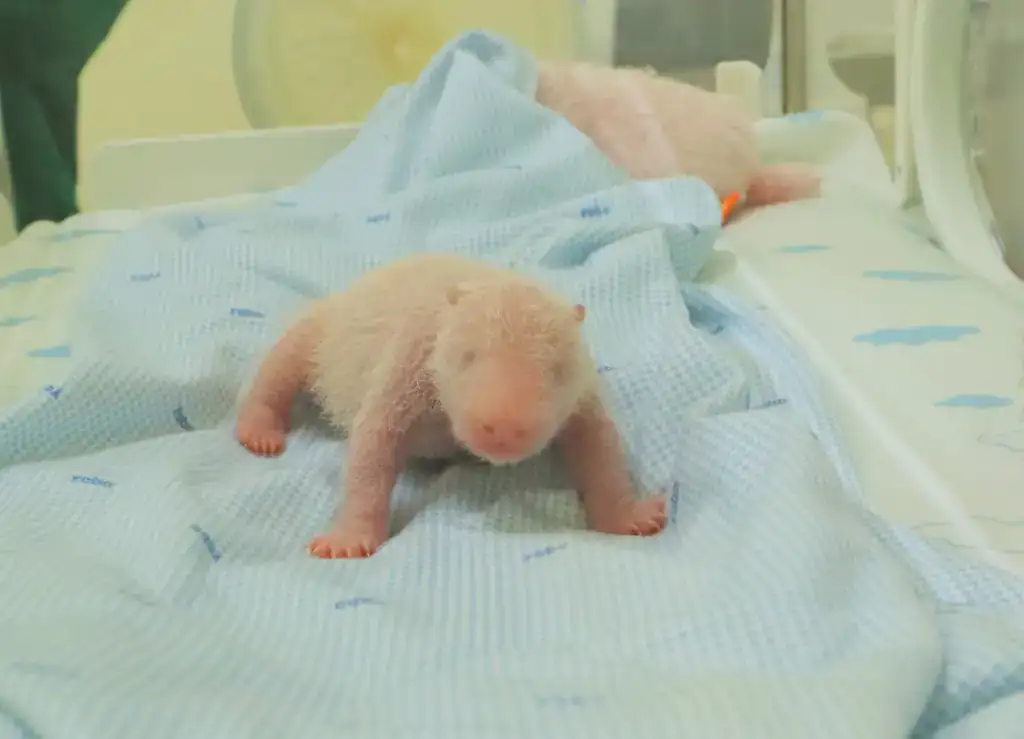
The arrival of the first panda born in Indonesia has sparked national excitement, with zoo veterinarians reporting strong early signs of health and development. The male cub, delivered in late November at Indonesian Safari Park in West Java, represents a major milestone in the country’s decade-long conservation partnership with China. His birth also adds a new chapter to the long-standing tradition of panda diplomacy.
The newborn — named Satrio Wiratama, or Rio for short — has already made a spirited introduction. Zoo footage shows him squirming, squealing and responding actively to caretakers and his mother. For Indonesia, the event marks an important step in its participation in global efforts to safeguard the vulnerable species.
Healthy First Signs for the First Panda Born Indonesia
Veterinarians at Indonesian Safari Park say Rio is “noisy and nursing well,” two indicators that specialists typically look for in the earliest days of a panda’s life. His mother, 15-year-old Hu Chun, delivered him on November 27 after what officials described as a smooth birth. The cub’s vocal strength, steady weight gain and stable temperature suggest he is adjusting normally and showing the developmental cues expected in a newborn panda.
Caretakers have placed him in a temperature-controlled incubator when not with his mother, monitoring his progress around the clock. Over the coming weeks, they expect Rio to develop better temperature regulation, begin to open his eyes and grow a fuller coat of fur. Mobility usually improves during the first two months, although progress differs among individual cubs.
Zoo officials say the health and welfare of both mother and baby remain the top priority. As a result, Rio’s enclosure will remain closed to visitors until he is strong enough for controlled public viewing. This protective approach aligns with global best practices at major panda-breeding centers in China, where handlers limit external interaction in the initial weeks to reduce stress and ensure maternal bonding.
Symbolism and Diplomacy Behind Indonesia’s First Panda Birth
The cub’s arrival carries broader meaning beyond the zoo grounds. Indonesia’s government announced the name Satrio Wiratama last week, symbolizing courage, resilience and joint commitment between Jakarta and Beijing to protect endangered species. President Prabowo Subianto revealed the name during a meeting with Wang Huning, a senior Chinese political adviser and prominent figure in Beijing’s policymaking circles.
The naming gestures highlight the diplomatic significance of panda exchanges, which have been part of China’s foreign engagement strategy for decades. Known widely as “panda diplomacy,” these long-term loans allow partner countries to host giant pandas while supporting breeding and research. The programs are designed to strengthen bilateral ties and raise awareness about conservation challenges.
Indonesia received its adult pandas, Cai Tao and Hu Chun, in 2017 under a 10-year cooperation agreement. The pair has since lived in a dedicated 4,800-square-meter enclosure at the West Java park, roughly 70 kilometers (43 miles) south of Jakarta. The facility was specifically designed to simulate the cool, bamboo-rich environments of the mountainous regions of Sichuan and Shaanxi where wild pandas naturally live.
Their successful reproduction in Indonesia reflects years of husbandry, veterinary planning and habitat preparation, zoo representatives said. Given the species’ notoriously low fertility and narrow reproductive window, every birth is carefully celebrated in breeding centers around the world.
Why Panda Births Are Such a Global Event
Giant pandas remain one of the world’s most recognizable animals and a flagship species for conservation. While China has expanded its national breeding programs and increased protected areas, wild panda populations are still vulnerable. According to the most recent assessments from Chinese conservation authorities and the International Union for Conservation of Nature, fewer than 1,900 pandas remain in the wild, most of them in Sichuan, Shaanxi and Gansu provinces.
The species’ low birth rate is a challenge. Female pandas are fertile for only a brief period each year, and successful mating is never guaranteed. Artificial insemination has helped strengthen numbers, but natural births — like Rio’s — are particularly welcomed because they signal strong pair bonding and good overall health.
Indonesia now joins a small number of countries that have witnessed panda births outside China, a list that includes the United States, Japan, Thailand, Belgium and several others. These births often become national talking points, partly due to the cultural symbolism pandas carry and partly because they remain a conservation success story in progress.
Public Enthusiasm and Next Steps for the New Arrival
In Jakarta and across Indonesia, news of Rio’s birth has already drawn significant public attention. Although the cub is not yet available for viewing, expectations are rising for his eventual debut. Typically, panda cubs are shown to the public only once they have developed enough mobility and resilience — usually between three and five months after birth.
For now, the zoo is focused on stabilizing Hu Chun’s postpartum health and ensuring she continues nursing consistently. Female pandas are known to be attentive mothers, but early developmental stages require constant supervision. Keepers rotate on shifts to manage feeding, temperature control and daily checks, similar to protocols used in China’s main panda bases in Chengdu and Bifengxia.
The zoo’s team says Rio’s growth markers are “on track,” and they anticipate releasing additional updates as he progresses. Officials have expressed hope that Rio will strengthen Indonesia’s role in global breeding programs and contribute to future research collaborations.
Conservation Commitments Reinforced Through a Milestone Birth
The arrival of the first panda born in Indonesia comes at a moment when many conservation programs worldwide are seeking renewed momentum. Habitat protection, wildlife corridors and improved forest management continue to shape global environmental goals. For Indonesia, which manages a vast network of tropical forests and biodiversity hotspots, partnerships with countries like China add scientific and diplomatic weight to its conservation agenda.
Pandas, despite their iconic status, face challenges shared by many species: shrinking habitats, climate pressures and limited genetic diversity. Births in overseas breeding centers demonstrate how long-term cooperation can help support the species’ survival. They also serve as public reminders that conservation requires both international collaboration and local community engagement.
Rio’s early weeks mark the beginning of a long journey, one that will involve years of observation, veterinary care and environmental management. But for now, his arrival has delivered a rare bright moment — a sign of resilience wrapped in black-and-white fur, capturing attention far beyond West Java.
This article was rewritten by JournosNews.com based on verified reporting from trusted sources. The content has been independently reviewed, fact-checked, and edited for accuracy, neutrality, tone, and global readability in accordance with Google News and AdSense standards.
All opinions, quotes, or statements from contributors, experts, or sourced organizations do not necessarily reflect the views of JournosNews.com. JournosNews.com maintains full editorial independence from any external funders, sponsors, or organizations.
Stay informed with JournosNews.com — your trusted source for verified global reporting and in-depth analysis. Follow us on Google News, BlueSky, and X for real-time updates.