A Melbourne teacher’s search for answers about missing fabric orders ignited a global online reckoning that pulled in customers, artists, and international suppliers. What followed was a months-long unraveling of a brand that had once been hailed as a rising force in Australia’s independent textiles scene.
A Costly Search for Answers
Focus keyphrase: Fabric queen scandal
The fabric queen scandal began quietly in late 2024, when Melbourne-based legal studies teacher Maree O’Connor grew tired of waiting for fabric orders that never arrived. At 6ft tall and plus-size, she had long relied on sewing to create well-fitted garments, often sourcing vibrant, high-quality fabrics online. After spending nearly A$900 on prints that caught her eye—a yellow floral pattern and a black-and-white abstract design—she waited months without receiving a single shipment.
By October, frustrated and looking for answers, she created a small Facebook group to find others experiencing similar delays. What she expected to be a niche conversation quickly expanded into something larger. Within two weeks, the group had attracted hundreds of members, suggesting the delays were widespread.
That online space soon revealed that customers around the world—from Australia to Europe and the United States—had been waiting months or years for orders. Some reported receiving only generic email updates, while others described unanswered messages and shifting explanations about supplier delays or holidays. It was the first public sign that something was deeply wrong at the center of a popular independent fabric brand.
A Designer Who Rose to Global Visibility
At the center of the controversy was Nerida Hansen, an Australian designer whose prints had gained global attention during the pandemic. Her bold, distinctive patterns regularly appeared on Instagram, promoted by home sewists, influencers, and independent designers. Several Australian newspapers had even dubbed her “the queen of fabrics,” a moniker that elevated her status within a passionate global sewing community.
Artists who collaborated with her often expressed admiration for her aesthetic judgment. UK-based illustrator Gabriela Larios said she believed Hansen offered “something different and new,” while New Zealand artist Sarah Rowe described her as “formidable” and creatively driven.
But as the Facebook group grew, so did concerns about delays, unfulfilled orders, and unanswered messages. For many customers, the turning point came when they learned that despite widespread complaints, the company continued to accept new orders.
Growing Alarm Over Missing Deliveries
Among those who joined the group was U.S. business owner Bergen Anderson, who had ordered more than US$3,300 worth of prints in 2024 to produce children’s clothing. Like Ms O’Connor, she received only generic emails promising imminent shipment. When her goods never arrived, she turned to bank chargebacks but managed to recover only part of the money.
Inside the Facebook group, she found hundreds of similar accounts. Members questioned why new orders were still being processed when older ones remained undelivered. Ms O’Connor began advising customers to seek refunds through their banks and to alert consumer regulators.
When Hansen discovered the group, she contacted Ms O’Connor requesting that it be taken down, arguing that the posts were defamatory. She also offered Ms O’Connor an immediate refund—an offer that made Ms O’Connor wonder whether the designer’s concern was reputational rather than operational. She refused to close the group, saying customers “were siloed, they didn’t know what was going on.”
Suppliers and Artists Step Forward
As the group expanded, its membership began to include not only dissatisfied customers but also suppliers and artists who alleged they were owed money.
One supplier, William Shan, worked for a Chinese fabric manufacturer that, he said, continued sending goods even as payments stalled. He alleged Hansen’s company failed to pay for multiple shipments worth tens of thousands of dollars in 2022 and 2023. Because Hansen had maintained strong credit in earlier years, he said his team continued to supply her in hopes she would recover financially. By the time they realized the scale of the problem, he said, communication had stopped.
Artists across Europe, Australia, and New Zealand also reported unpaid royalties and disappearing correspondence. French illustrator Clémence Albertus, who had licensed a floral print for a collaboration with European retailer Verhees, discovered her design on sale only through chance. She said it was offered in colourways she had never approved and that she had received no royalties.
Verhees told the BBC it was not responsible for designer payments and suspended its collaboration with Hansen’s label after concerns surfaced.
Not all artists blamed Hansen entirely. Some said late invoicing or communication challenges contributed to the payment issues. Others, such as Ms Rowe, believed the designer had good intentions but lacked strong business management skills.
Still, for many customers and suppliers, the pattern felt too systemic to be accidental.
A Public Warning and New Allegations
By September 2025—nearly a year after the Facebook group started—Consumer Affairs Victoria issued a public warning. The agency said it had received more than 120 complaints over a 12-month period from customers who collectively reported losing nearly A$30,000.
Officials urged consumers to avoid buying from Hansen’s online platforms and listed several names she was alleged to have used in business operations. Hansen denied operating under all of them.
Soon after the warning, she announced she would shut down her businesses by the end of the month. Yet fabric sales continued under different domain names well into November, adding to customer confusion.
Hansen Responds: ‘Great Shame and Embarrassment’
In a statement provided to the BBC, Hansen acknowledged that she had made “very poor” business decisions and that she was responsible for significant mismanagement. She cited financial difficulties beginning in 2022, which led to the liquidation of one company and the creation of another.
She said she fell further behind on orders in 2024 due to supplier delays and internal issues and intended to fulfil orders by early 2025. According to her, the Facebook group triggered a wave of refund requests and chargebacks, overwhelming the business and leading to a freeze on her trading accounts.
Hansen insisted she still intended to refund customers when financially able. She also accused the Facebook group’s founder of enabling “social media harassment,” digital monitoring, and interference with her livelihood—allegations Ms O’Connor strongly rejected.
“Customers being persistent and demanding in terms of seeking a refund… is not harassment,” Ms O’Connor said.
A Community Seeking Closure
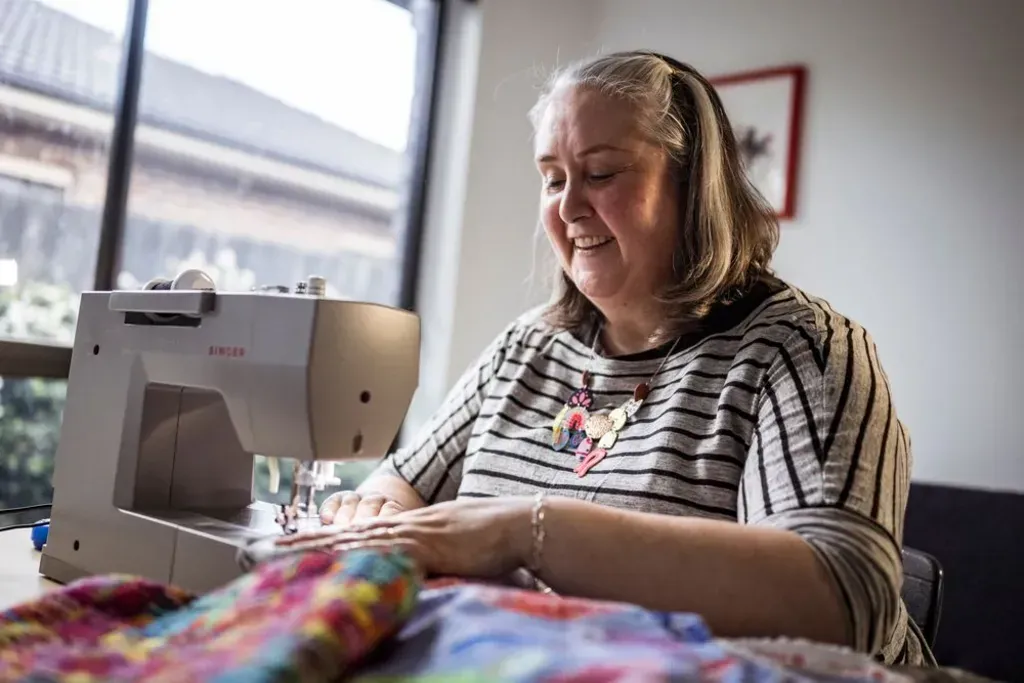
Despite the turmoil, Ms O’Connor continues to sew, though she says she will never wear Hansen’s designs again. She plans to keep the group active until customers receive refunds or the business is permanently closed.
“Some people are still awaiting justice,” she said. “We hope that can be achieved.”
This article was rewritten by JournosNews.com based on verified reporting from trusted sources. The content has been independently reviewed, fact-checked, and edited for accuracy, neutrality, tone, and global readability in accordance with Google News and AdSense standards.
All opinions, quotes, or statements from contributors, experts, or sourced organizations do not necessarily reflect the views of JournosNews.com. JournosNews.com maintains full editorial independence from any external funders, sponsors, or organizations.
Stay informed with JournosNews.com — your trusted source for verified global reporting and in-depth analysis. Follow us on Google News, BlueSky, and X for real-time updates.