Keeping your brain sharp as you age has a lot to do with your heart — and the younger you start taking better care of it, the better — according to a new scientific statement published Thursday by the American Heart Association.
“Dementia is commonly seen as an incurable and relentless disease that cannot be prevented,” said Dr. Fernando Testai, a professor of neurology and rehabilitation at the University of Illinois College of Medicine in Chicago, in a statement.
“Evidence shows, however, that adopting a healthy lifestyle and identifying and treating vascular risk factors early may help preserve normal brain function and reduce the burden of Alzheimer’s disease and other related dementias,” said Testai, who chaired the statement writing group.

Nearly 130 million adults in the United States have some form of heart disease, according to the AHA. Adopting a heart-heathy lifestyle should start early in life, even before a baby is born, said Dr. Andrew Freeman, director of cardiovascular prevention and wellness at National Jewish Health in Denver.
“This call to action is especially critical right now because so many Americans have some form of heart disease and people are getting sicker and sicker earlier in life,” said Freeman, who was not involved in writing the AHA statement.
“The typical American curse is that we all work hard our whole lives,” Freeman said. “We save our money, we get ready to retire, and then we look forward to heart attacks, strokes, dementia — diseases that are potentially avoidable if we can act early enough and change our lifestyles.”
Dementia and plaque in the arteries
Coronary heart disease, which is the buildup of plaque in the body’s arteries, is the lead killer in the world, according to the World Health Organization. Deaths from coronary artery disease have risen from 6.4 million in 2000 to 9.1 million in 2021, the WHO said.
The disease also takes a toll on the brain. The narrowing of arteries that occurs with coronary heart disease and high blood pressure can reduce blood flow and cause damage to the small blood vessels in the brain, resulting in cognitive impairment, the AHA said. High blood pressure and type 2 diabetes can also reduce blood flow to the brain and increase inflammation, leading to cognitive decline and dementia.
Having coronary heart disease raises the risk of future dementia by 27% compared with people without heart disease, the AHA statement said. The disease can start in a person’s 40s and 50s, often with no visible symptoms to alert a person of the danger.
Heart attacks and heart failure
About every 40 seconds, someone in the United States will have a heart attack, the AHA estimates. After that happens, up to 50% of those who survive experience loss of brain function, with some taking a sharper decline into cognitive impairment, the AHA statement said.
Heart failure is a more severe form of heart disease, in which the heart is too weak to pump enough blood and oxygen to the body’s organs. According to the new scientific statement, up to 81% of people with heart failure can have some form of cognitive decline that impacts their memory, language, or ability to think and plan.
“Emerging evidence suggests that the bidirectional relationship between the heart and the brain is deeper than we thought,” Testai said in an email. “Vascular risk factors associated with cardiac diseases, such as diabetes, can increase the levels of beta-amyloid in the brain. which is recognized as a key marker of Alzheimer’s disease.
“In return, beta-amyloid has been found in the heart and is associated with cardiac dysfunction,” he said. “These findings suggest a fundamental biochemical connection between the heart and the brain.”
A-fib and dementia
Known as A-fib, atrial fibrillation is an irregular heartbeat often described by many people who have it as a “quiver,” “flutter” or “flip-flop” of the heart in the chest.
Atrial fibrillation is the leading cause of stroke in the US. In addition, strokes connected to A-fib tend to be “more severe than strokes with other underlying causes,” according to the US Centers for Disease Control and Prevention.
Small brain bleeds, called microhemorrhages, that can lead to cognitive decline are more common in people with atrial fibrillation, according to the new scientific statement. In fact, people with A-fib have a 39% increased risk of memory or thinking problems.
The rate of atrial fibrillation in the US is growing — estimates suggest up to 16 million people will have A-fib by 2050.
Focus on lifestyle changes
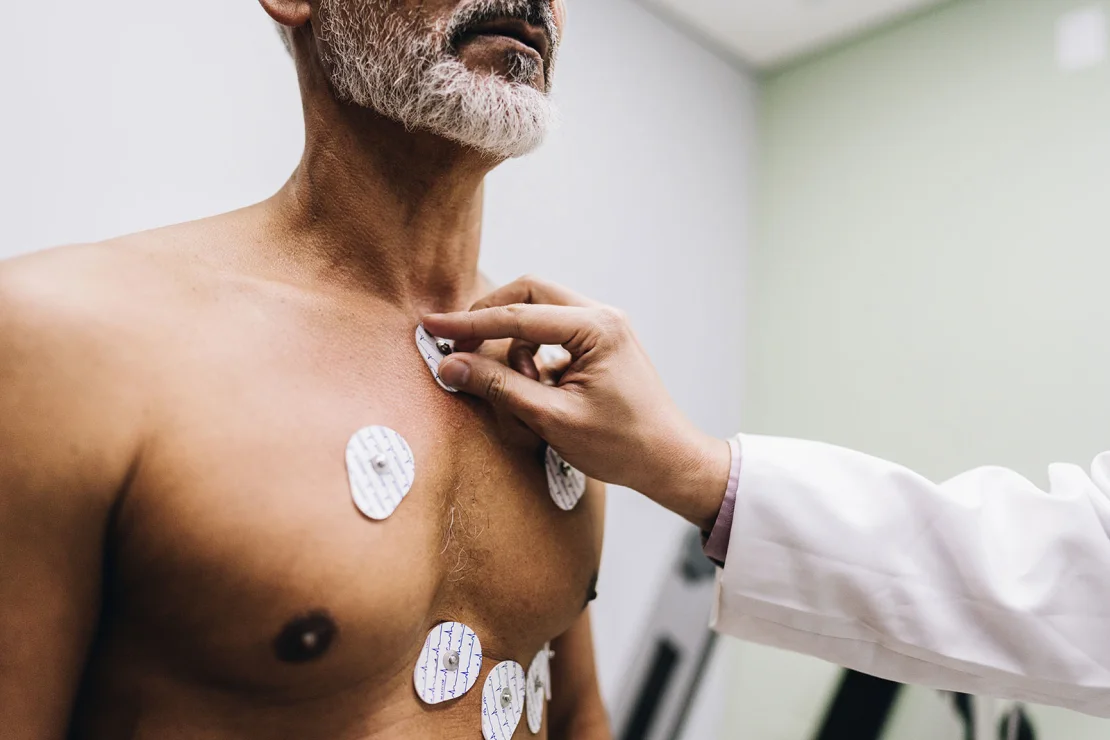
Modern medicine has amazing drugs — such as statins and cholesterol-lowering medications — that can prevent or slow heart disease, especially if caught early, Freeman said. Regular checkups and taking prescribed medications on a daily basis are critical to making that happen, he added.
However, there is a limit on what drugs can accomplish. For example, aggressively treating high blood pressure has shown promise in reducing mild cognitive impairment but not dementia, the AHA statement said.
“Humans were designed to live very differently than we live today, and it’s an imperative that people understand how unbelievably important lifestyle is,” Freeman said.
What are the key lifestyle factors that boost brain health? Nothing you haven’t heard before.
Prioritize sleep
Being well-rested boosts mood, improves energy and sharpens the brain. People who have more interrupted sleep in their 30s and 40s are more than twice as likely to have memory and thinking problems a decade later, a January study found.
The “sweet spot” for restorative slumber is when you can sleep continuously through the four stages of sleep four to six times each night. Since each cycle is roughly 90 minutes long, most people need seven to eight hours of relatively uninterrupted z’s to achieve this goal.
Concentrate on nutrients
Be sure to eat a healthier plant-based diet, such as the award-winning Mediterranean diet.
An August study found eating an anti-inflammatory diet of whole grains, fruits and vegetables instead of an inflammatory diet focused on red and processed meats and ultraprocessed foods, such as sugary cereals, sodas, fries and ice cream, lowered the risk of dementia by 31%.
That benefit held true even for people with existing diagnoses of cardiometabolic conditions such as type 2 diabetes, heart disease and stroke.
Reduce stress
High levels of cortisol — the so-called stress hormone — were associated with damage to the parts of the brain that move and manage information, an October 2018 study found. Another study published in March 2023 found people with elevated stress levels were 37% more likely to have poor cognition.
Stress isn’t inherently bad, and adopting ways to view stressors as healthy challenges can help, experts say. Other ways include getting plenty of sleep, eating healthy foods, and limiting your time following the news or engaging in social media, according to the World Health Organization. It also helps to stay connected with others and to employ calming practices such as meditation and deep breathing. One of the most successful tools, though, is physical activity.
That’s right — exercise is critical
If there is only lifestyle change you can make, focus on exercise, Freeman said. Adults should do 150 minutes of moderate-intensity activity or 75 minutes of vigorous activity each week, along with strength training, according to the CDC. You know you’re doing moderate exercise when you are breathing hard and unable to sing a song, but can still talk. Vigorous activities such as jogging, swimming laps or playing basketball will make it hard to speak at all.
The increase in activity benefits the whole body, including the brain, studies have shown. A September 2022 study found people who walked at a very brisk pace of 112 steps per minute for 30 minutes a day lowered their risk of dementia by 62%.
Don’t have a step counter? You can count the number of steps you take in 10 seconds and then multiply it by six — or the number of steps you take in six seconds and multiply it by 10. Either way works.
“Physical activity is just absolutely magnificent,” Freeman told CNN. “And when if you blend that with eating a more plant-based diet, de-stressing, sleeping enough and connecting with others — that’s your magic recipe. It’s the fountain of youth, if you will.”
This article was rewritten by JournosNews.com based on verified reporting from trusted sources. The content has been independently reviewed, fact-checked, and edited for accuracy, neutrality, tone, and global readability in accordance with Google News and AdSense standards.
All opinions, quotes, or statements from contributors, experts, or sourced organizations do not necessarily reflect the views of JournosNews.com. JournosNews.com maintains full editorial independence from any external funders, sponsors, or organizations.
Stay informed with JournosNews.com — your trusted source for verified global reporting and in-depth analysis. Follow us on Google News, BlueSky, and X for real-time updates.