Journos News - Breaking News, World News, Top Stories, Todays Headlines and Flash Reports
Tuesday, July 14, 2026
  • Login
  • Home
  • World
    • Africa
    • Americas
    • Asia
    • Europe
    • Middle East
    • Oceania
  • Politics
  • Business
  • Technology
  • Health
  • Science
  • Sports
  • Entertainment
  • Culture
No Result
View All Result
  • Home
  • World
    • Africa
    • Americas
    • Asia
    • Europe
    • Middle East
    • Oceania
  • Politics
  • Business
  • Technology
  • Health
  • Science
  • Sports
  • Entertainment
  • Culture
No Result
View All Result
Journos News - Breaking News, World News, Top Stories, Todays Headlines and Flash Reports
No Result
View All Result
Home Science

Could a 2032 Asteroid Strike the Moon? What Scientists Are Watching Closely

NASA says asteroid 2024 YR4 won’t hit Earth—but its new trajectory could bring it dangerously close to the moon.

The Daily Desk by The Daily Desk
June 24, 2026
in Science, Space & Astronomy
0
NASA Tracks 2024 YR4: Moon Impact Risk Grows Despite Earth Being Safe - NASA/CNN

Lunar Impact Possible: 2024 YR4 Asteroid No Longer a Threat to Earth - NASA/CNN

Asteroid 2024 YR4 May Miss Earth—but the Moon Could Be at Risk

Written: July 29, 2025, 14:00 U.S. Eastern Time

A newly discovered asteroid that once seemed to pose a threat to Earth is no longer a direct danger to our planet—but now, astronomers are keeping a close eye on its potential to strike the moon. Asteroid 2024 YR4, roughly the size of a building, is being closely tracked after new data shifted its predicted path.

With current calculations ruling out an Earth impact, scientists are now exploring what might happen if the asteroid crashes into the moon in late 2032—and what the implications could be for future lunar missions and Earth’s satellite infrastructure.

A Near Miss for Earth, a Close Call for the Moon

First discovered in December 2024 by the ATLAS telescope in Chile, asteroid 2024 YR4 initially caused alarm. Early models suggested a possible Earth impact on December 22, 2032, with a peak probability of 3.1%—the highest risk level ever observed for a near-Earth object.

Thanks to a combination of ground-based observations and data from the James Webb Space Telescope (JWST), astronomers refined YR4’s trajectory and have since ruled out any Earth collision. However, recent measurements taken in early June 2025 before the asteroid slipped out of telescope range indicate a 4.3% chance of it hitting the moon.

RELATED POSTS

Vera C. Rubin Observatory Launches Decade-Long Sky Survey With World’s Largest Digital Camera

Scientific Imaging Reveals Hidden Layers in Raphael Portrait’s Restoration History

Artemis II Splashdown Validates NASA’s Deep-Space Systems for Future Lunar Research

Artemis II Lunar Flyby Will Test Deep-Space Systems Ahead of Future Moon Landings

NASA resumes Artemis II preparations after repairs on Space Launch System rocket

Total Lunar Eclipse Colors the Moon Reddish-Orange Across Multiple Continents

According to NASA, this new data has improved orbital predictions by nearly 20%, giving scientists a more accurate idea of YR4’s potential path in seven years.

What Would a Lunar Impact Look Like?

Though small compared to planetary “killers,” asteroid 2024 YR4 is estimated to be about 60 meters (roughly 200 feet) in diameter—large enough to cause regional devastation on Earth, or significant disruption if it hits the moon.

“The energy of an impact is directly tied to the size of the object,” explained Dr. Julien de Wit, an associate professor of planetary sciences at MIT. “Knowing YR4’s size gives us a sense of how powerful the explosion would be.”

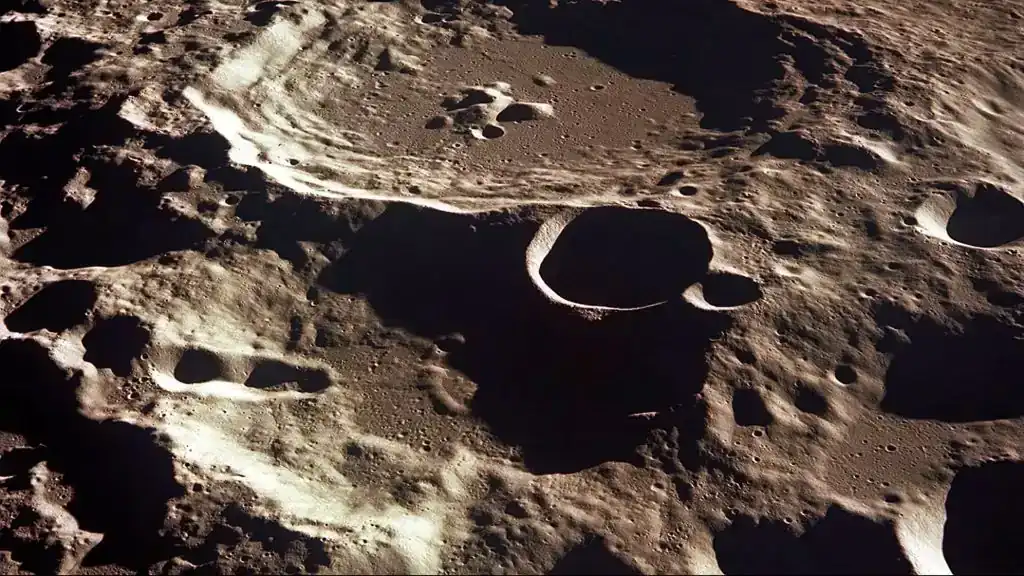
If YR4 strikes the moon, scientists estimate it could create a crater nearly 1 kilometer (0.6 miles) wide—similar in size to Arizona’s Meteor Crater. The resulting debris field could launch up to 100 million kilograms (220 million pounds) of lunar dust and rock into space.

Could It Affect Earth or Satellites?

While humans on Earth would not face any direct harm, a moon impact could have consequences for space infrastructure. Fine lunar particles traveling at extremely high speeds may eventually reach Earth’s atmosphere, causing an intense meteor shower. These particles could also threaten satellites or orbiting spacecraft.

“Even sugar-cube-sized particles moving faster than a bullet can damage sensitive satellite components,” said Dr. Paul Wiegert, lead author of a forthcoming study on YR4’s potential impact.

Though the risk of a catastrophic satellite chain reaction (known as Kessler Syndrome) remains low, even minor impacts could disrupt communications, navigation, and scientific missions.

Risk to Lunar Infrastructure and Astronauts

NASA and other space agencies have long-term goals to establish permanent lunar habitats by the 2030s. A direct impact near these installations could endanger astronauts or delay lunar exploration programs.

“The moon is no longer just a distant object—it’s part of our operational environment,” said Wiegert. “That means we need to start considering planetary defense for it, too.”

Could YR4 Be Deflected?

If asteroid YR4 were on course to hit Earth, a mission like NASA’s 2022 Double Asteroid Redirection Test (DART) might be deployed. The DART mission successfully altered the orbit of a moonlet asteroid, Dimorphos, by crashing a spacecraft into it at high speed.

However, deploying a deflection mission for an asteroid threatening the moon raises questions. Unlike Earth, the moon lacks an atmosphere to absorb impacts. Any deflection attempt would need to consider the safety of nearby lunar assets and the feasibility of intercepting such a fast-moving object.

For now, the next chance to observe YR4 will come around 2028, and researchers are already planning to use JWST and other tools to gather data.

Improving Asteroid Detection

One challenge with 2024 YR4’s discovery was that it wasn’t detected until after it had already passed Earth—hidden by the sun’s glare. This blind spot has long hindered astronomers from spotting inbound objects on sunward trajectories.

Future missions like NASA’s NEO Surveyor (launching in 2027) and the European Space Agency’s NEOMIR (set for the early 2030s) are designed to close that observational gap by detecting asteroids closer to the sun.

“NEOMIR would have spotted YR4 at least a month earlier,” said Richard Moissl, head of ESA’s Planetary Defence Office. “That would have given us more time to assess the threat.”

What Happens Next?

Though the odds of a lunar impact remain relatively low, astronomers will be watching closely. Any future collision would offer a rare opportunity to observe the effects of a real-time impact on the moon, yielding valuable scientific data.

De Wit and fellow researcher Dr. Andy Rivkin have already secured JWST observation time for spring 2026 to monitor YR4’s return to visibility. Their goal is to further refine predictions and help space agencies prepare in case deflection becomes necessary.

“This program buys us two extra years to either plan or relax,” de Wit said. “And it sets the stage for how we deal with potential impactors discovered by upcoming observatories like Rubin.”

Final Thoughts

Asteroid 2024 YR4 is a compelling case study in the evolving field of planetary defense. Though Earth is safe for now, the moon’s vulnerability marks a new frontier for protecting humanity’s expanding presence in space.

As scientists gather more data, missions like JWST, NEO Surveyor, and Rubin Observatory will play a vital role in shaping our preparedness for future celestial threats—whether they target Earth or its only natural satellite.

Source: CNN – The asteroid that will spare Earth might hit the moon instead. What happens if it does?

Tags: #2032Asteroid#Asteroid2024YR4#AsteroidTracking#AstronomyAlert#LunarCollision#MoonImpactRisk#NASAUpdate#NASAWarning#NearEarthObjects#PlanetaryDefense#SpaceDebrisThreat#SpaceNews2025
The Daily Desk

The Daily Desk

The Daily Desk is a contributor at JournosNews.com covering politics, media, governance, and the evolving dynamics of public discourse. Stories published under this byline are produced in accordance with JournosNews' editorial standards, with an emphasis on verified reporting, accuracy, context, and impartiality.

Related Posts

Vera C. Rubin Observatory Launches Decade-Long Sky Survey With World’s Largest Digital Camera

by The Daily Desk
July 2, 2026
0
Vera C. Rubin Observatory telescope beginning its decade-long southern sky survey - NSF–DOE Vera C. Rubin Observatory/NOIRLab/SLAC/AURA via AP

NEW YORK — The Vera C. Rubin Observatory has officially launched a decade-long astronomical survey using the world's largest digital...

Read moreDetails

Scientific Imaging Reveals Hidden Layers in Raphael Portrait’s Restoration History

by The Daily Desk
June 23, 2026
0
X-ray analysis reveals hidden layers in Raphael unicorn portrait - Alamy/ Galleria Borghese

Advanced imaging and conservation research are reshaping scholarly understanding of Raphael’s Portrait of a Young Woman with a Unicorn, with...

Read moreDetails

Artemis II Splashdown Validates NASA’s Deep-Space Systems for Future Lunar Research

by The Daily Desk
June 23, 2026
0
Artemis II Orion capsule splashes down after lunar return mission - Bill Ingalls/NASA via AP

NASA’s Artemis II mission concluded with a Pacific splashdown after nearly 10 days in deep space, delivering the first crewed...

Read moreDetails

Artemis II Lunar Flyby Will Test Deep-Space Systems Ahead of Future Moon Landings

by The Daily Desk
June 23, 2026
0
Artemis II crew aboard Orion during lunar flyby systems test - AP Photo/Chris O’Meara

NASA’s Artemis II mission is set to deliver the most significant deep-space systems test since the Apollo era, as four...

Read moreDetails

NASA resumes Artemis II preparations after repairs on Space Launch System rocket

by The Daily Desk
June 23, 2026
0
NASA rocket moved back to launch pad for Artemis II mission - AP Photo/Terry Renna

NASA has returned its massive Space Launch System (SLS) rocket to the launch pad at Kennedy Space Center, marking a...

Read moreDetails

Total Lunar Eclipse Colors the Moon Reddish-Orange Across Multiple Continents

by The Daily Desk
June 23, 2026
0
Red lunar eclipse visible across Asia and Americas sky - Petros Giannakouris/AP

A total lunar eclipse on Tuesday is giving the moon a reddish-orange hue, visible across Asia, Australia, the Pacific Islands,...

Read moreDetails

Chile Telescope Discovery Reveals Striking New Image of Cosmic ‘Butterfly’

by The Daily Desk
June 24, 2026
0
Gemini South telescope captures glowing Butterfly Nebula image - NSF NOIRLab via AP

A Chile-based telescope has captured a sweeping new image of the Butterfly Nebula, offering one of the clearest looks yet...

Read moreDetails

1,700-Year-Old Roman Sarcophagus Unearthed in Budapest

by The Daily Desk
June 23, 2026
0
1,700-Year-Old Roman Sarcophagus Unearthed in Budapest’s Óbuda District - Gabor Lakos, Budapest History Museum via AP

Roman Sarcophagus Found in Budapest Reveals Pristine 4th-Century Burial A remarkably preserved Roman sarcophagus, dating back approximately 1,700 years, has...

Read moreDetails

Researchers Analyze DNA Believed to Belong to Hitler, Reveal Possible Genetic Condition

by The Daily Desk
June 23, 2026
0
Researchers analyze Hitler’s DNA, suggesting a rare hormonal disorder and debunking ancestry rumors in new documentary. - Blink Films via CNN

Analysis of Hitler’s DNA Suggests Rare Hormonal Condition, Genetic Study Sparks Debate A team of researchers led by Turi King...

Read moreDetails
Load More
Next Post
Ghislaine Maxwell claims Epstein deal shields her from prosecution - Laura Cavanaugh/Getty Images/File

Ghislaine Maxwell asks Supreme Court to overturn sex-trafficking conviction

Gabbard’s Russiagate revelations reignite calls for DOJ investigation into 2016 election probe - Melina Mara/The Washington Post via Getty Images

Tulsi Gabbard’s Russiagate Documents Rekindle Debate Over 2016 Intelligence Abuse

Kidnapped and Killed: Dozens Die in Nigeria Despite Ransom Payment - Getty Images

Nigeria Zamfara killings raise alarm over worsening kidnapping crisis

JournosNews logo

Journos News delivers globally neutral, fact-based journalism that meets international media standards — clear, credible, and made for a connected world.

  • Categories
  • World News
  • Politics
  • Business & Markets
  • Technology
  • Health
  • Science
  • Sports
  • Arts & Culture
  • Resources
  • Editorial Standards
  • Submit a Story
  • Advertise with Us
  • Syndication & Partnerships
  • Site Map
  • Press & Media Kit
  • Editorial Team
  • Careers

Join thousands of readers receiving the latest updates, tips, and exclusive insights straight to their inbox. Never miss an important story again.

  • About Us
  • Editorial & Trust Center
  • Contact Us
  • Privacy Policy
  • Terms of Use & Copyright Notice

© JournosNews.com All rights reserved.

Welcome Back!

Login to your account below

Forgotten Password?

Retrieve your password

Please enter your username or email address to reset your password.

Log In
JournosNews

Independent Journalism.
Verified Facts.

You're about to read a professionally edited article from JournosNews.com.

Every article is produced in accordance with our editorial standards, emphasizing factual accuracy, transparent attribution, fairness, editorial independence, and meaningful context.

Editorial Standards
No Result
View All Result
  • Home
  • World
    • Africa
    • Americas
    • Asia
    • Europe
    • Middle East
    • Oceania
  • Politics
  • Business
  • Technology
  • Health
  • Science
  • Sports
  • Entertainment
  • Culture

© JournosNews.com All rights reserved.

This website uses cookies. By continuing to use this website you are giving consent to cookies being used. Visit our Privacy and Cookie Policy.