China is set to launch an ambitious mission to search for frozen water on the moon’s far side, a key component in the country’s plans for future lunar exploration. The flying robot will be part of China’s Chang’e-7 mission, which aims to make significant strides in space exploration, including paving the way for astronauts to land on the moon within five years.
The Flying Detector and Its Mission
The flying robot, dubbed a “flying detector,” is designed to explore the lunar south pole. This area, particularly the deep craters in permanent shadow, is believed to harbor frozen water that could be vital for sustaining future lunar missions. Scheduled for deployment next year, this mission is part of China’s larger effort to strengthen its position as a key player in global space exploration.
While the concept of water on the moon is not new—previous lunar probes from China, NASA, and India have detected signs of water in soil samples or on the surface—scientists believe that ice, particularly preserved deep in craters on the moon’s far side, could serve as a critical resource. If found in sufficient quantities, this ice could be used for drinking water, oxygen production, and even fuel, making it a key resource for sustaining human life during long-term lunar missions.

Unlocking the Potential of Lunar Water
The Chang’e-7 mission’s goal is not just to confirm the presence of water but to determine its precise location, quantity, and distribution. According to Wu Weiren, chief designer of China’s Lunar Exploration Project, there are deep caves at the moon’s south pole where water is likely to be trapped. The flying robot will inspect one or two of these caves after landing to evaluate the potential for water extraction.
The discovery of lunar ice is significant. It could help reduce the cost of future missions by providing a local source of water, which would eliminate the need to transport large quantities from Earth. Additionally, the presence of ice could support the construction of a lunar research base, which China is planning as part of its long-term space exploration goals.
However, experts caution that finding water on the moon is just the first step. While lunar ice could support human life on the moon, challenges remain in making the water usable for essential purposes like growing crops or drinking. The chemical form of the water and its abundance in specific locations will be key factors in determining its viability for human use.
The Flying Robot: A Technical Marvel
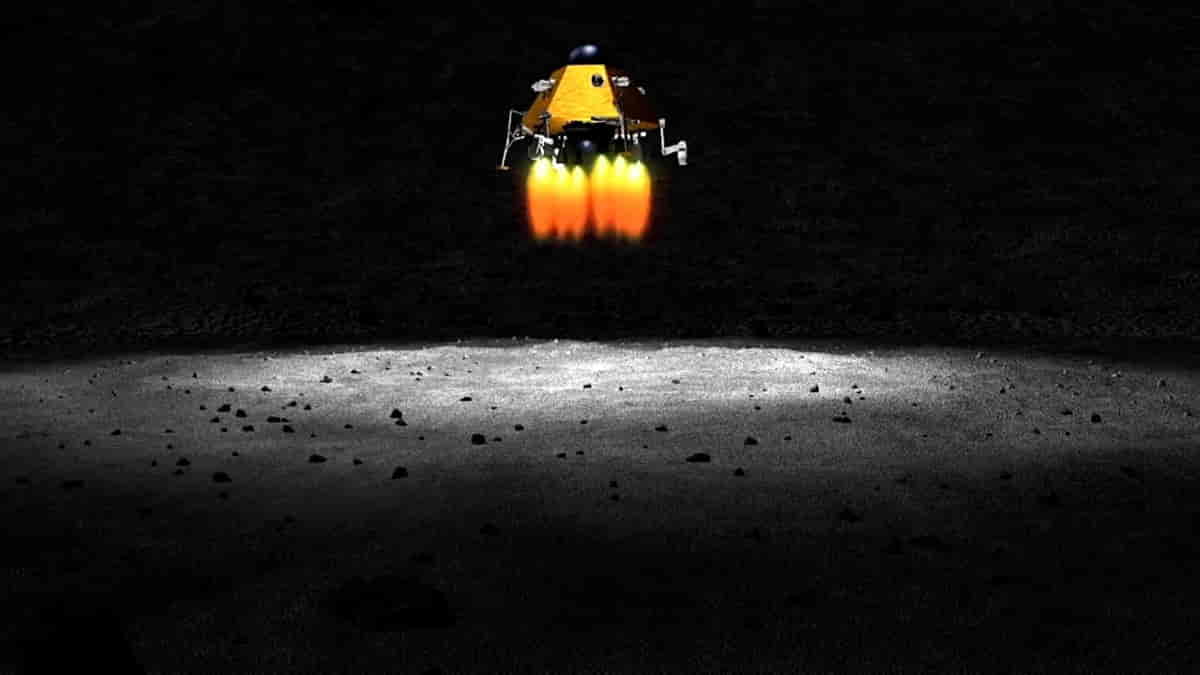
The flying robot will play a central role in surveying the lunar south pole. As part of the Chang’e-7 mission, which also includes an orbiter, a lander, and a rover, the flying detector is expected to conduct detailed analyses of the shadowed craters where lunar ice is most likely to be found.
The robot is designed to “leap” from sunlit areas to shadowed regions, conducting several jumps to gather data on the ice deposits. Although details on the robot’s design remain scarce, it is said to have legs that bend and function similarly to how humans jump from a height, enabling it to land in a controlled manner on the lunar surface.
Harsh Conditions on the Moon’s Far Side
The moon’s south pole presents one of the most extreme environments in the solar system. Temperatures in the permanently shadowed craters can plunge to below -250°F (-157°C), with no sunlight ever reaching these areas due to the tilt of the moon’s axis. Tang Yuhua, deputy chief designer of the Chang’e-7 mission, noted that the robot will face severe challenges working in these harsh conditions for extended periods.
Despite these difficulties, China is determined to overcome the technical hurdles. The flying robot’s success could open new possibilities for lunar exploration and offer insight into the viability of using the moon as a base for future missions to Mars and beyond.
China’s Broader Space Ambitions
This mission is part of China’s broader space strategy, which has already achieved several milestones, including the first-ever return of lunar samples from the far side of the moon. China is aiming to become the second country to land astronauts on the moon, with its first crewed mission to take place by 2030.
The Chang’e-7 mission, set for 2026, will provide a detailed survey of the lunar south pole. By advancing in its lunar exploration capabilities, China is not only working toward its space ambitions but also positioning itself as a serious contender in the global space race, alongside nations like the United States.
Conclusion
China’s Chang’e-7 mission and its flying robot are poised to play a pivotal role in the future of lunar exploration. The search for frozen water at the moon’s south pole could be a game-changer, making long-term lunar missions more feasible and potentially leading to groundbreaking discoveries about extraterrestrial life. With its aggressive space plans and focus on sustainability, China is clearly preparing to make significant contributions to humanity’s understanding of the moon and beyond.