Journos News - Breaking News, World News, Top Stories, Todays Headlines and Flash Reports
Tuesday, July 14, 2026
  • Login
  • Home
  • World
    • Africa
    • Americas
    • Asia
    • Europe
    • Middle East
    • Oceania
  • Politics
  • Business
  • Technology
  • Health
  • Science
  • Sports
  • Entertainment
  • Culture
No Result
View All Result
  • Home
  • World
    • Africa
    • Americas
    • Asia
    • Europe
    • Middle East
    • Oceania
  • Politics
  • Business
  • Technology
  • Health
  • Science
  • Sports
  • Entertainment
  • Culture
No Result
View All Result
Journos News - Breaking News, World News, Top Stories, Todays Headlines and Flash Reports
No Result
View All Result
Home Health General Health Coverage

China Challenges Neuralink with Breakthrough in Brain-Computer Interface Technology

Brain Tech Race: China’s Beinao-1 Rivals Elon Musk’s Neuralink in ALS Trials

The Daily Desk by The Daily Desk
June 15, 2026
in General Health Coverage, Health
0
China’s Brain Tech Advances Signal New Rivalry with U.S. in Neural Implants - CNN

How China’s Beinao-1 Brain Implant Is Competing with U.S. Neuralink Tech - CNN

China’s Brain-Reading Tech Is Catching Up Fast — Here’s Why That Matters

China Advances in Brain Technology, Rivals U.S. Leaders Like Neuralink

China is quickly making strides in brain-computer interface (BCI) technology, a field once led almost entirely by U.S. companies like Elon Musk’s Neuralink. A recent trial in Beijing shows how far the country has come — and why global attention is shifting.

In a public hospital in Beijing, a 67-year-old woman with ALS (also known as Lou Gehrig’s Disease) was able to “speak” using only her thoughts. Her brain signals were translated into Chinese text on a screen using a chip implanted in her head. It’s part of a growing race in brain technology, one that has big implications for science, medicine, and even global competition.

What Is Brain-Computer Interface (BCI) Technology?

BCI allows a person’s brain signals to control computers, machines, or text displays — often with the help of a small chip implanted in the brain. This kind of tech has the potential to restore communication for people with neurological diseases, like ALS, who can’t speak or move.

In the U.S., companies like Neuralink and Synchron have led the way. But now, Chinese researchers are making fast progress of their own.

RELATED POSTS

Why Scratching Bug Bites Makes Them Worse, According to New Research

WHO Launches Clinical Trial of Two Ebola Treatments as Congo’s Bundibugyo Outbreak Grows

New Jersey Targets Employers With New Medicaid Fee as Other States Consider Similar Policies

Medicaid Work Requirement Guidance Raises Concerns for Patients With Chronic Illnesses

Extreme Weather Anxiety on the Rise as Experts Urge Preparedness and Support

Genomic Test Could Help Millions of Breast Cancer Patients Avoid Chemotherapy

The Beinao-1 Chip: A Breakthrough in China

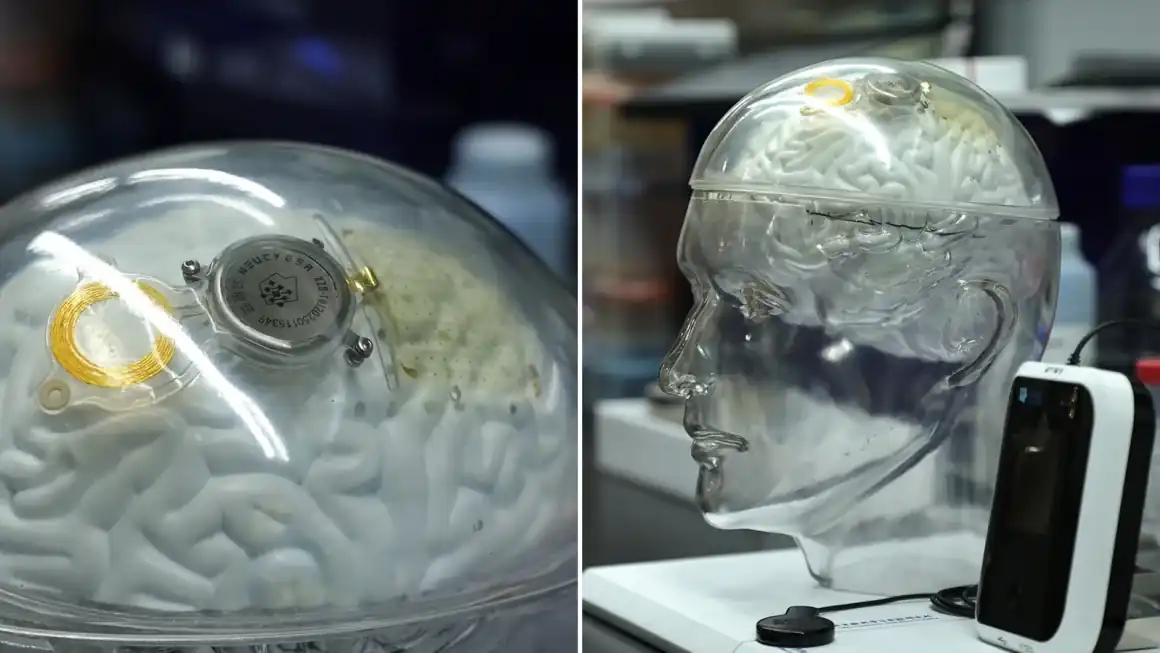
The chip used in the Beijing trial is called Beinao-1, developed by a team led by Luo Minmin, director of the Chinese Institute for Brain Research (CIBR). The chip is wireless and about the size of a coin. So far, it’s been implanted in five patients as part of ongoing clinical trials.

In one case, the chip helped an ALS patient express basic sentences, something she hadn’t been able to do in years. Luo said the system has shown “high accuracy” in reading and translating brain signals into text or device commands.

“The patients were saying that this feels so great, like they can gain or regain the control of their muscles,” Luo told CNN.

The team plans to expand testing to 50 to 100 more patients within the next year.

How Does This Compare to U.S. Efforts?

So far, Beinao-1 has matched Neuralink’s five human trials. Another U.S. company, Synchron, backed by Jeff Bezos and Bill Gates, has tested its chip on ten patients in the U.S. and Australia.

According to Maximilian Riesenhuber, a neuroscience professor at Georgetown University, China is no longer just catching up — it’s becoming a serious player in the field.

“China has definitely shown the ability to not just catch up, but also then be competitive,” he said.

In fact, Chinese research is now helping shape the future of BCI alongside U.S. breakthroughs.

Different Approaches to the Same Goal

The Chinese team is using a semi-invasive method, meaning the chip is implanted just outside the brain’s protective covering (called the dura mater). This approach is less risky than fully invasive methods, which are more common in U.S. trials, but may provide slightly less precise data.

Still, experts say the Chinese method seems to work well.

“It is interesting to see that NeuCyber is apparently able to get enough information even through the dura,” Riesenhuber noted.

The Beinao-1 system has now gone through five human trials, and developers describe it as part of the world’s first batch of semi-invasive, wireless BCI implants.

Why This Matters for China — and the World

BCI is not just about medical benefits. It’s also part of a broader competition between the U.S. and China in advanced technology. Chinese leader Xi Jinping has made tech development a national priority, calling it the “main battlefield” of global competition.

In 2014, China began planning a national brain research project to match efforts in the U.S. and Europe. The field got a further boost when brain tech was included in China’s national five-year plan starting in 2016.

“Brain science is new in China… but its speed of development has been faster than other countries,” said Lily Lin, a former assistant at a top Chinese neuroscience lab.

Today, China’s BCI research is backed by strong government funding, ethical guidelines, and local support from cities like Beijing and Shanghai.

The Global Market Is Growing Fast

According to Precedence Research, the brain tech market was valued at $2.6 billion in 2023, and is expected to grow to $12.4 billion by 2034. That growth is attracting global investment — and competition.

In the U.S., the Obama-era Brain Initiative, launched in 2013, invested over $3 billion into brain science research. Since then, U.S. institutions like UC Davis Health have developed systems capable of decoding speech with 97% accuracy in ALS patients.

China’s Research Gaining Ground

In a 2024 report from Georgetown University, researchers said China’s non-invasive BCI work is now comparable to efforts in the U.S. and U.K. While invasive research started later, it’s catching up quickly.

“China’s invasive BCI research… is approaching global standards of sophistication,” the report said.

Still, the differences between Beinao-1 and Neuralink show how various countries may take different paths in developing this technology.

Not a Zero-Sum Game

Luo, who studied neuroscience in the U.S., says that comparing the two systems is like comparing “apples and oranges.” They work differently, target different areas of the brain, and use different types of data.

“All in all, I don’t think these two products are in a competitive or exclusive relationship,” he said. “The jury is still out… We don’t know yet which route will ultimately benefit patients better.”

Final Thoughts

As brain-computer interface technology continues to grow, both the U.S. and China are pushing the boundaries of what’s possible. For patients with conditions like ALS, the progress is promising — and potentially life-changing.

At the same time, the race for innovation is shaping the future of global tech leadership. Whether led by Beijing or Silicon Valley, the next big leap in brain tech may be just around the corner.

Source: CNN – China is catching up to the US in brain tech, rivaling firms like Elon Musk’s Neuralink

Tags: #ALSCommunicationBreakthrough#BCIClinicalTrials#Beinao1Chip#BrainComputerInterface#ChinaBrainTech#ChineseNeuroscience#ElonMuskTechnology#NeuCyberNeuroTech#NeuralinkRival#USChinaTechRace#WirelessBrainImplants#XiJinpingTechPush
The Daily Desk

The Daily Desk

The Daily Desk is a contributor at JournosNews.com covering politics, media, governance, and the evolving dynamics of public discourse. Stories published under this byline are produced in accordance with JournosNews' editorial standards, with an emphasis on verified reporting, accuracy, context, and impartiality.

Related Posts

Why Scratching Bug Bites Makes Them Worse, According to New Research

by The Daily Desk
July 3, 2026
0
Person scratching a mosquito bite on their arm outdoors - AP Photo/Rick Bowmer, File

WASHINGTON - Many people instinctively scratch a mosquito bite, poison ivy rash, or other itchy skin irritation for immediate relief....

Read moreDetails

WHO Launches Clinical Trial of Two Ebola Treatments as Congo’s Bundibugyo Outbreak Grows

by The Daily Desk
July 3, 2026
0
Healthcare workers at an Ebola treatment center during Congo clinical trial - AP Photo/Moses Sawasawa, File

The World Health Organization (WHO) has launched a clinical trial in the Democratic Republic of Congo to evaluate two potential...

Read moreDetails

New Jersey Targets Employers With New Medicaid Fee as Other States Consider Similar Policies

by The Daily Desk
July 2, 2026
0
New Jersey State House as lawmakers approve Medicaid employer fee policy - AP Photo/Seth Wenig, File

New Jersey has become the latest state to require certain employers to help offset Medicaid costs by introducing a new...

Read moreDetails

Medicaid Work Requirement Guidance Raises Concerns for Patients With Chronic Illnesses

by The Daily Desk
June 15, 2026
0
Patient reviewing Medicaid coverage requirements after federal policy changes - AP Photo/Rebecca, Blackwell, File

NEW YORK - Patients living with serious health conditions and disabilities may face new challenges proving they qualify for exemptions...

Read moreDetails

Extreme Weather Anxiety on the Rise as Experts Urge Preparedness and Support

by The Daily Desk
June 15, 2026
0
Residents facing severe weather prepare emergency plans to reduce stress - AP Photo/Gerald Herbert

As hurricanes, wildfires, floods, tornadoes and other extreme weather events become increasingly common, mental health experts are drawing attention to...

Read moreDetails

Genomic Test Could Help Millions of Breast Cancer Patients Avoid Chemotherapy

by The Daily Desk
June 15, 2026
0
Researcher reviewing breast cancer genomic testing results in laboratory - Credit: Getty Images

Millions of people with hormone-sensitive breast cancer may be able to avoid chemotherapy without reducing their chances of remaining cancer-free,...

Read moreDetails

Why Brain Freeze Continues to Fascinate Scientists Beyond the Ice Cream Cone

by The Daily Desk
June 15, 2026
0
Person experiencing brain freeze after eating ice cream quickly - Credit: Getty Images

Why Brain Freeze May Reveal More About the Brain Than Ice Cream Scientists say the common cold-triggered headache offers clues...

Read moreDetails

France Permits Healthy Cruise Passengers to Disembark After Gastrointestinal Illness Outbreak

by The Daily Desk
May 15, 2026
0
Cruise ship passengers disembarking after gastroenteritis outbreak in France - AP Photo/Caroline Blumberg

French authorities allowed asymptomatic passengers to leave a cruise ship near Bordeaux after a gastrointestinal illness outbreak sickened hundreds aboard...

Read moreDetails

Global Health Coordination Intensifies After U.S. Passenger Tests Positive for Hantavirus

by The Daily Desk
June 15, 2026
0
Passengers evacuated from MV Hondius during hantavirus containment operation - AP Photo

A U.S. passenger evacuated from the Dutch-operated cruise ship MV Hondius after a hantavirus outbreak has tested mildly positive for...

Read moreDetails
Load More
Next Post
Ellen DeGeneres Reflects on Life in the UK and Her Hollywood Reputation - SOPA/Getty Images

Ellen DeGeneres Says Trump’s Re-Election Prompted Her Move to the UK

New Study Links Early Smartphone Use to Emotional Struggles in Children, Especially Girls - Elva Etienne/Moment RF/Getty Images

Why Experts Say Kids Under 13 Shouldn’t Use Smartphones: New Global Study Warns of Mental Health Risks

Researchers Rewrite the Song of Wade, Shifting It from Myth to Romance - Courtesy of the Master and Fellows of Peterhouse/University of Cambridge

Scribe’s Mistake Hid a Lost Medieval Epic for Centuries, Scholars Reveal

JournosNews logo

Journos News delivers globally neutral, fact-based journalism that meets international media standards — clear, credible, and made for a connected world.

  • Categories
  • World News
  • Politics
  • Business & Markets
  • Technology
  • Health
  • Science
  • Sports
  • Arts & Culture
  • Resources
  • Editorial Standards
  • Submit a Story
  • Advertise with Us
  • Syndication & Partnerships
  • Site Map
  • Press & Media Kit
  • Editorial Team
  • Careers

Join thousands of readers receiving the latest updates, tips, and exclusive insights straight to their inbox. Never miss an important story again.

  • About Us
  • Editorial & Trust Center
  • Contact Us
  • Privacy Policy
  • Terms of Use & Copyright Notice

© JournosNews.com All rights reserved.

Welcome Back!

Login to your account below

Forgotten Password?

Retrieve your password

Please enter your username or email address to reset your password.

Log In
JournosNews

Independent Journalism.
Verified Facts.

You're about to read a professionally edited article from JournosNews.com.

Every article is produced in accordance with our editorial standards, emphasizing factual accuracy, transparent attribution, fairness, editorial independence, and meaningful context.

Editorial Standards
No Result
View All Result
  • Home
  • World
    • Africa
    • Americas
    • Asia
    • Europe
    • Middle East
    • Oceania
  • Politics
  • Business
  • Technology
  • Health
  • Science
  • Sports
  • Entertainment
  • Culture

© JournosNews.com All rights reserved.

This website uses cookies. By continuing to use this website you are giving consent to cookies being used. Visit our Privacy and Cookie Policy.