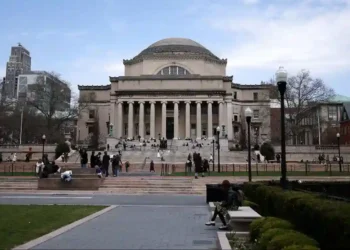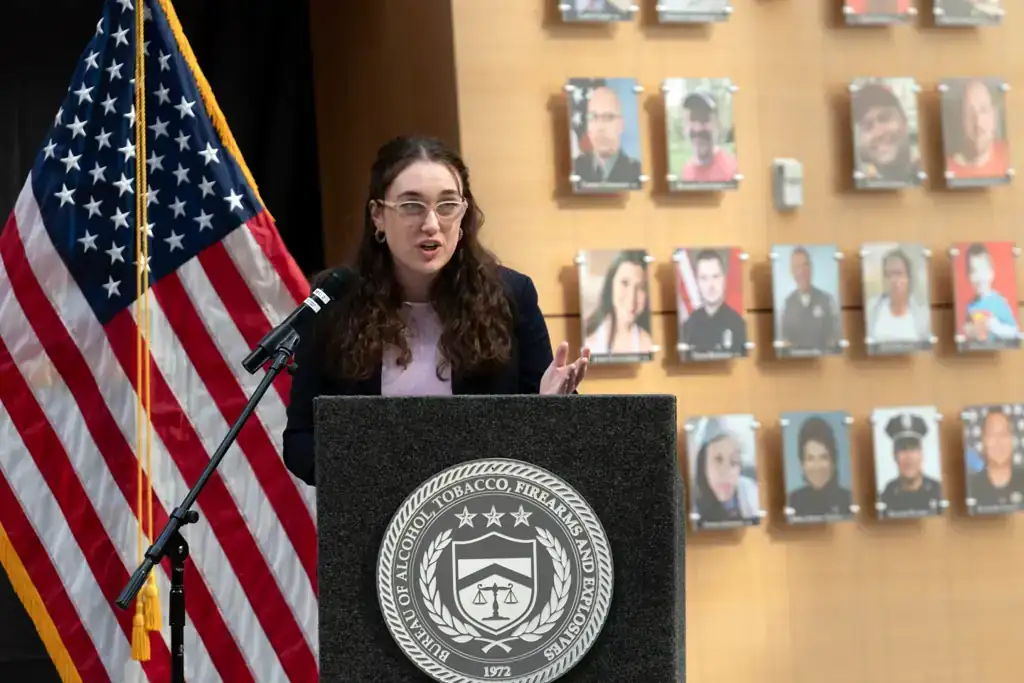
For a Brown University student who survived a mass shooting as a teenager, the sound of emergency alerts during finals week brought back a trauma she thought she had left behind. The shooting in Providence has renewed attention on how repeated gun violence is shaping a generation of American students.
Active shooter alerts return for a survivor
When Mia Tretta’s phone began vibrating with emergency alerts during finals week, she tried to reason them away. Sitting in her dorm room at Brown University, studying with a friend, she told herself it had to be something else.
In 2019, Tretta was shot in the abdomen during a mass shooting at Saugus High School in Santa Clarita, California. Two students were killed, and she and two others were wounded. She was 15 years old.
So when the first alert arrived on Saturday, warning of an emergency near Brown’s engineering building, she hesitated to draw conclusions. But as additional messages followed, urging people to lock down and stay away from windows, the wording felt painfully familiar.
By the end of the day, two people were dead and nine others injured in a shooting that once again disrupted a school campus — this time in Providence, Rhode Island.
“No one should ever have to go through one shooting, let alone two,” Tretta said in a phone interview Sunday. “I never thought this was something I’d have to experience again.”
A generation shaped by repeated school violence
Tretta’s experience reflects a growing reality for students now in college. Many grew up practicing lockdown drills in elementary and high school, only to confront similar threats years later on campuses that once felt like a refuge.
In recent years, small but increasing groups of students have lived through multiple mass shootings at different stages of their education. Survivors of the 2018 massacre at Marjory Stoneman Douglas High School in Parkland, Florida, later experienced another deadly shooting at Florida State University in April.
For these students, the passage of time has not brought distance from violence. Instead, it has followed them into adulthood, reshaping how they think about safety, learning, and daily life.
Mental health experts have warned that repeated exposure to mass shootings can compound trauma, particularly when incidents occur in places meant to feel secure, such as schools and universities.
Brown campus locked down
Saturday’s shooting triggered widespread lockdowns across Brown’s campus. Students barricaded themselves inside dorm rooms, classrooms, and offices as police searched the area.
Louisville, Kentucky, Mayor Craig Greenberg said his son Ben, a Brown junior, was among those sheltering in place. Greenberg said his son and roommates used furniture to block their door until authorities lifted the alert. Greenberg himself survived an assassination attempt during his mayoral campaign in 2022.
Another Brown student, Zoe Weissman, reflected on social media about her own past. She attended middle school next door to Marjory Stoneman Douglas High School during the Parkland shooting in 2018.
She said she was outside her school when the attack happened and heard gunshots and screams. She later watched videos of the violence that unfolded just steps away.
Now, years later, she found herself once again responding to emergency alerts on a school campus.
From survivor to advocate
After being shot in high school, Tretta became involved in gun safety advocacy. She rose to a leadership role with Students Demand Action, a national group pushing for tighter firearm regulations.
Her advocacy took her to meetings at the White House under former President Joe Biden. She also met with then-Attorney General Merrick Garland to discuss gun violence and prevention strategies.
Tretta has focused much of her work on so-called “ghost guns,” firearms assembled from kits or parts that lack serial numbers. These weapons, including the one used in the Saugus High School shooting, are difficult to trace and regulate.
At Brown, Tretta studies international and public affairs alongside education policy. She has continued to engage with issues related to violence and learning environments, both academically and personally.
Research shaped by lived experience
In an unsettling coincidence, Tretta had been working on a research paper about the educational journeys of students who have lived through school shootings. The assignment was due just days after the Providence attack.
Her research explores how trauma affects academic performance, emotional well-being, and long-term educational choices. It also examines how institutions respond to students who carry that history with them.
Saturday marked the first time Tretta had ever received an active shooter alert at Brown.
“I chose Brown because it felt like somewhere I could finally be safe,” she said. “Somewhere I could try to be normal again, in this new normal of being a school shooting survivor.”
That sense of safety, she said, was shattered in an instant.
Broader questions for universities
The Brown shooting has renewed questions about campus security and emergency response at universities across the United States. While colleges have increasingly adopted alert systems and lockdown protocols, many students say the messages themselves can trigger intense fear.
Administrators nationwide have struggled to balance preparedness with the emotional toll of repeated alerts, drills, and warnings. Critics argue that while such systems may save lives, they also reinforce a sense of constant threat.
Federal data shows that while mass shootings at colleges remain relatively rare compared with other settings, the frequency of gun-related incidents on or near campuses has risen over the past decade.
Universities have responded with a mix of increased policing, counseling services, and threat assessment teams. Still, many students say those measures feel insufficient in the face of broader gun violence.
Living with the aftermath
For Tretta, the aftermath of the shooting has been both immediate and deeply personal. She said the sounds, language, and pacing of the alerts transported her back to her high school hallway in California.
Even so, she emphasized that her story is not unique.
“There are so many students like me,” she said. “People who thought they survived something once and would never have to face it again.”
As campuses resume classes and exams, students at Brown and elsewhere are grappling with grief, fear, and unresolved questions about safety.
For Tretta, the experience has reinforced a belief she has held since she was 15.
“It didn’t have to happen,” she said. “Not then, and not now.”
This article was rewritten by JournosNews.com based on verified reporting from trusted sources. The content has been independently reviewed, fact-checked, and edited for accuracy, neutrality, tone, and global readability in accordance with Google News and AdSense standards.
All opinions, quotes, or statements from contributors, experts, or sourced organizations do not necessarily reflect the views of JournosNews.com. JournosNews.com maintains full editorial independence from any external funders, sponsors, or organizations.
Stay informed with JournosNews.com — your trusted source for verified global reporting and in-depth analysis. Follow us on Google News, BlueSky, and X for real-time updates.