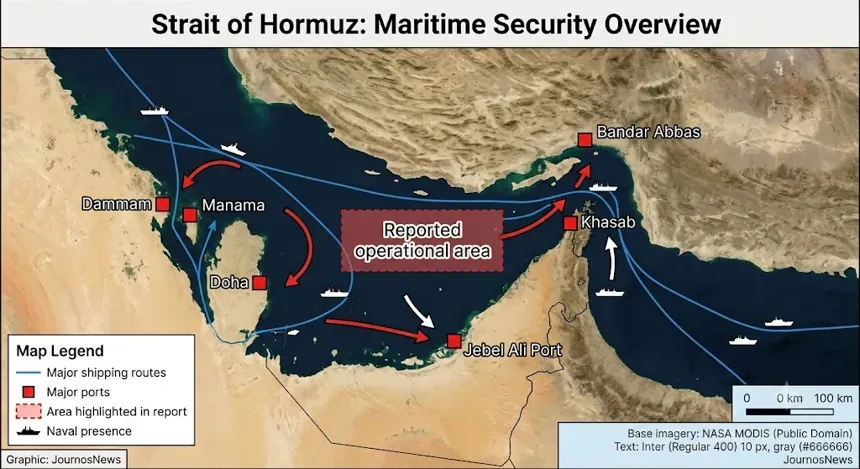
DUBAI, United Arab Emirates – The United States has reinstated a blockade of Iranian ports, accusing Tehran of attacking commercial vessels in the Strait of Hormuz, a move that further weakens an interim ceasefire and raises fresh concerns over security in one of the world’s most important maritime trade corridors.
President Donald Trump announced the blockade Monday, and the U.S. military confirmed Tuesday that it had taken effect. The move follows weeks of escalating violence around the Strait of Hormuz despite a June agreement intended to reduce hostilities and create space for negotiations over Iran’s nuclear program.
Interim Agreement Under Pressure
The temporary agreement, reached in mid-June after the United States lifted an earlier blockade imposed in April, created a 60-day window for negotiations aimed at ending the conflict and addressing Iran’s disputed nuclear activities.

However, the agreement has done little to calm the fighting. fighting has intensified around the Strait of Hormuz. Before the conflict disrupted commercial traffic, roughly one-fifth of the world’s traded crude oil and natural gas passed through the strategic waterway.
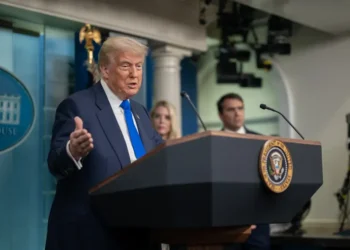
Hours before restoring the blockade, Trump withdrew a proposal to impose a 20% transit fee on vessels using the strait. Speaking at the White House, he said Gulf leaders had offered to increase investment in the United States instead of introducing shipping charges. He added that the waterway should remain open to international shipping without tolls.
Military Operations Continue
U.S. Central Command said American forces carried out additional strikes inside Iran before the blockade resumed. The military said the operation targeted coastal defense systems, missile and drone facilities, and maritime capabilities used to threaten commercial shipping.
The command said Iranian attacks on seven commercial vessels over the previous week left nearly a dozen civilians dead, injured or missing. It added that Iran had launched dozens of missiles and drones toward neighboring Gulf countries.
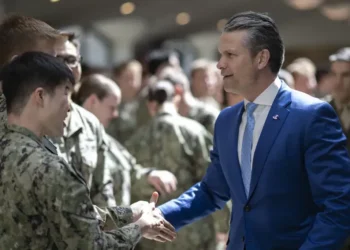
Adm. Brad Cooper, commander of U.S. Central Command, said the operation responded to what he described as continued Iranian aggression against civilian shipping and regional security.


Iran acknowledged that strikes had occurred but did not immediately provide casualty figures or damage assessments.
Kazem Gharibabadi, Iran’s deputy foreign minister for legal and international affairs, told state broadcaster IRIB that Washington was attempting to prevent Iran from exercising what he described as effective sovereignty over the Strait of Hormuz.
Iranian state media later reported exchanges of fire in the strait but provided no additional details. Those reports could not be independently verified.
Regional Concerns Grow
Qatar called for renewed diplomatic efforts and condemned what it described as repeated Iranian attacks on Jordan, Bahrain and Kuwait, saying the strikes violated those countries’ sovereignty and the international rules-based order.
Iranian state media also reported explosions in Bushehr, Ahvaz and the southern port city of Bandar Abbas after U.S. forces said their latest round of strikes had concluded. The reports did not identify who carried out the attacks.
The reports fueled speculation that additional regional actors could become involved in the conflict. However, no Gulf government publicly claimed responsibility for the reported strikes.
Negotiations Face Mounting Pressure
Trump said additional U.S. military action could follow if negotiations fail to resume. At the same time, he said American and Iranian negotiators had remained in contact earlier in the day, despite expressing skepticism about the prospects for a breakthrough.
Regional officials, speaking on condition of anonymity because of the sensitivity of the talks, told The Associated Press that Pakistan-led mediation efforts remain active as negotiators try to restore the ceasefire before the conflict escalates further.
Separate U.S.-mediated negotiations between Lebanon and Israel also continued in Rome after implementation of a framework agreement announced last month stalled. The agreement aims to secure the withdrawal of Israeli forces from southern Lebanon in exchange for Hezbollah’s disarmament.
Fighting continued around the Strait of Hormuz on Tuesday as diplomats worked to preserve the interim agreement. With military operations expanding and negotiations under growing pressure, prospects for restoring the ceasefire before the 60-day deadline remain uncertain.
This report is based on reporting by The Associated Press.
Article Topics: Strait of Hormuz | Iran | United States | Gulf Security | Maritime Trade | Diplomacy | Energy Markets