CAIRO, Egypt – Iran entered a new political chapter Thursday as Ayatollah Ali Khamenei was laid to rest following his death in Israeli strikes, with public mourning by supporters unfolding alongside renewed debate over the legacy of the country’s longest-serving supreme leader and the deep divisions that defined his decades in power.
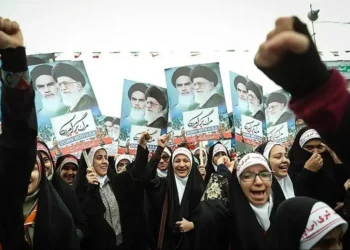
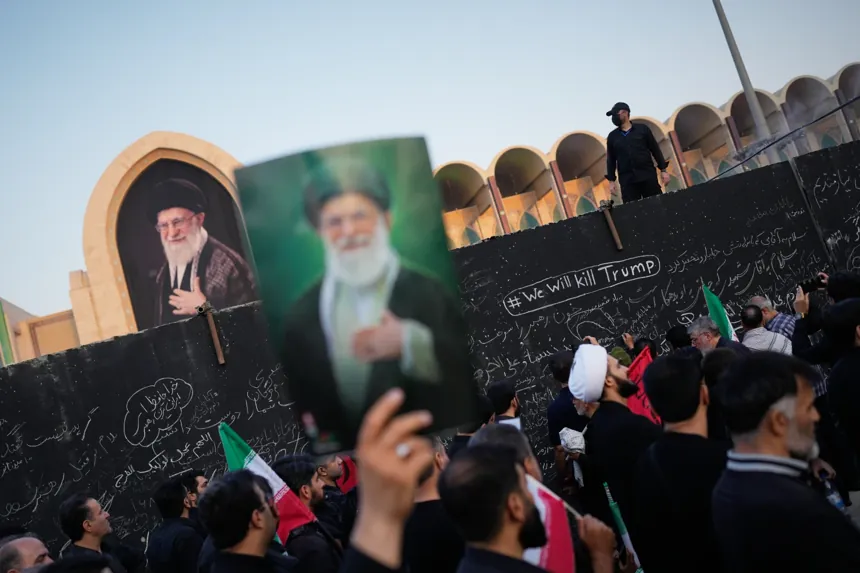
Mass funeral processions in Tehran and other cities drew large crowds of supporters who praised Khamenei as a defender of the Islamic Republic and an opponent of the United States and Israel. At the same time, many Iranians reflected on years of political repression, economic hardship and growing polarization that critics say intensified during his leadership.
Interviews conducted by The Associated Press with Iranians from different backgrounds highlighted starkly different views of Khamenei’s rule, underscoring the divisions that continue to shape the country’s political landscape as its leadership transitions to a new era.

A legacy that divided Iranian society
One Tehran-based technology worker, speaking anonymously for security reasons, said Khamenei’s leadership widened political and religious divisions even within families.
Raised in a traditional religious household in Qom, the center of Shiite religious scholarship in Iran, he said he abandoned both regular prayer and support for clerical rule while still in his twenties. Today, he said, political and religious disagreements have become so severe that meaningful discussions with relatives are nearly impossible.
He described Iranian society as deeply fractured, blaming Khamenei for creating divisions that extend beyond supporters and opponents of the Islamic Republic.
Funeral ceremonies, however, presented a contrasting image. Many mourners portrayed Khamenei as a martyr whose resistance to Western pressure and Israel defined his leadership. Some participants echoed hard-line slogans opposing negotiations with Washington, while others called for retaliation following his death.
“Our goal is to prove to the world that we will not submit to oppression and tyranny, and that we will avenge the blood of our leader,” 60-year-old mourner Hossein Akbari said during the funeral in Tehran.


Three decades of expanding state power
Khamenei became Iran’s supreme leader in 1989 after the death of Ayatollah Ruhollah Khomeini, who led the 1979 Islamic Revolution that overthrew the U.S.-backed shah.
Throughout more than three decades in office, Khamenei expanded Iran’s nuclear program, developed its missile capabilities and strengthened alliances with armed groups across the Middle East while resisting international sanctions and pressure.
Domestically, he consolidated clerical rule by weakening reformist movements and significantly expanding the influence of the Islamic Revolutionary Guard Corps across military, political and economic institutions. His government also maintained strict enforcement of religious and social regulations despite growing demands among younger Iranians for greater personal freedoms.
Protest crackdowns reshaped public opinion
Many observers view the government’s suppression of mass protests following the disputed 2009 presidential election as a defining moment of Khamenei’s rule. Security forces killed dozens while suppressing demonstrations challenging the election outcome, weakening hopes among many reform-minded Iranians that change could be achieved through political participation.
A senior adviser to reformist President Masoud Pezeshkian acknowledged last month that Iranian society had become “severely polarized” between committed supporters of the Islamic Republic and those seeking its collapse. Ali Rabiei, quoted by the state news agency IRNA, said a large segment of society remained between those competing camps and could support gradual reforms within the existing political system.
Election turnout has reflected growing public disillusionment. Participation in Iran’s most recent presidential election fell to one of the lowest levels on record, although reformist candidate Pezeshkian ultimately secured 16.3 million votes compared with 13.5 million for his hard-line rival.
January crackdown deepened public anger
Successive waves of protests since 2009 have been met with force, but January’s nationwide demonstrations became the deadliest in recent years after security forces killed thousands while suppressing protests that began over economic conditions before expanding into calls for Khamenei’s removal.
The sister of a protester killed in Tehran on Jan. 9 described Khamenei’s legacy as one of “injustice,” saying her family continues to struggle emotionally and financially following her sister’s death.
She said worsening economic conditions have added to the hardship facing ordinary families, with workers increasingly unable to afford basic necessities.
During this year’s Ashoura commemorations, videos shared on social media showed some participants carrying photographs of relatives killed during the January crackdown, reflecting a quieter form of public dissent. The authenticity of those videos could not be independently verified.
Uncertain future after Khamenei
Despite Khamenei’s death and the recent U.S.-Israeli military campaign, Iran’s leadership has remained intact. Authorities emerged from the conflict with an interim agreement with the United States that could eventually lead to sanctions relief if negotiations produce a comprehensive nuclear agreement, although the outcome remains uncertain.
A 35-year-old woman who participated in January’s protests said the interim deal represented a political success for the Islamic Republic but cautioned that ordinary Iranians would judge it by whether it produced meaningful improvements in daily life.
She also expressed concern over growing divisions among opponents of clerical rule, with some favoring rapid political change while others advocate gradual reform.
Economic hardship remains the most immediate concern for many Iranians. A 33-year-old former technology worker in Tehran said rising unemployment, inflation and falling incomes have left many families focused simply on paying for rent and food after layoffs spread through the private sector.
Governance challenges remain
Rebin Rahmani, director of the Kurdish Human Rights Network, said the Islamic Republic continued relying on security measures rather than political reforms to address mounting economic and social challenges, warning that periodic unrest was likely to continue.
Within the government, President Pezeshkian and other pragmatists hope ongoing negotiations with Washington could eventually secure sanctions relief and help revive Iran’s economy. According to the report, they currently appear to have tentative backing from Khamenei’s son and successor, Ayatollah Mojtaba Khamenei, who remains in hiding and has expressed cautious support for continued talks in a written statement.
Ali Vaez, Iran director at the International Crisis Group, said the country’s greatest challenge may emerge after wartime unity fades.
“Wartime gave the system a degree of cohesion under shared duress,” Vaez said. “But the governance challenges remain just as stark.”
As Iran moves beyond Khamenei’s rule, competing political factions now face the task of defining the future direction of the Islamic Republic while confronting persistent economic difficulties and a society that remains deeply divided.
This report is based on reporting by The Associated Press.
Topics: Iran | Ali Khamenei | Middle East | Iranian Politics | U.S.-Iran Relations | Political Unrest | Economic Crisis | Nuclear Talks