ANKARA, Turkey – A NATO summit intended to highlight increased defense spending and continued support for Ukraine was overshadowed after U.S. President Donald Trump ordered military strikes against Iran and revoked a license allowing Tehran to sell oil on global markets, shifting attention away from the alliance’s planned agenda.
The strikes were launched late Tuesday in retaliation for attacks on three merchant ships in the Strait of Hormuz, underscoring the fragility of an interim agreement aimed at ending months of fighting between the United States and Iran.
Trump authorized the operation shortly after leaving a dinner hosted by Turkish President Recep Tayyip Erdogan, where leaders of NATO’s 32 member states had gathered ahead of formal summit discussions in Ankara.

Although Trump did not publicly address the military action Tuesday night, the decision dramatically altered the atmosphere surrounding a meeting that had been expected to focus on defense investment and European security.
Iran tensions complicate NATO gathering
European allies and Canada had already expressed concern that Trump might criticize NATO members over their unwillingness to support U.S. military operations against Iran.
Earlier Tuesday, Trump said he had deliberately tested allied support by requesting assistance during the conflict with Iran.
“Italy turned us down and Germany turned us down and France turned us down,” Trump said during a meeting with Erdogan. “And that’s OK. But, you know, why are we spending hundreds of billions of dollars and they’re not there for us?”
His comments followed earlier criticism in which he demanded greater “loyalty” from NATO allies after some countries declined to provide unrestricted access to military bases for operations targeting Iran.
■ Related News

NATO sought to highlight defense investments
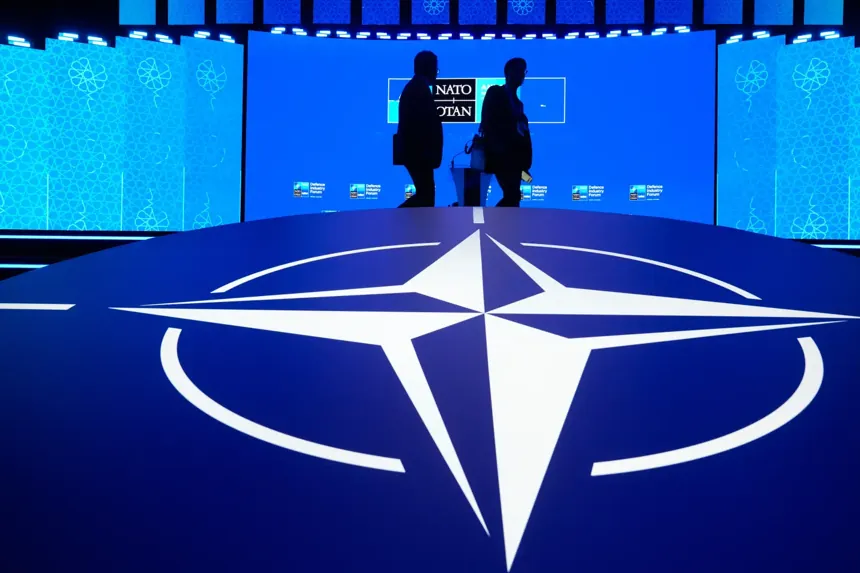
Alliance leaders had planned to use the summit to demonstrate that European members were responding to longstanding U.S. calls to increase defense spending.
Last month, NATO Secretary-General Mark Rutte visited Washington and highlighted what he described as the “Trump Trillion,” referring to an estimated $1.2 trillion increase in defense spending by European allies and Canada since Trump first entered office in 2017.
Ahead of the summit, Rutte organized an event showcasing major defense procurement projects, many involving U.S. defense manufacturers, as NATO sought to demonstrate stronger military capabilities and greater burden sharing.
Despite those efforts, alliance officials remained uncertain whether the spending commitments would satisfy Trump.
Defense spending remains central issue
Trump has consistently argued that the United States shoulders a disproportionate share of NATO’s defense responsibilities.
At the alliance’s previous summit, member states agreed to work toward investing 5% of gross domestic product in defense-related spending, including 3.5% for military budgets and 1.5% for infrastructure such as roads, bridges and ports that support military mobility.
Ahead of this year’s meeting, Rutte urged member governments to submit “clear, concrete and credible plans” for achieving those targets.
New NATO figures released Tuesday showed that Slovenia, Belgium, Spain and the Czech Republic continue to fall short of the alliance’s previous benchmark of spending 2% of GDP on defense.
The Trump administration has advocated for what it describes as a more efficient and capable “NATO 3.0,” with European allies assuming greater responsibility for conventional defense, including support for Ukraine, while the United States maintains its nuclear deterrence role.
European governments also continue to seek clarity on the future of U.S. troop deployments in Europe after the Pentagon launched a six-month review of American military forces stationed across the continent.
Ukraine renews membership appeal
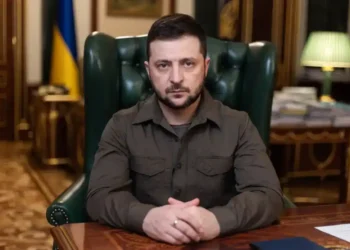
Ukrainian President Volodymyr Zelenskyy again urged NATO members to admit Ukraine into the alliance, arguing that the country’s military experience would strengthen collective security.
Speaking ahead of an expected meeting with Trump, Zelenskyy highlighted Ukraine’s ability to conduct long-range strikes against military and energy targets inside Russia and said Ukrainian forces eliminate an average of 30,000 Russian troops each month.
European governments remain increasingly concerned that Russia could expand hybrid operations—including cyberattacks and other unconventional tactics—against NATO members as the war in Ukraine continues.
Trump also set to meet Syria’s leader
Separately, Trump is scheduled to meet Syrian President Ahmad al-Sharaa during the summit.
Al-Sharaa, a former insurgent commander who led the offensive that removed former President Bashar Assad from power in December 2024, has received Trump’s backing as Syria seeks to rebuild relations with Western governments.
Trump has previously suggested that al-Sharaa would be more effective than Israel in countering Hezbollah in Lebanon, comments that have raised concerns in both Lebanon and Israel. Syrian officials have said they have no intention of pursuing such a role.
This report is based on reporting by The Associated Press.
Topics: NATO | Donald Trump | Iran | Ukraine | Defense Spending | Turkey | Middle East | European Security