SEOUL, South Korea – South Korea on Tuesday began enforcing a new law that allows courts to impose steep punitive damages on news organizations and major social media content creators found to have spread false or manipulated information, despite objections from journalist organizations and civil liberties advocates who say the measure could undermine press freedom.
Supporters of the legislation argue it is necessary to curb disinformation and online manipulation, while critics contend its broad language and enforcement mechanisms risk encouraging self-censorship and limiting scrutiny of government officials, politicians and large corporations.
The law also places new responsibilities on major online platforms to respond to reports of false information, adding to concerns over how digital content will be moderated.

New penalties target false information and repeated violations
Under the legislation, courts may award damages of up to five times the proven losses against news outlets and large social media channels, including YouTube creators, that distribute illegal, false or manipulated information for financial gain or to cause harm.
Individuals or organizations that continue distributing information more than twice after a court has determined it to be false or manipulated may also face fines of up to 1 billion won (about $656,000) from South Korea’s media regulator.
Large internet platforms with more than one million daily users must establish procedures for handling reports of fabricated information, including removing content or suspending user accounts when appropriate.
The law was backed by President Lee Jae Myung’s liberal Democratic Party and passed by the National Assembly in December after conservative opposition lawmakers boycotted the vote. Democratic Party lawmakers said the legislation is intended to combat disinformation that they argue increasingly threatens democratic institutions by fueling political division and hate speech.
Media organizations warn of chilling effect
Press freedom groups say the legislation does not clearly define the types of information subject to penalties and lacks sufficient safeguards for legitimate journalism.
■ Related News



The Journalists Association of Korea said the possibility of repeated lawsuits and substantial financial penalties could discourage news organizations from reporting on matters involving powerful public figures or institutions.
“Even if a law’s objective is legitimate, it could erode the foundations of democracy if it’s enforced in a way that discourages the media and ordinary citizens from freely criticizing and scrutinizing those in power,” the association said in a statement.
The Seoul Foreign Correspondents’ Club also voiced concern that the legislation could affect reporting and the broader flow of information.
Political tensions shaped the debate
Momentum for the legislation increased after South Korea’s political crisis following former President Yoon Suk Yeol’s brief declaration of martial law in 2024.
Yoon was later impeached, removed from office and convicted of rebellion, receiving a life prison sentence that he appealed in February.
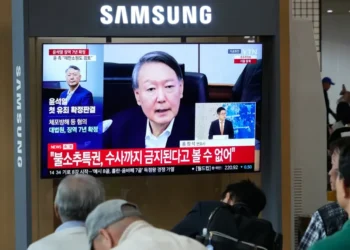
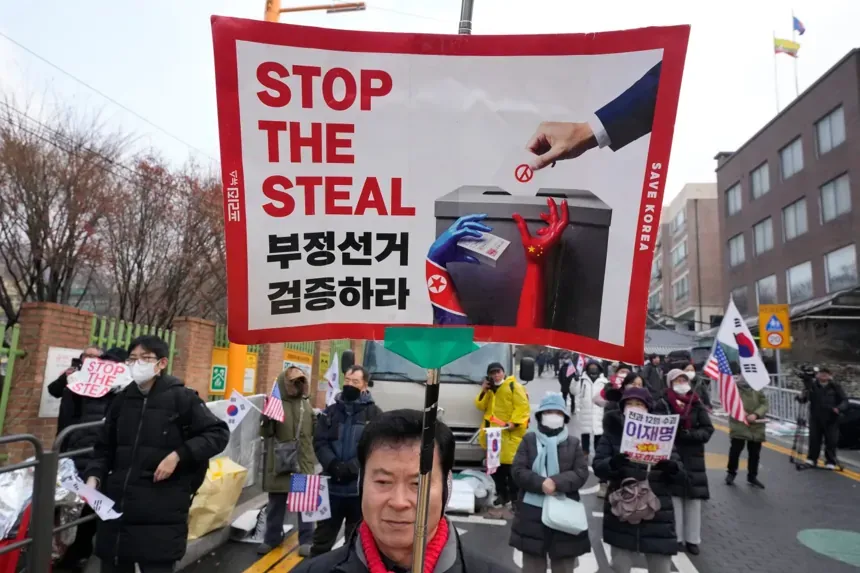
According to the Associated Press, Yoon repeatedly promoted unsubstantiated election fraud claims circulated on YouTube while defending his actions and mobilizing conservative supporters. Critics argued those claims further deepened political polarization and spread misinformation during an already divisive period.
Regulators reject censorship concerns
The Korea Media and Communications Commission has rejected suggestions that the law creates a government censorship tool.
The commission said decisions on whether reported material constitutes false or manipulated information would be made by private online platform operators rather than government authorities. It also noted that reporting conducted in the public interest is exempt from damages claims under the legislation.
Even so, Kim Hong-yeol, a professor at Duksung Women’s University in Seoul, warned that internet companies may adopt aggressive moderation practices to reduce legal risks, potentially leading to the removal of lawful content and discouraging discussion of controversial issues.
Major South Korean technology companies, including Naver and Kakao, have reportedly updated their reporting and moderation systems in line with guidance issued by the Korea Internet Self-Governance Organization. It remains unclear how major foreign platforms such as Google’s YouTube will implement the new requirements.
In a statement to The Associated Press, YouTube said it seeks to balance openness with protecting users and would continue engaging with relevant stakeholders. The company did not specify whether the South Korean law would lead to policy changes but encouraged users to report potentially violating content through its reporting tools and legal submission process.
Following the law’s passage in December, U.S. Under Secretary of State Sarah B. Rogers criticized the measure in a post on X, saying it could undermine technology cooperation and arguing that civil remedies for victims were preferable to giving regulators what she described as broad authority that could enable viewpoint-based censorship.
This report is based on reporting by The Associated Press.
Topics: South Korea | Fake News | Press Freedom | Media Law | Disinformation | YouTube | Freedom of Expression | Digital Regulation