LA GUAIRA, Venezuela – Survivors of Venezuela’s devastating June 24 earthquakes are increasingly criticizing the government’s disaster response, saying delays, limited coordination, and shortages of heavy rescue equipment have left families waiting days for loved ones to be recovered from collapsed buildings, The Associated Press reported.
The twin earthquakes, measuring 7.2 and 7.5 in magnitude, struck northern Venezuela on June 24, killing at least 2,295 people and injuring more than 11,200, according to government figures. Thousands of others remain missing as rescue teams continue searching through debris across the heavily affected state of La Guaira and surrounding areas.
Families Wait as Rescue Operations Continue
Among those waiting is Angélica Mundrain, whose son, niece, and nephew remain trapped beneath the rubble of her collapsed beachfront apartment building in La Guaira.

Speaking six days after the disaster, Mundrain said she has remained near the site while waiting for the heavy machinery needed to remove large sections of concrete and twisted steel.
“We’ve been abandoned,” she said, describing what she viewed as a lack of organization and empathy during the rescue effort.
Residents in several affected communities questioned who was directing emergency operations, arguing that the government’s response fell short during the crucial first days following the disaster.
Civilians and International Teams Lead Many Rescues
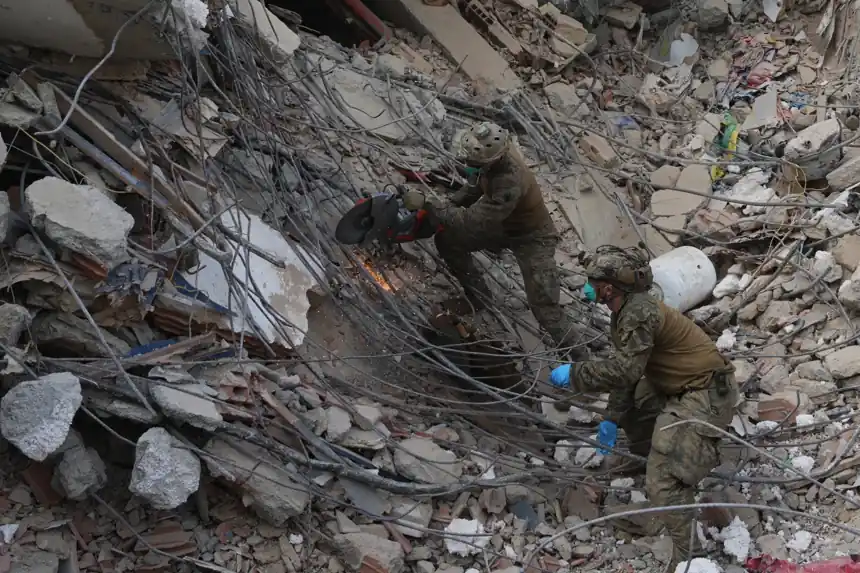
According to residents, much of the initial response focused on traffic control, with police officers, intelligence personnel, and members of the armed forces stationed at road intersections while civilians and foreign rescue teams searched collapsed buildings for survivors.
Local residents said ambulances became trapped in lengthy traffic congestion, hospitals struggled with limited staff and medical supplies, and emergency responders often operated with minimal equipment.
■ Related News


Many survivors credited fellow Venezuelans and international rescue teams equipped with trained search dogs, thermal imaging cameras, and sound-detection technology for carrying out many of the successful rescues and recoveries.
Several residents also alleged that government personnel spent extended periods observing rescue operations rather than actively participating. Those claims reflect the views of residents interviewed by The Associated Press.
Experts Cite Long-Term Institutional Weaknesses
David Smilde, a professor at Tulane University who has studied Venezuela for decades, said the disaster highlighted broader institutional challenges facing the country’s public sector.
He argued that years of low public-sector wages, corruption, and workforce departures have weakened the government’s ability to organize large-scale emergency responses.
Smilde said effective disaster management depends on clearly defined emergency protocols and sufficient personnel to implement them. Without those systems, he said, government agencies struggle to coordinate rescue operations during major crises.
Uneven Access to Rescue Resources
Residents also questioned whether access to rescue equipment varied depending on wealth or political connections.
Mundrain pointed to another collapsed residential building where relatives of residents were reportedly able to rent a telescopic crane to assist recovery efforts, while her own building continued waiting for similar equipment.
She suggested that communities connected to influential officials appeared to receive faster assistance than others.
Public frustration occasionally spilled over into confrontations. In one incident described by residents, people blocked a government excavator from leaving the site of a collapsed public housing complex and pulled its operator from the vehicle to prevent the machinery from being relocated before recovery work had been completed.
Government Defends Ongoing Relief Effort
Acting President Delcy Rodríguez acknowledged public frustration while defending the government’s response.
In a post on X on Wednesday, Rodríguez said authorities continued supporting affected families and directly overseeing rescue and recovery operations in La Guaira, adding that she shared the grief and frustration experienced by many Venezuelans.
Rescue workers continued searching damaged buildings Tuesday, occasionally finding survivors despite diminishing hopes as more time passed after the earthquakes.
Emergency experts generally consider the first 48 to 72 hours following a major disaster to be the most critical period for locating survivors, although survival can be extended when trapped individuals have access to food and water.
Survivors Describe Growing Frustration
Daniel Castillo, an electrician whose mother and son survived after he rescued them from their collapsed apartment building shortly after the earthquake, said he later recovered his brother’s body after waiting another day to reach him.
While collecting humanitarian supplies from a military-operated distribution point, Castillo criticized what he viewed as an inadequate official response.
He contrasted the appearance of clean military uniforms with civilians and foreign rescue workers who had spent days digging through collapsed buildings, saying ordinary Venezuelans carried much of the rescue effort.
Search operations continue across affected communities as authorities work to determine the full number of casualties and locate thousands of people who remain missing following one of Venezuela’s deadliest natural disasters in recent history.
Tags: Venezuela, La Guaira, Earthquake, Disaster Response, Search and Rescue, Delcy Rodríguez, Nicolás Maduro, Humanitarian Crisis, Emergency Response, U.S., Natural Disaster, Public Safety