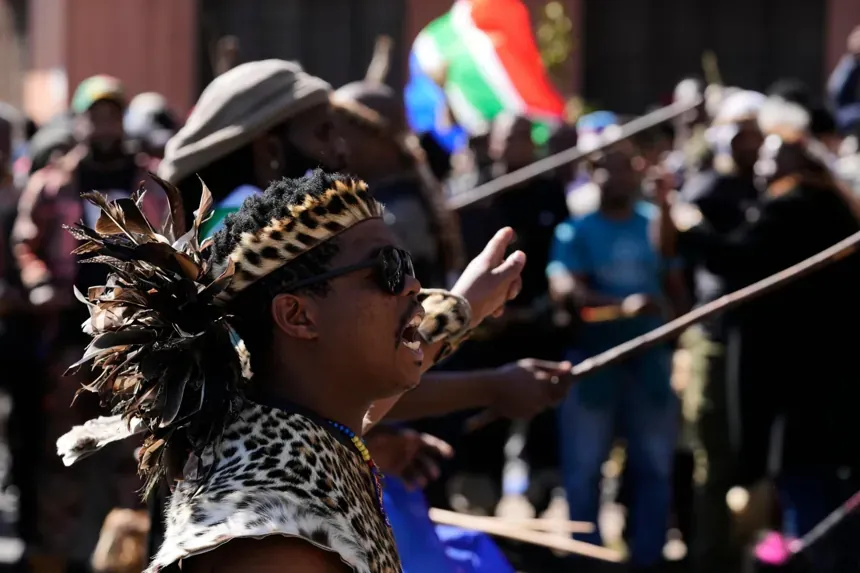
JOHANNESBURG, Africa -Thousands of people marched across parts of South Africa on Tuesday in the country’s largest anti-immigration demonstrations since the wave of xenophobic violence in 2008, as some migrants began leaving the country amid rising tensions, according to The Associated Press.
Police said the protests were largely peaceful despite isolated incidents of looting and attempted looting. Authorities confirmed several arrests but did not immediately disclose how many people had been taken into custody.
Justice Minister Mmamoloko Kubayi praised demonstrators who protested peacefully while warning that those responsible for criminal acts would face legal consequences.

“Those who chose to exploit the marches to commit criminal acts will face the full might of the law,” Kubayi said. “Police will continue to identify, arrest and prosecute all those responsible for criminal conduct.”
Migration Debate Fuels Nationwide Demonstrations
The demonstrations followed a June 30 deadline set by several anti-immigration groups demanding that undocumented migrants leave South Africa.
Activists argue that illegal immigration contributes to unemployment, crime and pressure on public services by increasing competition for jobs and resources.
South Africa’s government has rejected the deadline, emphasizing that immigration enforcement remains the responsibility of state authorities.
Among the organizations leading the demonstrations were March and March, Operation Dudula and Progressive Forces.
■ Related News


President Cyril Ramaphosa met with leaders of some protest groups on Monday, urging them to conduct peaceful demonstrations while rejecting claims that migrants are primarily responsible for the country’s economic and social challenges.
Protest Leaders Cite Crime and Employment Concerns
Ngizwe Mchunu, one of the protest organizers, told The Associated Press that illegal immigration has contributed to drug trafficking and increased competition for small businesses.
He criticized the number of neighborhood shops operated by immigrants from other African countries and argued they should instead be owned by South African citizens.
“It is time for our government to put South Africa first,” Mchunu said.
Marchers in Johannesburg included men carrying traditional fighting sticks and women waving South African flags while singing liberation songs.
Demonstrators carried signs calling for South Africa to withdraw from the United Nations Refugee Convention and expressing concerns about immigration and public services.
One protester, Nkele Thebe, said demonstrators wanted the government to act on illegal immigration without outside interference.
Another participant, Bongani Cindi, argued that concerns over undocumented migration should not automatically be dismissed as xenophobia.
Rights Groups Reject Claims Blaming Migrants
Amnesty International South Africa criticized efforts to blame migrants, refugees and asylum seekers for the country’s economic difficulties.
The organization argued that unemployment, inequality and strained public services are rooted in the legacy of apartheid, persistent economic disparities and shortcomings in South Africa’s asylum system.
Executive Director Shenilla Mohamed warned that misinformation and xenophobic rhetoric could increase the risk of violence against foreign nationals while diverting attention from broader structural challenges facing the country.
Heavy Security Presence Across Major Cities
Protests also took place in Durban and parts of the North West and Free State provinces.
Police deployed hundreds of officers in Johannesburg, Durban and other areas to prevent violence.
Many businesses, including shops owned by both South Africans and foreign nationals, closed before demonstrators arrived. In some communities, private security companies were hired to protect commercial properties.
Previous anti-immigration demonstrations in South Africa have resulted in attacks on migrants and damage to foreign-owned businesses, making authorities particularly cautious ahead of Tuesday’s protests.
Growing Number of Migrants Leave South Africa
As demonstrations continued, increasing numbers of migrants sought assistance from their embassies and consulates to return home voluntarily.
Thousands of people, primarily from neighboring Zimbabwe and Malawi, requested transportation back to their countries.
Officials reported increased traffic at the Beitbridge border crossing between South Africa and Zimbabwe as buses carrying departing migrants left the country.
Thousands of Malawian nationals also returned home through a temporary repatriation center established in Durban.
Nigeria has likewise seen an increase in voluntary returns. Three groups of Nigerian migrants have returned this month, including 271 people who arrived in Lagos on Tuesday.
Nigerian authorities said 632 citizens have now been repatriated after more than 1,000 registered for voluntary return, with additional flights expected.
Migrants Describe Fear and Uncertainty
Some returning migrants said they left because they no longer felt safe.
Emmanuella Akagbosun, who moved from Nigeria to South Africa in 2017, said she feared for her life after the shop she shared with her sister was looted during anti-migrant unrest.
“We are not safe, so we had to leave,” she said after arriving in Lagos.
Another Nigerian returnee, Fintan Opara, who had lived in South Africa for 18 years, said many Nigerians no longer believed they were welcome in the country.
Justice Minister Kubayi said authorities have repatriated 4,286 individuals and deported an additional 419 people in recent days as immigration enforcement continues.
Tags: South Africa, Immigration, Cyril Ramaphosa, Operation Dudula, Amnesty International, Johannesburg, Durban, Nigeria, Zimbabwe, Malawi, Xenophobia, Migration