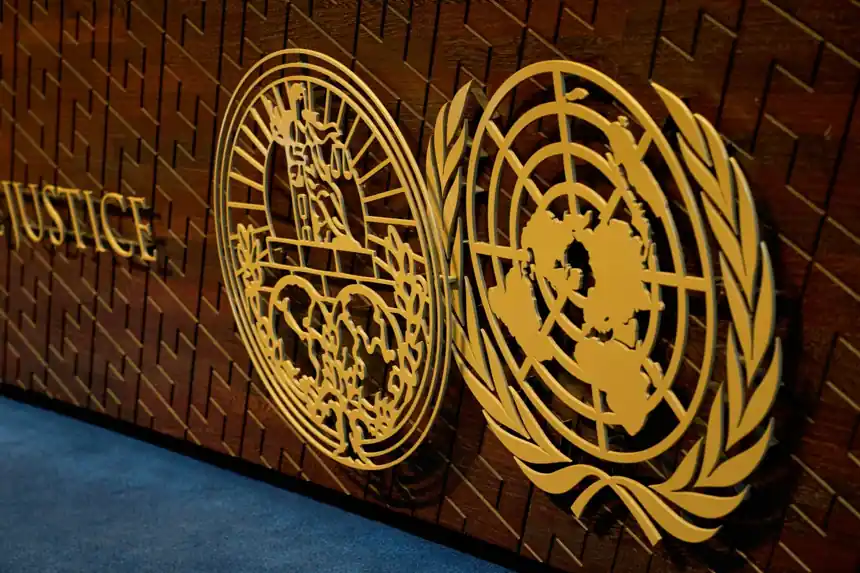
KINSHASA, Democratic Republic of the Congo — The Democratic Republic of the Congo has filed a new case against Rwanda at the International Court of Justice (ICJ), accusing its neighbor of bearing international legal responsibility for decades of violence that has destabilized eastern Congo and fueled one of the world’s most persistent humanitarian crises.
The Congolese government announced Friday that its application asks the United Nations’ highest judicial body to determine that Rwanda violated multiple international treaties through its alleged involvement in armed conflict in eastern Congo dating back to the 1990s.
According to the filing, Congo accuses Rwanda of breaching international conventions covering genocide, racial discrimination, discrimination against women, and torture. Kinshasa alleges that civilians have endured massacres, extrajudicial killings, torture, sexual violence, forced displacement, and ethnic- and gender-based persecution throughout the prolonged conflict.

Congo seeks legal accountability and reparations
Congo has asked the ICJ to declare Rwanda internationally responsible for the conflict, order Kigali to cease activities within Congolese territory, require guarantees against future violations, and award reparations to both the Congolese state and civilian victims.
The International Court of Justice confirmed that it had received Congo’s application instituting legal proceedings. However, the court said it has not yet determined whether it has jurisdiction to hear the case.
The filing represents Congo’s third attempt to bring Rwanda before the ICJ.
An earlier application submitted in 2001 was later withdrawn by Congolese authorities, while a second case filed in 2002 was dismissed in 2006 after the court concluded it lacked jurisdiction because Rwanda had not accepted certain treaty obligations cited by Congo or had entered reservations limiting the court’s authority.
Conflict rooted in decades of regional instability
Eastern Congo has endured armed conflict for decades as government forces and allied militias continue fighting more than 100 armed groups operating across the mineral-rich region.

Among the most powerful is the M23 rebel movement, which Congolese authorities and the United States accuse of receiving support from Rwanda.
M23 fighters made significant territorial gains early last year, capturing the strategic city of Goma and expanding control across parts of eastern Congo.
The United Nations has described the conflict as one of the world’s longest-running, most complex, and most severe humanitarian emergencies.
The roots of the violence extend to the aftermath of the 1994 Rwandan genocide, when Hutu fighters responsible for the killings fled into eastern Congo.
Rwanda has repeatedly stated that its military actions and security policies are intended to prevent armed Hutu groups from threatening its national security.
Congolese authorities and the U.S. government, however, have accused Rwanda of using security concerns as a justification for supporting rebel groups in order to gain influence over eastern Congo’s valuable mineral resources.
Rwanda denies allegations
The Congolese filing identifies several armed organizations that it alleges have received Rwandan backing over the years, including the M23 movement.
Rwanda has consistently denied supporting armed groups operating in eastern Congo.
However, United Nations experts have previously reported finding evidence that Rwandan military personnel operated alongside and provided direction to M23 fighters. Rwanda has rejected those findings.
As of Friday, the Rwandan government had not publicly responded to Congo’s latest legal action before the ICJ.
Peace negotiations continue alongside legal action
The legal proceedings come as separate peace initiatives mediated by the United States and Qatar continue in an effort to reduce tensions between Congo and Rwanda and achieve a lasting settlement to the conflict.
Diplomatic efforts have so far struggled to produce a durable agreement despite months of negotiations.
On Thursday, the United States announced sanctions against Gasabo Gold Refinery, a Rwanda-based company that U.S. authorities described as part of a network allegedly operating in coordination with M23 in eastern Congo.
According to U.S. officials, the sanctions are intended to support ongoing peace initiatives led jointly by the United States and Qatar while increasing pressure on networks accused of contributing to instability in eastern Congo.
Tags: Democratic Republic of the Congo, Rwanda, International Court of Justice, ICJ, M23, Eastern Congo, United Nations, International Law, Humanitarian Crisis, Gasabo Gold Refinery, Peace Talks, Africa