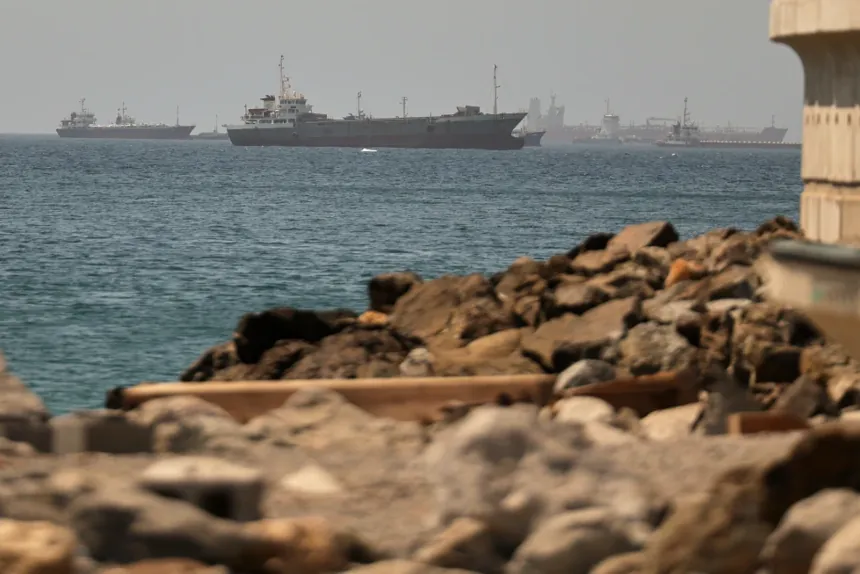
LONDON — Major shipping companies have begun moving vessels through the Strait of Hormuz following the interim agreement reached between the United States and Iran to end their conflict, according to maritime intelligence firm Lloyd’s List Intelligence.
During a media briefing on Thursday, Richard Meade, editor-in-chief of Lloyd’s List, said vessels operated by major shipping firms had resumed transits through the strategic waterway for the first time in 110 days.
According to Lloyd’s List, many vessels had effectively been stranded in the region since February amid security concerns linked to the conflict.

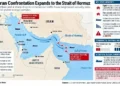
The Strait of Hormuz is one of the world’s most important maritime chokepoints, serving as a key route for global energy supplies. Before the conflict, roughly one-fifth of the world’s crude oil shipments moved through the passage off Iran’s coast.
Major Shipping Companies Resume Operations
Lloyd’s List reported that vessels controlled by several major shipping operators, including Grimaldi Group, Cosco, Knutsen and NYK, had successfully transited the strait.
The company also said two sanctioned crude oil tankers owned by Iran’s National Iranian Tanker Company entered the waterway.
Lloyd’s List did not disclose the total number of ships that had crossed through the strait as of Thursday.
Italian Foreign Minister Antonio Tajani said on social media platform X that a merchant vessel operated by Grimaldi Group was among the first ships to complete the transit following the agreement.
■ Related News


Separate tracking data from maritime analytics company Kpler showed six verified vessel crossings on Wednesday and another 11 on Thursday.
Alternative Routes Being Used
U.S. Vice President JD Vance said Thursday that the U.S. Navy had lifted its blockade of the strait, allowing some ships to access Iranian ports.
Despite the resumption of traffic, maritime industry representatives said the primary shipping corridor remains unavailable.
Phillip Belcher, marine director of Intertanko, an international trade association representing independent tanker owners, said the central route through the Strait of Hormuz remains closed because of an estimated 80 naval mines that still require clearance.
According to Belcher, vessels are currently using alternative northern and southern routes through the strait.
The northern passage runs through Iranian territorial waters, while the southern route passes through waters controlled by Oman.
“Those two routes now seem to be fully open,” Belcher said.
Full Reopening Expected to Take Time
Industry officials cautioned that restoring normal operations across the entire strait could take weeks or months.
Belcher said the alternative routes do not provide the same capacity as the main central shipping channel traditionally used by commercial vessels.
“This is like a highway where the road in the middle is closed and you’re using that hard shoulder,” Belcher said. “That’s now being used as the main route. We need to get back to having the highway open.”
Lloyd’s List estimates that approximately 550 merchant vessels remain positioned to depart the Persian Gulf once maritime traffic returns to normal levels.
That total includes about 160 oil tankers, 200 bulk carriers, 60 container ships and 10 vehicle carriers, according to the maritime intelligence firm.
Global Energy Markets Monitor Developments
The reopening of portions of the Strait of Hormuz is being closely watched by shipping operators, energy markets and governments because of the waterway’s importance to international trade and global oil supplies.
While vessel movements have resumed, maritime industry officials say a full return to normal operations will depend on continued security improvements and the reopening of the strait’s main shipping corridor.
Tags: Strait of Hormuz, Iran, United States, Global Shipping, Oil Markets, Maritime Trade, Persian Gulf, Energy Security