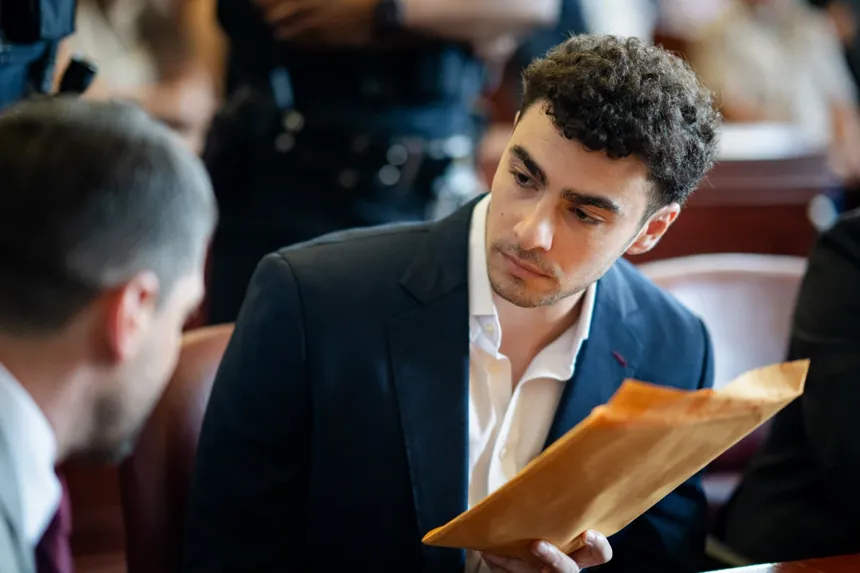
NEW YORK – Luigi Mangione plans to pursue a psychiatric defense at his upcoming New York state murder trial in the killing of UnitedHealthcare chief executive Brian Thompson, a legal strategy that could reduce a potential murder conviction to manslaughter if accepted by a jury.
Judge Gregory Carro disclosed the development during a court hearing Wednesday, saying Mangione’s legal team intends to argue that he was experiencing an extreme emotional disturbance when Thompson was fatally shot in Manhattan on Dec. 4, 2024.
Mangione, 28, has pleaded not guilty to charges in both state and federal cases stemming from the killing.

Under New York law, a successful extreme emotional disturbance defense does not result in acquittal. Instead, it can reduce a murder conviction to manslaughter. A manslaughter conviction carries a potential prison sentence of up to 25 years, while a murder conviction could result in a life sentence.
Carro said defense attorneys first informed the court in a sealed letter last September that they intended to pursue the psychiatric defense and reaffirmed that position during a closed hearing on June 3. The judge said transcripts and related court records from that hearing would be released after redactions are completed.
Court Presses Defense for Additional Details
The judge indicated prosecutors have complained that Mangione’s legal team has not yet fully disclosed what they believe triggered the alleged emotional disturbance.
Carro warned that the defense risks losing the opportunity to present the argument if prosecutors are not given sufficient information to allow their own mental health expert to evaluate Mangione before trial.
Addressing defense attorneys, Carro said the prosecution would not be surprised by evidence presented shortly before trial and instructed them to provide the necessary information promptly.
■ Related News




Despite the dispute, the judge said he does not expect the issue to delay the state trial, which is scheduled to begin on Sept. 8. Federal proceedings, which include stalking-related charges, are currently set for Oct. 13.
Distinction From an Insanity Defense
The planned strategy differs from a not guilty by reason of insanity defense. An extreme emotional disturbance defense does not eliminate criminal responsibility but seeks to reduce the severity of the offense based on the defendant’s mental state at the time of the crime.
According to the court discussion, Mangione’s attorneys must demonstrate that the disturbance was severe enough to undermine his self-control, that there was a reasonable explanation for it from his perspective, and that it contributed to the killing.
Heather Cucolo, a professor at New York Law School specializing in mental health law, said such a defense typically relies on expert testimony regarding a defendant’s psychological condition and personal history. She noted that the defense does not require proof of mental illness or evidence that the defendant faced immediate danger.
Prosecutors Cite Evidence of Planning
The circumstances surrounding the case could present challenges for the defense, Cucolo said, noting that juries often associate extreme emotional disturbance claims with sudden, emotionally charged incidents rather than actions that appear planned.
Prosecutors allege Mangione deliberately targeted Thompson, 50, and traveled from another state to carry out the attack. They have also cited notebook entries in which he allegedly discussed wanting to kill a health insurance executive.
Authorities have further alleged that ammunition connected to the shooting bore the words “delay,” “deny,” and “depose,” a phrase police said referenced tactics critics associate with insurance claim denials.
Cucolo said jurors may be less likely to accept an emotional disturbance argument when significant time passes between the triggering event and the alleged crime.
Ongoing Legal Disputes
Mangione’s attorney, Karen Friedman Agnifilo, objected to the release of materials related to the psychiatric defense, arguing that public disclosure could negatively affect his defense in the federal case, which involves the same underlying events.
The latest hearing follows a ruling last month in which Carro allowed prosecutors to introduce a notebook and a 3D-printed pistol that authorities say matched the weapon used in the shooting.
At the same time, the judge found that a loaded gun magazine and certain other items were obtained through what he described as an improper warrantless search after Mangione’s arrest in Pennsylvania five days after Thompson’s death.
During Wednesday’s proceedings, Carro dismissed one charge connected to possession of the magazine.
The case continues to draw significant public attention as both the state and federal prosecutions move toward trial.
Tags: Luigi Mangione, Brian Thompson, UnitedHealthcare, New York, Murder Trial, Extreme Emotional Disturbance, Federal Case, Criminal Justice