The annual Hajj pilgrimage to Saudi Arabia is once again drawing global attention to Islam’s role as both a spiritual tradition and a force shaping international movement, governance, and cultural identity, as millions of Muslims prepare for rituals that remain central to the faith.
According to reporting by the Associated Press, Hajj is one of the five pillars of Islam and is required once in a lifetime for Muslims who are physically and financially able to undertake the journey. The pilgrimage centers on the holy city of Mecca and concludes alongside Eid al-Adha, one of the most significant observances in the Islamic calendar.
Saudi authorities oversee one of the largest recurring religious gatherings in the world, with pilgrims arriving from across Asia, Africa, Europe, and the Americas. The event carries religious meaning for Muslims while also reflecting the kingdom’s broader role as custodian of Islam’s holiest sites.

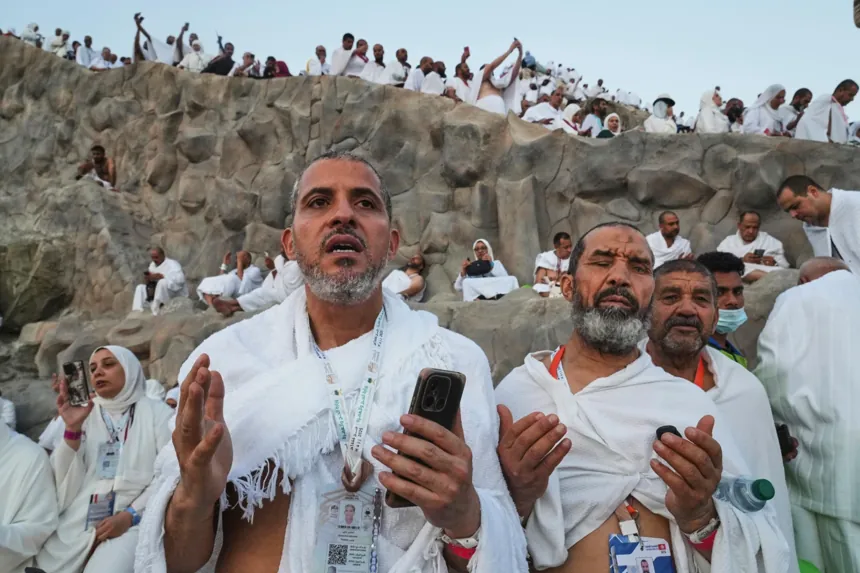
Hajj rituals retrace events associated with the Prophet Ibrahim, known in Christianity and Judaism as Abraham, as well as his wife Hajar and their son Ismail according to Islamic tradition. Pilgrims perform a series of rites over several days, including circling the Kaaba in Mecca, praying at sacred locations, and participating in symbolic acts tied to sacrifice, endurance, and submission to God.
Eid al-Adha, which coincides with the pilgrimage period, commemorates Ibrahim’s willingness to sacrifice his son in obedience to God, according to Islamic teaching. Muslims around the world mark the occasion through communal prayers, charitable giving, and the ritual slaughter of livestock, with meat traditionally shared among relatives and poorer communities.
While the religious significance of Hajj remains unchanged for believers, the pilgrimage increasingly intersects with issues extending beyond faith alone. Saudi Arabia has expanded infrastructure and crowd-management systems in recent years as authorities attempt to manage growing numbers of pilgrims and reduce risks associated with extreme heat and overcrowding.
The pilgrimage has also become tied to broader economic and diplomatic considerations. Governments across the Muslim world coordinate travel quotas, visa systems, and religious delegations with Saudi officials each year, making Hajj an important element of relations between Riyadh and many Muslim-majority nations.
At the same time, rising travel costs and climate pressures have added new challenges for pilgrims. Extreme temperatures in Saudi Arabia during recent pilgrimage seasons have intensified concerns over public safety and the physical demands of the rituals, particularly for elderly participants.


Religious authorities continue to frame Hajj as a unifying act that transcends nationality, ethnicity, and class. Yet the scale of the gathering also reflects the realities of a rapidly growing and globally dispersed Muslim population whose religious practices increasingly intersect with modern questions surrounding mobility, infrastructure, public health, and state administration.
As pilgrims gather in Mecca in the coming days, the annual observance is expected to remain both a deeply personal spiritual undertaking for millions of Muslims and a major international event watched closely across political, religious, and humanitarian spheres.