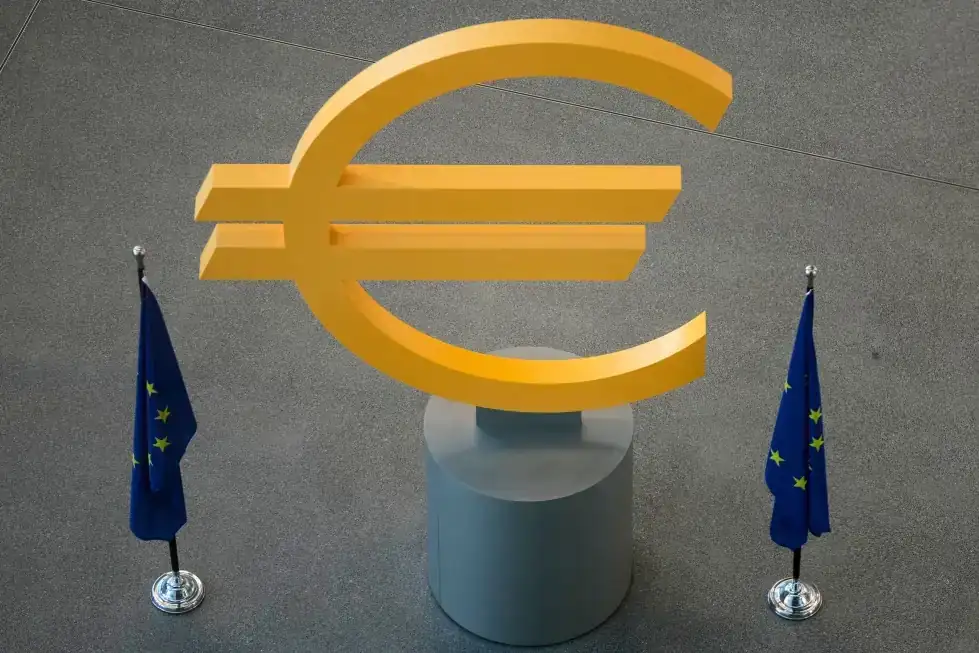
The European Commission has lowered its economic growth forecasts for the eurozone, warning that energy disruptions linked to the Iran conflict are increasing inflationary pressures and threatening the region’s fragile recovery.
The Commission now expects eurozone gross domestic product to grow 0.9% in 2026, down from a previous forecast of 1.2%, while inflation is projected to average 3.0%, significantly above the European Central Bank’s 2% target. The revised outlook reflects the economic fallout from surging oil and gas prices tied to disruptions in shipping through the Strait of Hormuz, one of the world’s most critical energy transit routes.
The downgrade highlights mounting concerns across Europe that the prolonged Middle East conflict could trigger a period of stagflation — slower growth combined with persistent inflation — similar to the energy crisis that followed Russia’s invasion of Ukraine in 2022.

Energy Prices Pressure Europe’s Economic Recovery
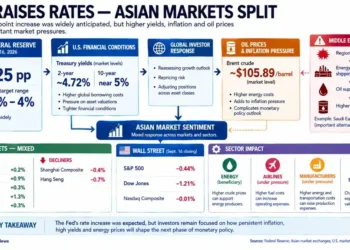
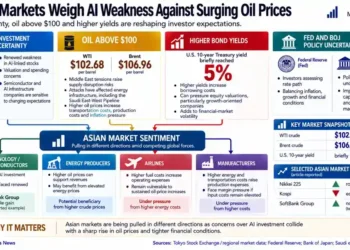
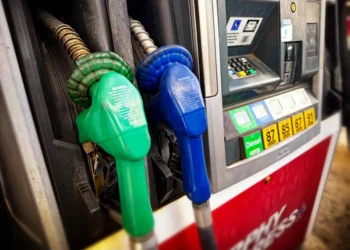
The Commission said the region’s economic outlook deteriorated sharply after oil prices climbed above $100 per barrel earlier this year following attacks and shipping disruptions connected to the Iran conflict. Natural gas prices have also surged as markets reacted to instability affecting Gulf energy supplies.
Europe remains heavily dependent on imported energy despite efforts to diversify away from Russian supplies in recent years. Analysts said higher fuel and electricity costs are already reducing household spending power and raising operating expenses for manufacturers, transportation companies, and chemical producers.
According to S&P Global survey data, eurozone private-sector activity contracted for a second consecutive month in May, with Germany and France experiencing particularly sharp slowdowns as business confidence weakened.
The Commission warned that prolonged disruption in energy markets could further weaken investment and industrial output across the bloc, especially in energy-intensive sectors.
Inflation Complicates ECB Interest Rate Strategy
The inflation outlook has become increasingly challenging for policymakers at the European Central Bank as energy-driven price pressures spread through the economy.
The ECB had previously been expected to continue easing monetary policy in 2026 after inflation cooled last year. However, economists now expect policymakers to maintain higher borrowing costs for longer or potentially raise rates again if inflation accelerates further.
Input costs for businesses have risen sharply, while companies across Europe have increasingly passed higher transportation and fuel expenses on to consumers. Employment growth has also weakened, with firms reducing hiring plans amid uncertainty over future demand and energy availability.
The European Commission said domestic consumption is expected to remain the primary source of growth, though elevated financing costs and weaker global demand are likely to constrain private investment.
Governments Face Rising Fiscal Pressure
The deteriorating economic outlook is also expected to increase pressure on public finances across Europe as governments consider additional support measures for households and businesses affected by higher energy prices.
The Commission forecasts eurozone budget deficits will widen from 2.9% of GDP in 2025 to 3.3% in 2026. Italy is projected to become the European Union’s most indebted major economy by 2027, surpassing Greece in debt-to-GDP terms.
Several European governments have already introduced temporary subsidies, tax relief measures, and fuel support programs to cushion the impact of rising utility and transportation costs. In the United Kingdom, the government recently announced consumer-focused tax reductions and energy-related relief measures aimed at easing cost-of-living pressures.
Despite the worsening outlook, EU officials said Europe remains better prepared for an energy disruption than during the 2022 crisis due to expanded renewable energy investment, improved gas storage coordination, and more diversified supply chains.
Markets Monitor Risks of Extended Conflict
Financial markets and economists continue to monitor whether the conflict around Iran and the Strait of Hormuz evolves into a prolonged disruption to global energy flows.
The International Monetary Fund previously lowered its global growth forecast for 2026 to 3.1%, citing inflationary pressures tied to the Middle East conflict and higher energy prices.
European officials warned that a prolonged escalation could lead to further increases in fuel costs, weaker consumer confidence, and deeper industrial contraction across the eurozone.