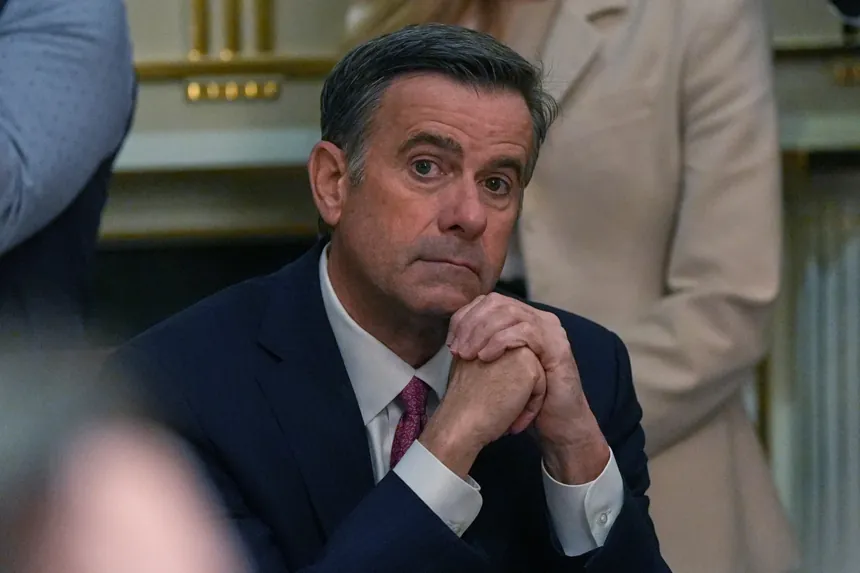
HAVANA — CIA Director John Ratcliffe held rare high-level meetings with Cuban officials in Havana, including Raúl Castro’s grandson, in a development that signals renewed backchannel engagement between the United States and Cuba despite escalating political tensions between the two countries. Cuban and U.S. officials confirmed that Ratcliffe met Raúl Guillermo Rodríguez Castro, Interior Minister Lázaro Álvarez Casas, and senior Cuban intelligence officials during the visit.
According to U.S. officials, Ratcliffe delivered a message from President Donald Trump stating that Washington is prepared to engage more seriously with Havana on economic and security matters if Cuba undertakes “fundamental changes.” Cuban authorities described the talks as taking place during a period of “complex bilateral relations.”
Security and Intelligence Cooperation at the Center
The discussions reportedly focused on intelligence cooperation, regional security, migration issues, and Cuba’s worsening economic crisis. U.S. officials reiterated concerns that Cuba could serve as a strategic platform for adversaries operating in the Western Hemisphere, while Cuban representatives rejected accusations that the island poses a national security threat to Washington.

Analysts noted that the direct involvement of Ratcliffe, one of the Trump administration’s most senior intelligence officials, marked an unusual diplomatic signal given the administration’s hardline posture toward Havana. The visit represented one of the highest-level known contacts between the two governments in recent years.
The meetings also highlighted the increasingly visible role of Raúl Guillermo Rodríguez Castro — widely known inside Cuba’s political system as “Raulito” — who has emerged as an influential figure within the country’s security establishment and inner political circle.
Cuba’s Economic Crisis Shapes Diplomatic Calculations
The talks occurred as Cuba faces severe fuel shortages, prolonged blackouts, and mounting economic instability worsened by U.S. sanctions and restrictions on energy imports. According to Reuters and the Financial Times, the crisis has increased pressure on Havana to explore limited channels of cooperation with Washington despite deep ideological differences.
The Trump administration has recently expanded sanctions targeting Cuba’s military-linked business networks while simultaneously offering humanitarian assistance tied to broader political reforms. Officials familiar with the discussions said the United States is attempting to combine economic pressure with selective diplomatic engagement.
Cuban officials, meanwhile, renewed objections to the island’s designation by Washington as a state sponsor of terrorism and argued that U.S. economic restrictions remain the primary driver of the country’s humanitarian difficulties.
■ Related News



Regional Stability and Strategic Messaging
The Havana meetings are being closely watched across Latin America as governments assess whether Washington may be testing a more flexible approach toward Cuba while maintaining broader geopolitical pressure. The discussions come amid heightened regional tensions linked to Venezuela, migration flows, and growing Chinese and Russian influence in the Caribbean.
Political analysts said the visit demonstrated that even during periods of confrontation, intelligence and security channels between adversarial governments often remain active to prevent wider instability. While no immediate policy breakthroughs were announced, the talks suggested both Washington and Havana may be seeking mechanisms to avoid further deterioration in relations.