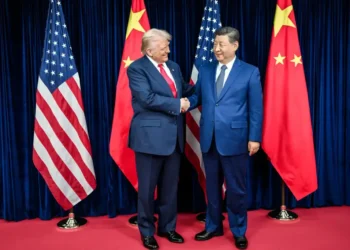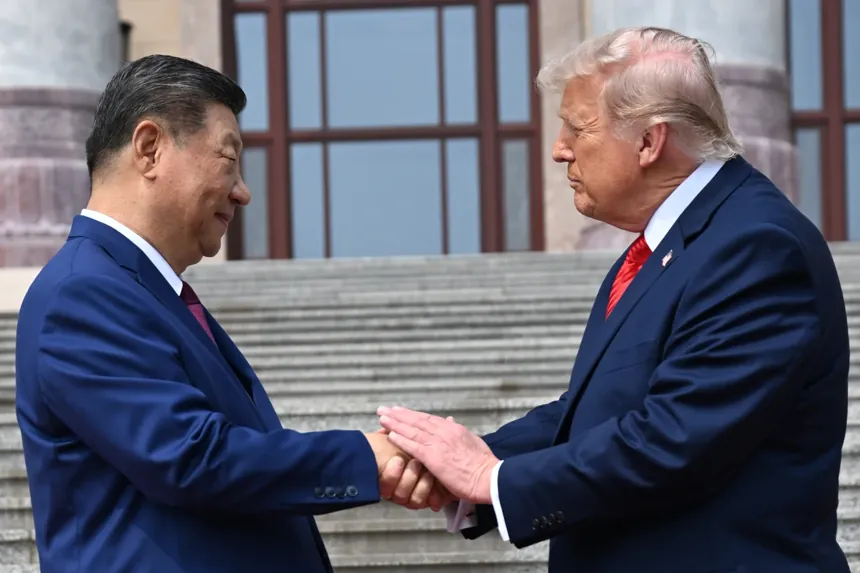
BEIJING — U.S. President Donald Trump said relations between Washington and Beijing remain “in a good place” as he concluded a closely watched visit to China, despite deep divisions over Taiwan, trade policy, and regional security issues. Chinese President Xi Jinping used the summit to warn against escalating tensions, particularly regarding Taiwan, which Beijing considers a core national interest.
The Beijing meetings came at a sensitive moment for the world’s two largest economies, with conflicts in the Middle East, supply chain concerns, and ongoing trade disputes adding pressure to an already fragile geopolitical landscape. Officials from both governments described the discussions as an attempt to stabilize relations while preventing further strategic confrontation.
Taiwan Remains Central Flashpoint
Taiwan emerged as one of the most contentious issues during the summit. Chinese officials reiterated opposition to recent U.S. military support and arms sales to Taipei, warning that Washington’s actions risk undermining regional stability.

According to international reports, Xi told Trump that mishandling the Taiwan issue could lead to broader confrontation between the two powers. The remarks reflected Beijing’s increasingly firm stance as tensions continue to rise across the Taiwan Strait.
The Trump administration, meanwhile, maintained that U.S. commitments in the Indo-Pacific remain unchanged. American officials accompanying the president emphasized continued support for Taiwan’s defense capabilities while also seeking to avoid direct military escalation with China.
Trade Talks Aim to Reduce Friction
Trade and economic cooperation formed another major pillar of the discussions. Trump promoted expanded Chinese purchases of American agricultural products, aircraft, and energy exports as part of broader efforts to ease commercial tensions between the two countries.
Government statements indicated that both sides discussed mechanisms to manage disputes more effectively and avoid a repeat of previous tariff escalations that disrupted global markets. Analysts noted that while no major breakthrough was announced, the dialogue suggested both governments remain interested in preventing further economic deterioration.
Business executives from leading American technology and manufacturing firms were also present during portions of the visit, highlighting the importance of commercial ties despite increasing strategic rivalry.
■ Related News




Middle East Conflict Adds Global Pressure
The leaders also addressed the conflict involving Iran and concerns over global energy security. Both Washington and Beijing acknowledged the importance of maintaining stability in critical shipping routes, including the Strait of Hormuz, amid fears of broader disruption to international oil markets.
Chinese officials signaled willingness to support diplomatic efforts aimed at reducing regional tensions, though analysts cautioned that Beijing’s close economic relationship with Tehran complicates its role as a mediator.
The discussions underscored how geopolitical crises beyond East Asia are increasingly shaping U.S.-China relations, with both governments attempting to balance strategic competition against the need for cooperation on global economic stability.
Symbolism Without Major Breakthroughs
Trump received a highly ceremonial welcome in Beijing, including formal state events and cultural visits designed to emphasize the significance of the summit. The symbolism echoed earlier periods of diplomatic engagement between the two countries, even as substantive disagreements remain unresolved.
Analysts said the summit appeared focused more on managing rivalry than achieving transformational agreements. While both leaders publicly projected confidence in continued dialogue, divisions over Taiwan, technology restrictions, trade access, and regional security continue to define the broader relationship between the United States and China.