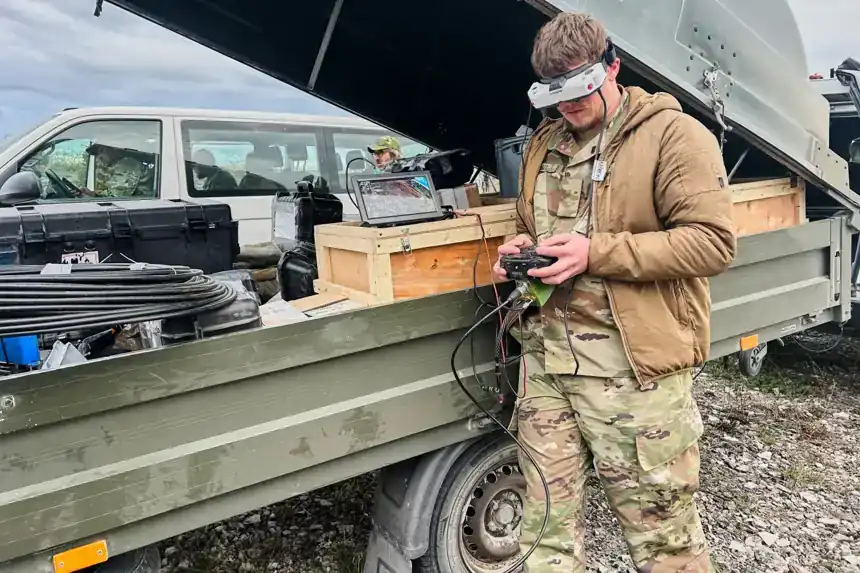
GOTLAND, Sweden — Ukrainian drone operators participating in a NATO military exercise in Sweden delivered a stark warning to Western allies after successfully overwhelming Swedish forces during simulated combat operations designed to test the alliance’s readiness against hybrid threats near Russia’s border.
The Swedish-led exercise on the Baltic island of Gotland focused on defending NATO territory from sabotage, cyberattacks, and potential military escalation in northern Europe. Ukrainian drone pilots invited to share battlefield experience from the war against Russia demonstrated tactics that military officials said exposed critical weaknesses in NATO’s drone warfare preparedness.
The exercise comes as European governments increase defense coordination following Russia’s continued military pressure in the Baltic region and growing uncertainty surrounding long-term US security commitments to NATO under President Donald Trump. Military officials and analysts said the drills reflected mounting concern over how quickly future conflicts could escalate in strategically sensitive areas such as the Baltic Sea.

Ukrainian Drone Tactics Expose NATO Gaps
During the exercise, Ukrainian drone teams acting as opposing forces repeatedly defeated Swedish units using tactics developed on the battlefield in Ukraine, according to military officials and participants involved in the drills.
One Ukrainian drone pilot told the Associated Press that the exercise had to be paused multiple times after NATO forces struggled to respond effectively to coordinated drone attacks. Ukrainian operators emphasized that Western militaries still underestimate the speed, survivability, and tactical flexibility of modern drone warfare.
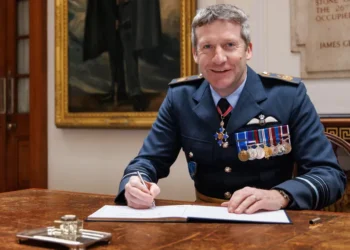
Sweden’s top military commander, General Michael Claesson, said NATO allies must rapidly improve drone detection and counter-drone systems by learning directly from Ukraine’s combat experience. US military officials participating in the exercise also stressed the need for stronger integrated air defense capabilities across NATO members.
Baltic Security Concerns Intensify
The exercise centered on Gotland because of its strategic location between Sweden and Russia’s heavily militarized Kaliningrad exclave. Military analysts have long viewed the island as critical to control of the Baltic Sea and NATO’s northern defense posture.
According to Swedish officials, the scenario tested how NATO members might respond before Article 5 collective defense measures are formally triggered. The drills simulated sabotage operations causing power outages, supply disruptions, and instability on the island.




European governments have increasingly warned about Russian hybrid operations, including cyberattacks, disinformation campaigns, and drone-related security incidents across NATO territory. Recent drone incursions involving Baltic states and Finland have heightened pressure on NATO to strengthen regional air defense and surveillance systems.
Europe Watches US Commitment to NATO
The military exercise also unfolded against broader uncertainty over the future of US engagement in Europe after President Trump announced troop reductions in Germany and redirected some military assets toward the Middle East.
European defense officials have expressed concern that reduced American military presence could weaken NATO deterrence capabilities at a time of growing instability near Russia’s borders. While Swedish officials rejected suggestions that European defense cooperation is replacing NATO, they acknowledged that greater regional military coordination has become increasingly important.
Defense cooperation among Nordic and Baltic countries has accelerated in recent months, including joint naval planning and expanded military exercises involving Sweden, Norway, the United Kingdom, and other NATO partners.
Strategic Pressure Builds Across Northern Europe
Military analysts warned that Russia could test NATO unity through limited operations targeting vulnerable territories in the Baltic region rather than through a large-scale conventional attack.
Swedish military leaders said Gotland represents a potential flashpoint because control of the island would provide strategic dominance over major Baltic Sea shipping and military routes. NATO officials increasingly view drone warfare, electronic jamming, and sabotage as central threats shaping future European security planning.