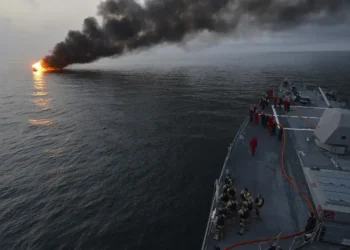
The United States military says it intercepted Iranian missile, drone and small-boat attacks targeting three U.S. Navy destroyers transiting the Strait of Hormuz, marking one of the most serious direct confrontations between Washington and Tehran since a fragile ceasefire took hold earlier this year.
U.S. Central Command said American forces repelled what it described as “unprovoked attacks” against the USS Truxtun, USS Rafael Peralta and USS Mason while the vessels were operating in the strategic waterway linking the Persian Gulf to global shipping lanes. The Pentagon said no American ships were hit and confirmed that U.S. forces carried out retaliatory strikes against Iranian military infrastructure linked to the attacks.
The incident further strains already volatile relations between Iran, the United States and Israel amid continuing tensions surrounding shipping access through the Strait of Hormuz, a route responsible for transporting a significant share of the world’s oil and liquefied natural gas supplies.

Iranian state media offered a sharply different account, claiming Iranian forces responded after U.S. operations targeted an Iranian oil tanker near the strait. Tehran-linked outlets also reported exchanges of fire near Qeshm Island and explosions around Bandar Abbas, one of Iran’s most strategically important port cities.
Strait of Hormuz Crisis Enters More Dangerous Phase
The latest confrontation reflects the growing instability surrounding the Strait of Hormuz, where military tensions and disrupted shipping have increasingly threatened global energy markets.
The current crisis intensified after Iran imposed restrictions on maritime traffic following joint U.S.-Israeli military operations earlier this year. Washington later launched “Project Freedom,” an effort to escort commercial shipping through the strait and reduce the impact of Iran’s maritime pressure campaign.
Reuters and defense reporting cited by international outlets said American naval forces have repeatedly intercepted Iranian drones, cruise missiles and fast-attack boats in recent days while escorting merchant vessels through the waterway. U.S. officials also confirmed earlier operations that destroyed several Iranian boats allegedly threatening civilian shipping.
Military analysts say the increasing frequency of these encounters raises the risk of rapid escalation because the strait’s narrow geography leaves little margin for operational error or diplomatic delay.
■ Related News




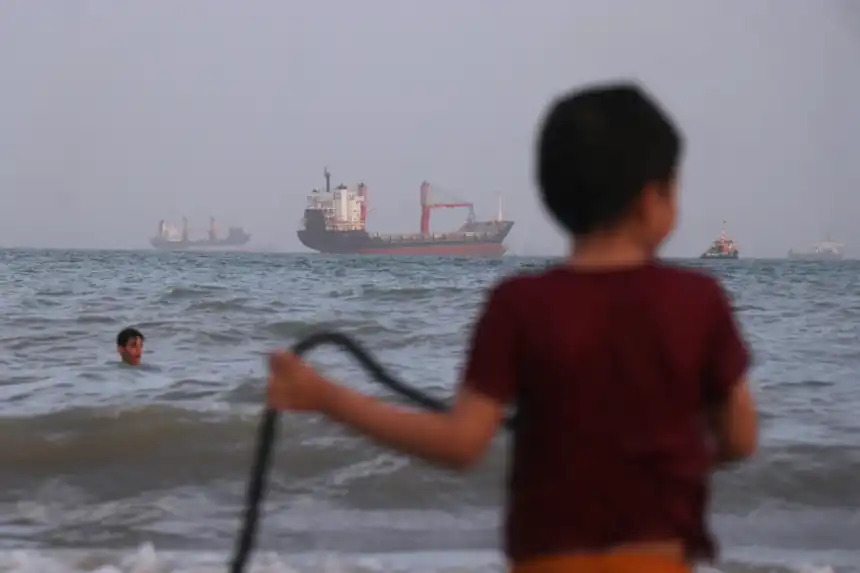
The waterway remains one of the world’s most strategically sensitive maritime chokepoints. Prolonged instability there could disrupt international energy supplies, insurance markets and shipping operations across Asia, Europe and the Middle East.
Diplomatic Efforts Struggle Amid Escalating Military Pressure
The naval clash comes despite ongoing diplomatic mediation efforts involving regional actors including Pakistan and Gulf states.
President Donald Trump insisted the ceasefire framework between Washington and Tehran technically remains in effect, even as U.S. forces conducted retaliatory strikes against Iranian launch sites, intelligence nodes and command facilities.
Iranian officials, however, accused Washington of violating the ceasefire through attempts to force open the strait without Tehran’s approval. Iranian parliamentary speaker Mohammad Bagher Qalibaf warned earlier this week that continued U.S. military operations in Gulf waters could provoke a broader response from Tehran.
At the United Nations, diplomats have reportedly discussed proposals tied to freedom of navigation guarantees and possible sanctions if maritime attacks continue. Several Gulf states remain cautious about becoming directly involved in any expanded confrontation between Iran and the United States.
Security experts say the conflicting narratives from both governments illustrate how military signaling and political messaging have become central parts of the confrontation, complicating efforts to stabilize the region diplomatically.
Global Economic and Security Risks Continue to Expand
The renewed fighting in the Strait of Hormuz has intensified concerns among global markets already unsettled by energy volatility and regional instability.
Shipping disruptions in the Gulf have left hundreds of commercial vessels delayed or rerouted in recent weeks, increasing transportation costs and adding pressure to global oil prices. Analysts warn that any sustained closure or militarization of the strait could trigger broader economic consequences for Europe and Asia, both heavily dependent on Gulf energy exports.
The confrontation also underscores the broader transformation of the Iran conflict from a localized military struggle into a wider geopolitical crisis involving maritime security, energy infrastructure and competing regional alliances.
Western defense officials increasingly view the Gulf as a long-term strategic flashpoint where naval escorts, drone warfare and proxy operations may continue even if formal ceasefire arrangements remain nominally intact.
With both Iran and the United States maintaining significant military deployments around the strait, analysts warn that additional confrontations could rapidly undermine already fragile diplomatic efforts and further destabilize one of the world’s most critical trade corridors.