Kenya is facing mounting concerns over political violence ahead of next year’s elections as the term “goonism” becomes central to the country’s political discourse, reflecting growing fears that gangs and intimidation tactics are increasingly shaping the national contest for power.
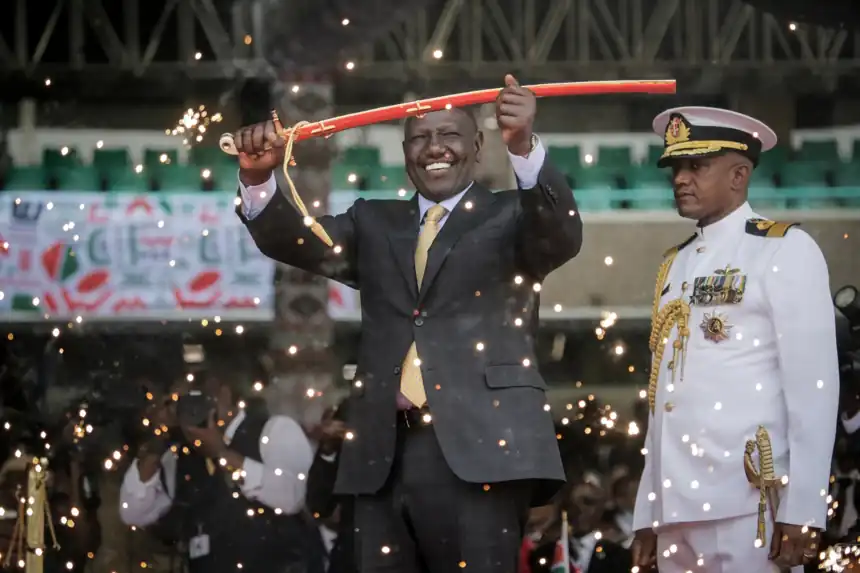
The debate has placed President William Ruto under intensified scrutiny, with critics — including former religious allies — accusing the self-described Christian leader of benefiting from a climate of political aggression that they say contradicts the moral and religious values he promoted during his rise to power.
According to reporting from The Associated Press, supporters of Ruto use the term “goonism” to describe violent gangs disrupting political activity, while opposition figures argue the phrase has become shorthand for what they see as state-tolerated intimidation targeting critics and rivals ahead of the 2027 election campaign.

The escalating tensions highlight broader anxieties over democratic stability in East Africa’s largest economy, where elections have historically been accompanied by ethnic and political violence. Analysts warn that rising hostility between rival political camps risks deepening instability in a country viewed as a key diplomatic and economic anchor in the region.
Religious Backlash Intensifies Against Ruto
The controversy has become especially sensitive because of Ruto’s long-standing public image as a devout evangelical Christian.
Before winning the presidency in 2022, Ruto frequently framed his political rise as divinely guided and presented himself as a champion of ordinary Kenyans against entrenched political elites. He was widely supported by evangelical churches and religious leaders who viewed him as a morally conservative reformist figure.
However, some of those same religious figures now accuse him of abandoning those principles after taking office. AP reported that preacher Wilfred Lai recently condemned politicians who use violence and intimidation while claiming moral authority, warning during a sermon that leaders relying on “goons” to maintain power would ultimately fail.
Criticism has also emerged over Ruto’s increasingly combative political rhetoric and economic policies, including controversial tax increases that triggered youth-led protests in Nairobi and other cities. Opposition figures and civil society groups argue the administration has responded to dissent with intimidation rather than dialogue.



Some former supporters point to symbolic changes in Ruto’s public conduct — including criticism surrounding plans for a large church complex at the presidential compound — as evidence that his leadership has become more focused on power projection than spiritual messaging.
Political Violence Raises Democratic Concerns
Kenya’s political atmosphere has become increasingly confrontational as rival factions prepare for the next national election cycle.
AP reporting highlighted incidents in which armed groups allegedly disrupted rallies, attacked politicians and intimidated activists. In one recent case, opposition Senator Godfrey Osotsi was reportedly assaulted by men questioning his political views, an incident that intensified national debate over politically motivated violence.
Interior Secretary Kipchumba Murkomen has publicly warned gangs against participating in political violence, while National Assembly Speaker Moses Wetang’ula said “goonism” had no place in a democratic society.
Yet opposition leaders claim violence is becoming normalized within Kenya’s political culture. Former Deputy President Rigathi Gachagua, once a close Ruto ally before their political split, has emerged as one of the president’s fiercest critics and now leads efforts to block Ruto from securing a second term.
The increasingly hostile exchanges between senior political figures have alarmed religious leaders and governance observers, who fear the country’s political environment could deteriorate further as campaigning intensifies.
Regional Stability and International Reputation at Stake
The rising tensions carry implications beyond domestic politics because Kenya plays a major diplomatic and economic role across East Africa.
Kenya hosts key international institutions and serves as a regional hub for trade, finance and humanitarian operations. Prolonged instability or election-related violence could affect investor confidence and regional security coordination at a time when neighboring countries including Sudan, Somalia and the Democratic Republic of Congo continue facing conflict and political uncertainty.
Political analysts interviewed by AP warned that the re-emergence of organized political gangs evokes memories of previous Kenyan election crises, particularly the violence that followed the disputed 2007 election, when more than 1,000 people were killed.
Observers say the growing use of the term “goonism” reflects wider public fears that intimidation and informal militias may again become embedded in Kenya’s electoral politics if tensions are not contained early.
As rival political alliances continue mobilizing ahead of the 2027 vote, church leaders, civil society groups and regional observers are increasingly calling for restraint amid fears that escalating rhetoric and political violence could threaten Kenya’s democratic stability and international standing.