The release of newly disclosed U.S. investigative data into the 2022 crash of a China Eastern Airlines Boeing 737 has renewed international scrutiny over aviation safety oversight, pilot mental health protocols, and the transparency of major air disaster investigations.
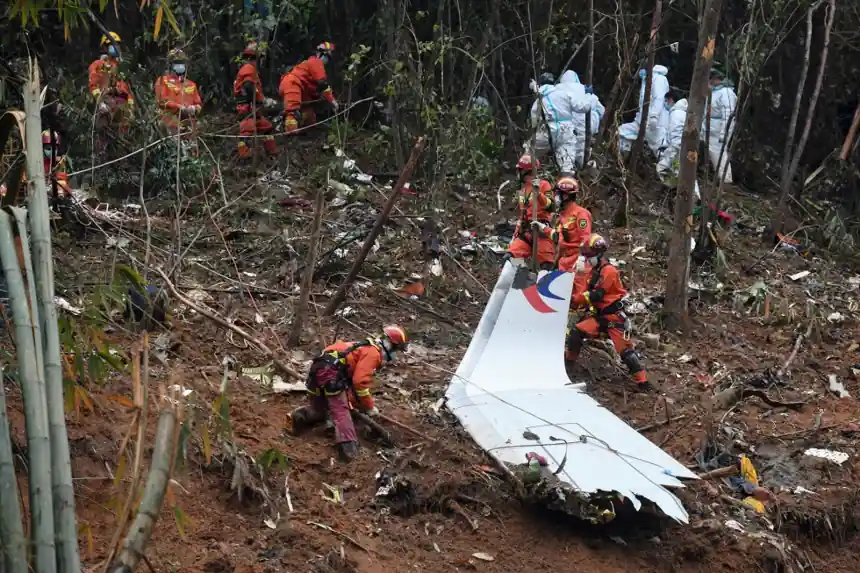
According to material released by the U.S. National Transportation Safety Board (NTSB), both engines on China Eastern Flight MU5735 were shut down mid-flight before the aircraft plunged into mountainous terrain in southern China, killing all 132 people on board. The findings, first reported by Reuters and The Associated Press, also indicate erratic cockpit control movements that investigators say may suggest a struggle inside the flight deck before impact.
The Boeing 737-800 was traveling from Kunming to Guangzhou on March 21, 2022, when it suddenly descended from cruising altitude and crashed in Guangxi province, marking China’s deadliest aviation disaster in nearly three decades. Chinese aviation authorities have not yet issued a final public report on the crash.

International Pressure Grows Over Investigation Transparency
The newly released data emerged through a Freedom of Information Act request filed in the United States, where the NTSB participated in the investigation because the aircraft and engines were manufactured by American companies. Aviation analysts say the disclosure has revived concerns over the pace and openness of the Chinese inquiry.
International aviation standards established through the International Civil Aviation Organization generally encourage final accident reports to be released within roughly a year of major incidents. More than four years after the crash, however, Chinese regulators have provided limited public detail regarding the cause of the disaster.
Reuters reported that the NTSB found no evidence of mechanical failure involving the aircraft itself, increasing attention on cockpit activity in the final minutes of the flight. The data reportedly showed both engine fuel switches moving from “run” to “cutoff” while the aircraft was cruising at approximately 29,000 feet.
Aviation Safety Debate Expands Beyond China
The findings are likely to intensify broader international debates over pilot screening procedures and mental health safeguards across the global aviation industry.
Former U.S. aviation investigators cited by multiple media organizations said the control inputs recorded during the descent appear inconsistent with standard emergency procedures. Some experts suggested the data could indicate attempts by one crew member to counteract another’s actions during the aircraft’s rapid dive.
■ Related News




The case has drawn comparisons with previous aviation tragedies involving suspected deliberate cockpit actions, including the 2015 Germanwings crash in Europe. Industry specialists interviewed by Reuters and AP noted that pilot mental health remains one of the most sensitive unresolved issues in global aviation safety regulation.
Analysts say the China Eastern case may place renewed pressure on regulators worldwide to reassess how airlines monitor psychological fitness while balancing medical privacy protections and employment concerns for pilots.
Regional Aviation Stability Under Renewed Focus
The crash was considered especially significant because China’s commercial aviation sector had achieved a relatively strong safety record in recent decades after a series of fatal accidents during the 1990s.
China Eastern Airlines, one of the country’s major state-owned carriers, has largely avoided public comment on the latest disclosures. Boeing has previously stated that it would continue cooperating with investigators.
The absence of a final Chinese report has also generated discussion within international aviation circles about cross-border investigative coordination and information sharing in high-profile disasters involving multinational stakeholders.
While the newly released NTSB material provides the clearest public account yet of the aircraft’s final moments, investigators have not officially determined motive or responsibility. Key cockpit voice recordings remain under the control of Chinese authorities and have not been publicly released.
As international aviation regulators continue reviewing the implications of the findings, the case is expected to remain a significant reference point in ongoing global discussions surrounding cockpit security, pilot wellness monitoring, and transparency standards in civil aviation investigations.