A surge in illegal gold mining across Amazon rainforest is accelerating environmental damage in Brazil, with deforestation and mercury pollution reaching alarming levels. The expansion, driven by high global gold prices, is raising concerns among environmental groups and policymakers about the broader impact on climate stability and Indigenous communities.
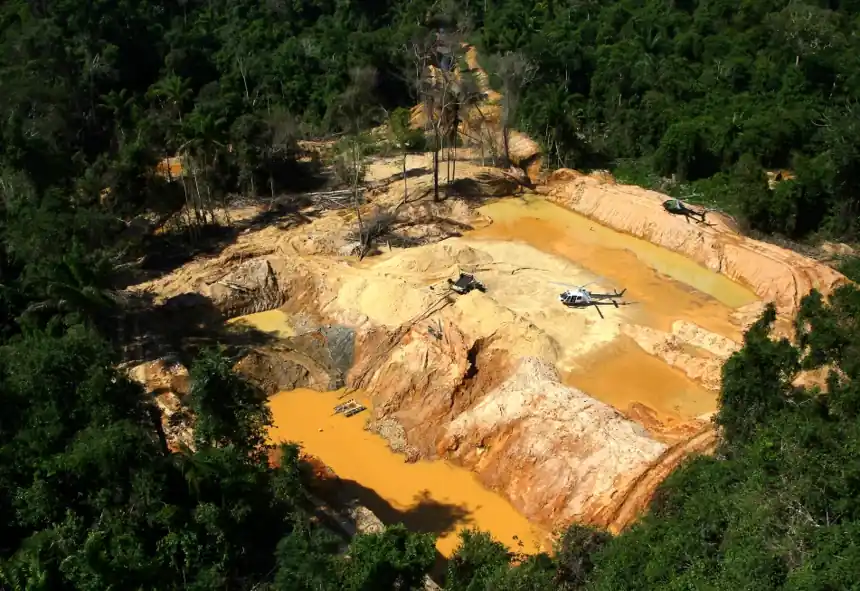
Recent findings show that mining activity has spread deeper into protected areas, including key conservation zones in the Xingu region. According to reporting from The Associated Press, satellite data and field research reveal that illegal operations are responsible for a significant share of forest clearing, much of it occurring unlawfully.
Environmental Damage Accelerates Across Protected Areas
The expansion of mining sites has led to rapid forest loss, with nearly 496,000 hectares of Amazon rainforest cleared for mining since 2018. Researchers estimate that around 80% of this deforestation in Brazil is likely illegal, highlighting persistent enforcement challenges.

In newly affected areas, clandestine infrastructure—including illegal airstrips—has enabled miners to access remote regions. As a result, conservation areas once considered secure are now increasingly vulnerable to exploitation.
Experts warn that continued deforestation threatens biodiversity and weakens the Amazon’s role as a critical carbon sink, with implications for global climate regulation.
Mercury Contamination Raises Public Health Concerns
Alongside deforestation, mercury pollution from gold extraction is emerging as a major health risk. The toxic metal, used to separate gold from sediment, often enters rivers and accumulates in fish consumed by local populations.
Studies cited in AP reporting show that more than one-fifth of fish sampled in Amazon markets exceeded safe mercury levels set by the World Health Organization. In some cases, children have been exposed to mercury at levels far above recommended limits.
Health experts warn that prolonged exposure can cause neurological damage and developmental issues, particularly among Indigenous communities that rely heavily on river ecosystems.
■ Related News




Enforcement Struggles Against Organized Networks
Despite government crackdowns, illegal mining continues to expand, often shifting locations in response to enforcement efforts. Officials describe the situation as a “cat-and-mouse game,” where dismantled operations quickly reappear elsewhere.
Investigations indicate that large criminal organizations are financing many of these operations, providing the resources needed to sustain mining activities even after raids. This has made enforcement more complex and resource-intensive.
Brazilian authorities have pledged to strengthen monitoring and dismantle the financial networks behind illegal mining. However, experts say lasting progress will require coordinated action across enforcement, regulation, and international supply chains.
Global Economic Drivers Intensify Pressure
The rise in gold prices has played a central role in the mining surge. As investors seek safe-haven assets amid global uncertainty, demand for gold has increased, creating strong incentives for illegal extraction.
Analysts note that weaknesses in Brazil’s mineral certification system allow illegally mined gold to enter legal markets, complicating efforts to curb the trade. This dynamic links local environmental damage to global economic systems.
Strategic Implications for Climate and Governance
The crisis in the Amazon reflects a broader challenge at the intersection of environmental protection and global demand for natural resources. As illegal mining expands, it not only threatens ecosystems but also undermines governance and rule of law in remote regions.
For international policymakers, the situation underscores the need for stronger cooperation on environmental crime, supply chain transparency, and climate protection strategies.
Without sustained intervention, experts warn that the combined effects of deforestation and pollution could have lasting consequences for both regional stability and the global climate system.