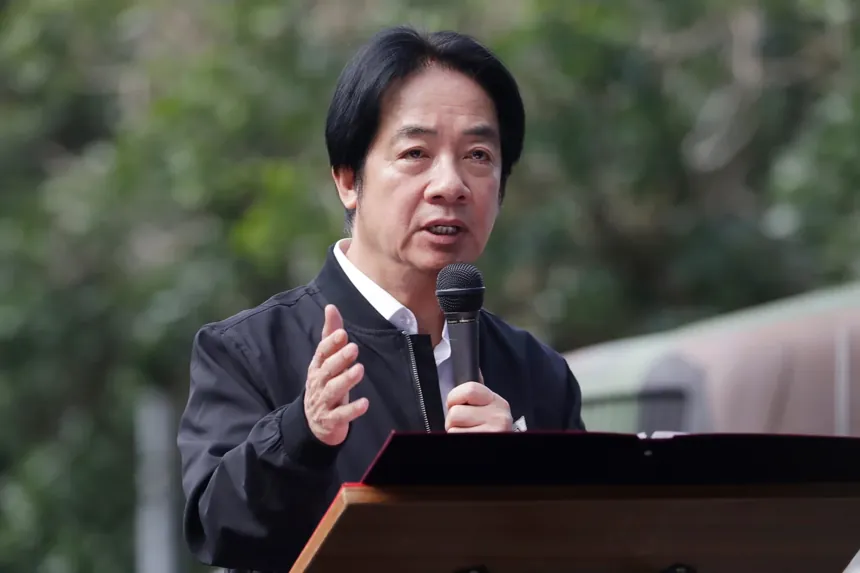
Taiwan President Lai Ching-te has defended the island’s right to conduct official overseas visits following a trip he said China attempted to obstruct. The remarks come amid growing Taiwan China diplomatic tensions, as Beijing continues efforts to limit Taipei’s international engagement.
Speaking after returning from a visit to Eswatini, one of Taiwan’s remaining diplomatic allies, Lai said state visits are a “basic right” for any government. According to reporting from The Associated Press, he stressed that Taiwan would continue to engage globally despite external pressure.
The trip, which had been delayed and rerouted, drew attention after Taiwanese officials said several countries denied overflight access under pressure from Beijing. China has not confirmed those claims but reiterated its position that Taiwan has no right to conduct state-to-state diplomacy.

Diplomatic Pressure Intensifies
The episode highlights increasing efforts by China to isolate Taiwan internationally. Beijing views Taiwan as part of its territory and routinely opposes any official exchanges between Taipei and other governments.
During the trip, Lai emphasized that Taiwan’s outreach reflects its determination to remain active on the global stage. He also warned that attempts to block such visits undermine broader principles of international cooperation.
Reuters reporting indicates that Taiwan had to adjust its travel route significantly, avoiding certain airspaces after alleged diplomatic pressure from China.
Strategic Alliances Under Strain
Taiwan maintains formal diplomatic ties with only a small number of countries, making each visit politically significant. Eswatini remains its sole diplomatic ally in Africa, underscoring the importance of maintaining these relationships.
According to The Associated Press, Lai used the visit to strengthen cooperation in areas such as agriculture, education, and economic development.

Analysts note that such engagements are critical for Taiwan’s international visibility, especially as Beijing expands its influence across developing regions.
Regional Stability Tested
The dispute reflects broader tensions across the Taiwan Strait, where political and military pressures have increased in recent years. China has stepped up efforts to limit Taiwan’s participation in international forums and diplomatic activities.
At the same time, Taiwan continues to assert its autonomy in global affairs. Officials argue that participation in international engagement is essential not only for diplomacy but also for economic and humanitarian cooperation.
The issue has drawn attention from Western governments, with the United States describing Taiwan as a “trusted partner,” according to Reuters reporting.
Strategic Implications for Global Diplomacy
The latest dispute underscores how Taiwan’s international outreach has become a focal point in broader geopolitical competition. For Beijing, restricting Taiwan’s visibility remains a key objective. For Taipei, expanding global engagement is central to its strategy.
The outcome of these competing approaches could shape regional stability and influence how other countries navigate relations with both China and Taiwan.