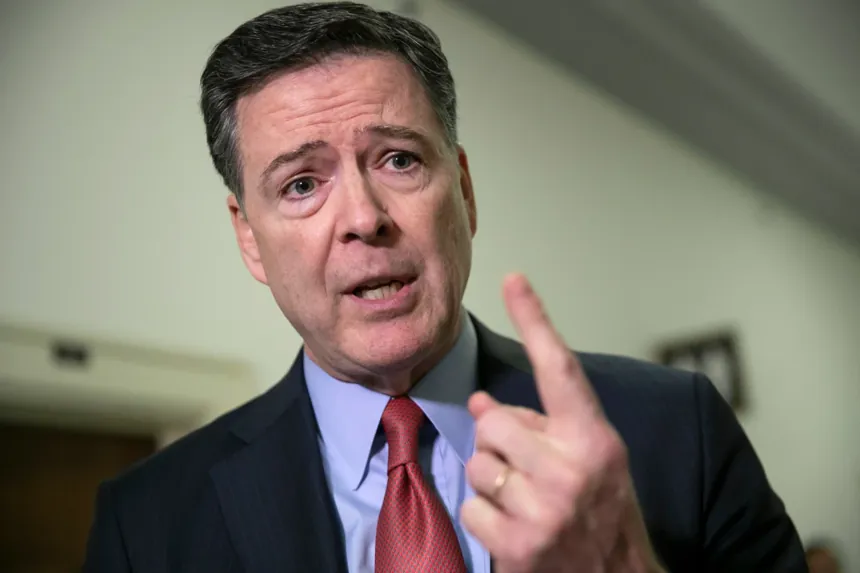
Former FBI Director James Comey has been indicted again by US federal prosecutors, this time over a social media post authorities say constituted a threat against President Donald Trump, intensifying scrutiny over the politicization of legal processes in Washington.
The charges stem from an image posted online showing seashells arranged in the numbers “86 47,” which officials interpreted as a coded threat referencing Trump, the 47th president of the United States, according to reporting by Associated Press. The case is unfolding in the Eastern District of North Carolina and includes counts related to making and transmitting threats.
Comey, who led the FBI from 2013 to 2017, has denied any intent to incite violence and said he removed the post after realizing it could be misinterpreted. His legal team has indicated it will challenge the charges, raising constitutional questions about free expression and prosecutorial standards.

Legal and Political Pressure Intensifies
The indictment marks the second time in recent months that Comey has faced federal charges, following an earlier case that was dismissed on procedural grounds. Analysts say the renewed prosecution reflects a broader effort by the current Justice Department leadership to pursue cases involving political figures linked to previous administrations.
Acting Attorney General Todd Blanche, a former legal adviser to Trump, has overseen the case. Officials insist the charges follow standard protocols for investigating threats against a sitting president, emphasizing that such allegations are treated with high priority regardless of the individual involved.
However, legal experts cited by international outlets note the difficulty of proving criminal intent based on symbolic or ambiguous online content, particularly when defendants argue their speech was misunderstood or protected.
Global Attention on Rule of Law and Free Speech
The case has drawn international attention as a test of how the United States balances national security concerns with constitutional protections. Democracies globally often face similar tensions when addressing alleged threats communicated through digital platforms.
Observers warn that high-profile prosecutions involving political figures can shape perceptions of institutional independence, particularly when they involve rivals of a sitting administration. The handling of such cases is closely watched by allies and adversaries alike as a measure of legal neutrality.


Strategic Implications for US Governance
The indictment comes amid broader efforts by US authorities to pursue legal cases involving prominent political actors, raising questions about governance norms and judicial independence. Analysts say the outcome could influence future interpretations of political speech and its legal limits.
As the case proceeds, courts will likely be asked to determine whether the social media post meets the legal threshold for a credible threat or falls under protected expression—an issue with implications extending beyond US borders into global debates over digital speech and political accountability.